
Saudi Arabia's 105-Mile-Long Skyscraper 'The Line' Could Kill Millions of Migratory Birds Environmentalists Warn.
Experts Fear Saudi Arabia’s Giant Mirror City Could Disrupt Critical Migration Paths and Cause a Massive Bird Mortality Crisis

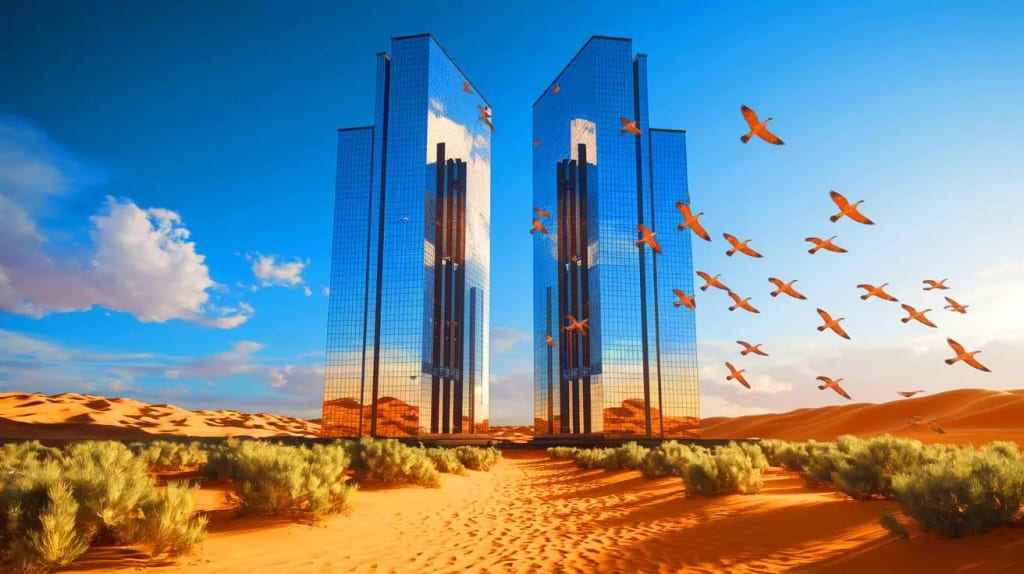
Saudi Arabia's 105-Mile-Long Skyscraper 'The Line' Could Kill Millions of Migratory Birds Environmentalists Warn.
Saudi Arabia’s bold futuristic project, "The Line," has captured the world's imagination with its ambition: a 105-mile-long, 1,640-foot-high mirrored skyscraper slicing through the desert. Envisioned as part of the $500 billion NEOM megacity, "The Line" promises a sustainable, car-free city with zero carbon emissions. However, behind the dazzling concept lies a growing environmental concern that has scientists and conservationists sounding alarms — the project could become a death trap for thousands of migratory birds.
A Deadly Obstacle for Migration
Twice a year, millions of birds journey across the Arabian Peninsula as part of one of the world’s most important migratory routes. From tiny songbirds to large birds of prey, they travel thousands of miles between Africa and Eurasia, relying on clear flight paths, natural landscapes, and stopover habitats for survival. "The Line," however, cuts directly through these vital corridors.
Experts warn that the skyscraper’s massive mirrored facade could confuse birds. Birds perceive reflections of the sky and natural surroundings as real, causing them to fly straight into the glass at full speed. Studies in other parts of the world — notably North America and Europe — have shown that glass collisions are one of the leading causes of avian mortality, killing up to a billion birds annually. Now, conservationists fear that "The Line" could amplify this problem to an unprecedented scale.
Scale of Potential Destruction
The sheer size of the project magnifies the threat. At 105 miles long, "The Line" would become the largest reflective structure ever built, creating a virtually continuous barrier across a crucial migration path. Even if a tiny fraction of migrating birds collide with the structure, the death toll could number in the hundreds of thousands — or even millions — each migration season.
Several bird species that use this flyway are already endangered or vulnerable. For them, losing even a small percentage of their population each year could tip them toward extinction. The Arabian Peninsula's unique location as a crossroads between continents means that bird populations across Africa, Europe, and Asia could all be affected.
Ecological Ripple Effects
The consequences wouldn't stop with the birds themselves. Migratory birds play crucial roles in ecosystems, from controlling insect populations to pollinating plants and dispersing seeds. Losing large numbers of birds could trigger cascading effects across multiple ecosystems, harming biodiversity not just in Saudi Arabia, but across continents.
Furthermore, Saudi Arabia's deserts and wetlands are already under stress from urbanization, oil development, and climate change. Adding a massive, disruptive structure into the heart of sensitive environments could exacerbate existing ecological pressures, leading to broader environmental degradation.
Calls for Urgent Action
Environmental groups, ornithologists, and conservationists are calling on the Saudi government and NEOM planners to reconsider the design. Some propose modifications to make the building more bird-friendly, such as using special patterned or UV-reflective glass that birds can recognize and avoid.
Others argue that such a monumental project should not be placed in such a critical ecological location at all. Moving the project slightly off the main migration corridor, reducing its reflective surfaces, or incorporating wildlife corridors could significantly reduce its impact.
However, critics point out that NEOM’s leadership has shown little willingness to prioritize environmental concerns over the project's futuristic aesthetic and rapid construction timeline. Given Saudi Arabia’s ambition to showcase "The Line" as a model for sustainable urban living, the irony of causing mass wildlife deaths could severely undermine its credibility on the global stage.
Balancing Development and Conservation
The situation presents a classic dilemma: how to balance human innovation and progress with the need to protect the natural world. Projects like "The Line" highlight the growing tension between humanity’s push for groundbreaking development and the planet’s ecological limits.
Some experts suggest that Saudi Arabia has an opportunity to turn this crisis into a case study for truly sustainable urban planning. By adapting the design to prioritize both human and non-human life, Saudi Arabia could set a new standard for integrating advanced technology with environmental stewardship.
If ignored, however, "The Line" may come to symbolize something much darker — a vision of the future where dazzling human achievements come at the cost of devastating ecological loss.
Final Thoughts
As construction on "The Line" progresses, the world watches closely. The decisions made today will ripple through generations of both humans and wildlife. Saudi Arabia stands at a crossroads: will it choose a path that harmonizes with nature, or will it press forward with a vision that turns the skies above the Arabian desert into a deadly mirror?
The fate of millions of migratory birds — and the ecosystems they sustain — may very well hang in the balance.
About the Creator
Adnan Rasheed
Author & Creator | Writing News , Science Fiction, and Worldwide Update| Digital Product Designer | Sharing life-changing strategies for success.
Keep reading
More stories from Adnan Rasheed and writers in Earth and other communities.
Curiosity Rover Captured in Action for the First Time
Curiosity Rover Captured in Action for the First Time In an extraordinary event that has thrilled scientists and space enthusiasts alike NASA’s Curiosity rover has been captured in action for the very first time on the Martian surface. Although images of Curiosity have been taken before what makes this moment historic is that it was photographed while actively conducting its exploration tasks. This remarkable achievement offers not just a stunning visual but also critical insights into the operations and endurance of the rover, which has been tirelessly working on Mars since 2012.
By Adnan Rasheed9 months ago in Earth
Nitrogen is necessary for young tropical rain forests to combat climate change.
By absorbing carbon dioxide from the atmosphere and storing it in wood, tropical rainforests contribute to the slowing of climate change. Forests that develop quickly are even more important because they absorb carbon more quickly.
By Francis Dami5 days ago in Earth
Wild Card Weekend Recap: What Happens Now?
I think I figured out why I love Wild Card Weekend so much. It's because it's the first playoff anything of the calendar year. The NFL season starts in the fall, and once upon a time, the champion was crowned either on or slightly before New Year's. The evolution of the NFL schedule has resulted in the playoffs starting just into the New Year, and currently, the final week of the season falls on the first weekend of the New Year, with Wild Card Weekend coming a week after that. So yes, chronologically, the NFL's Wild Card Weekend serves as the first playoff anything of the calendar year.
By Clyde E. Dawkins7 days ago in Unbalanced



Comments
There are no comments for this story
Be the first to respond and start the conversation.