
Saturday Night’s Celestial Show: The Full ‘Pink Moon’ and a Rare Micromoon
The pink moon of April shines brightly, but it's smaller than usual!

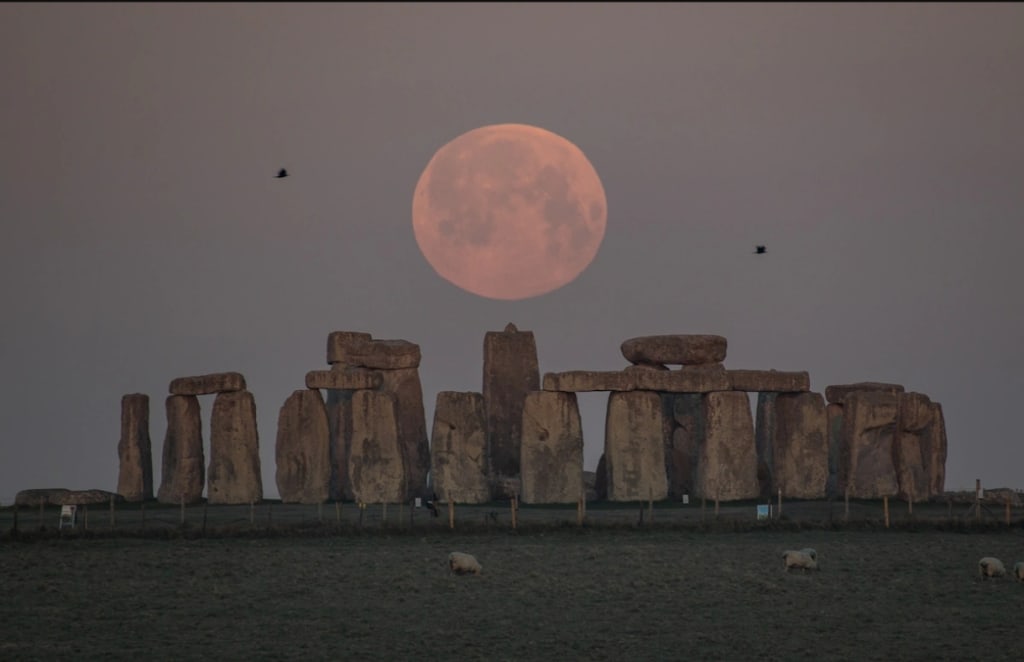
This weekend, skywatchers are in for a treat as April’s full moon, known as the "Pink Moon," rises on Saturday night (April 20, 2024). But there’s an extra twist—this full moon is also a micromoon, making it a unique celestial event.
The Pink Moon: What Is It?
The Pink Moon won't actually appear pink, despite its name. The name comes from Native American customs, specifically from the Algonquin tribe, who named the full moon in April after the wild pink phlox flowers that bloom in the early spring. Other names for this moon include the Sprouting Grass Moon, Egg Moon, or Fish Moon, reflecting seasonal changes.
This is a micromoon for a reason. A micromoon occurs when a full moon coincides with apogee—the point in the moon’s orbit where it is farthest from Earth. The moon may appear slightly smaller and dimmer than usual due to this distance, but the difference is not noticeable to the naked eye. The distance between the Earth and the Moon is about 238,855 miles (384,400 kilometers) on average.
Micromoon Distance: ~252,000 miles (405,500 km)
A supermoon, on the other hand, occurs when the moon is at its closest point (perigee), making it appear larger and brighter.
When and How to Look at It
The Pink Moon will reach peak illumination at 7:49 p.m. EDT on Saturday, April 20 at 23:49 UTC. However, from Friday night to Sunday morning, it will appear to be full, providing numerous viewing opportunities. The moon may appear larger due to the "Moon Illusion" effect just after sunset, so this is the best time to observe it. The moon will be visible to the naked eye, but binoculars or a telescope can enhance details like craters and lunar seas. No special equipment is required.
What is unique about this moon?
While not as dramatic as a supermoon, a micromoon is a fascinating reminder of the moon’s elliptical orbit. In addition, the Pink Moon has cultural significance because it signifies the beginning of spring and has an impact on practices like the date of Easter, which is the first Sunday after the first full moon after the spring equinox.
Last Thoughts Take some time this Saturday to appreciate the Pink Micromoon—a combination of natural wonder, cultural history, and celestial mechanics—whether you're a seasoned stargazer or just enjoy the beautiful night sky. Don’t forget to look up and enjoy the view!
Happy Moon-Gazing! 🌕✨
About the Creator
Keep reading
More stories from Shahi Sayeba Prithey and writers in Earth and other communities.
Trump’s Trade War Escalates as China Retaliates With 34% Tariffs
Beijing's announcement of retaliatory tariffs of up to 34% on American goods marked a significant escalation in economic tensions between the world's two largest economies, escalating the ongoing trade war between the United States and China. The move is in response to the latest round of tariffs imposed by the Trump administration on Chinese imports, which further strained relations and raised concerns about a prolonged economic standoff.
By Shahi Sayeba Prithey10 months ago in History
Gold Soars Past $5,100 an Ounce as Silver Hits a New Record Amid Tariff and U.S. Shutdown Fears
Gold and silver are once again stealing the spotlight in global markets. Gold has surged past $5,100 an ounce, while silver has climbed to a new all-time high, reflecting growing investor anxiety over rising trade tensions and renewed fears of a potential U.S. government shutdown. These dramatic moves underline a familiar pattern: when uncertainty rises, investors often rush toward assets perceived as safe havens. The latest rally in precious metals is being driven by a mix of political instability, economic uncertainty, and concerns about the future direction of global trade and monetary policy. Together, these factors are reshaping market sentiment and pushing gold and silver to record levels. Why Gold Is Breaking Records Gold has long been viewed as a store of value during times of crisis. Its surge past $5,100 an ounce signals deep unease across financial markets. Investors are increasingly worried about the long-term consequences of aggressive trade policies, escalating tariffs, and political gridlock in Washington. Tariff disputes between major economies raise fears of slower global growth and higher inflation. When tariffs increase the cost of goods, purchasing power weakens, and confidence in traditional currencies can decline. Gold often benefits in such environments, as it is not tied to any one government or central bank. At the same time, uncertainty surrounding U.S. fiscal policy has added fuel to the rally. The risk of a government shutdown brings concerns about delayed payments, weakened public services, and broader economic disruption. For investors, gold represents stability when political systems appear fragile. Silver’s Record Run: More Than Just a Safe Haven While gold often grabs headlines, silver’s performance has been equally remarkable. Unlike gold, silver plays a dual role in global markets. It is both a precious metal and an industrial commodity, widely used in electronics, renewable energy, and manufacturing. Silver’s record-breaking rise reflects not only fear-driven buying but also optimism about long-term demand. As industries such as solar power, electric vehicles, and advanced electronics continue to grow, silver’s industrial value strengthens. When combined with its appeal as a hedge against uncertainty, silver becomes especially attractive during volatile periods. This combination of industrial demand and safe-haven appeal has helped silver outperform expectations, pushing prices to levels few analysts predicted just months ago. The Role of Tariffs in Fueling Market Anxiety Trade tariffs have emerged as a central driver behind the surge in precious metals. When governments impose or threaten new tariffs, businesses face higher costs and disrupted supply chains. These pressures often slow economic activity and create uncertainty for investors. Markets tend to react quickly to tariff announcements, pricing in the risk of inflation and reduced corporate earnings. As confidence in equities weakens, investors often shift funds toward assets like gold and silver that are less sensitive to trade disruptions. In this context, the metals rally reflects broader fears that global trade tensions could deepen, harming economic growth and destabilizing financial markets. U.S. Shutdown Fears Add to Safe-Haven Demand The prospect of a U.S. government shutdown has further unsettled investors. Shutdowns disrupt federal operations, delay economic data releases, and weaken confidence in political leadership. Even short shutdowns can have ripple effects across markets. For international investors, political dysfunction in the world’s largest economy raises questions about fiscal discipline and long-term stability. These concerns often lead to increased demand for gold, which is viewed as a neutral asset unaffected by domestic political struggles. Silver, though more volatile than gold, often follows the same trend during periods of heightened uncertainty. Central Banks and the Precious Metals Boom Another important factor behind rising gold and silver prices is central bank behavior. Many central banks have been increasing their gold reserves in recent years, seeking to diversify away from the U.S. dollar and reduce exposure to geopolitical risk. When central banks buy gold, it sends a strong signal to markets. It reinforces gold’s role as a strategic asset and supports higher prices. This institutional demand adds another layer of support to the current rally. At the same time, expectations around interest rates continue to influence precious metals. Lower or stable interest rates reduce the opportunity cost of holding non-yielding assets like gold and silver, making them more attractive to investors. What This Means for Investors The surge in gold and silver highlights how sensitive markets have become to political and economic uncertainty. While rising prices can present opportunities, they also come with risks. Precious metals can be volatile, and sharp gains are sometimes followed by sudden corrections. For long-term investors, gold and silver are often seen as portfolio diversifiers rather than primary growth assets. Their value lies in providing balance during turbulent times, not necessarily in delivering consistent returns. Short-term traders, meanwhile, are closely watching political developments, trade negotiations, and fiscal decisions, knowing that headlines alone can move prices significantly. Looking Ahead: Will the Rally Continue? Whether gold and silver can maintain their record levels depends largely on how current uncertainties unfold. If tariff tensions ease and political stability improves, some of the safe-haven demand could fade. However, if uncertainty persists—or worsens—precious metals may remain well supported. What’s clear is that gold and silver are once again playing a central role in global markets, reflecting deeper concerns about economic resilience and political stability. Final Thoughts Gold’s surge past $5,100 an ounce and silver’s record-breaking rally are more than just market milestones—they are signals of widespread unease. Tariff fears, political gridlock, and global uncertainty are reshaping investor behavior, pushing money toward assets that have historically offered protection in turbulent times. As markets navigate these challenges, precious metals remain a powerful reminder that confidence, trust, and stability still matter deeply in the global financial system.
By Muhammad Hassana day ago in Earth
US to Transfer Islamic State Prisoners from Syria to Iraq
The United States has announced plans to transfer Islamic State (IS) prisoners currently held in Syria to Iraq, marking a significant development in ongoing counterterrorism operations. The move aims to enhance regional security, ensure proper detention, and facilitate judicial processes for individuals captured during operations against IS in Syria and Iraq.
By Aarif Lashari5 days ago in Earth
The Path to Salvation
The late autumn evening air filled the monk's lungs, but it wasn't the season that chilled his bones. The heavy-handed presence of evil he had sensed upon entering the woods surrounding this mountain village had not bothered to conceal itself from him.
By Made in DNA6 days ago in Fiction


Comments
There are no comments for this story
Be the first to respond and start the conversation.