
Reducing Waste with Technology Education
Your phone is not broken. It's on airplane mode.

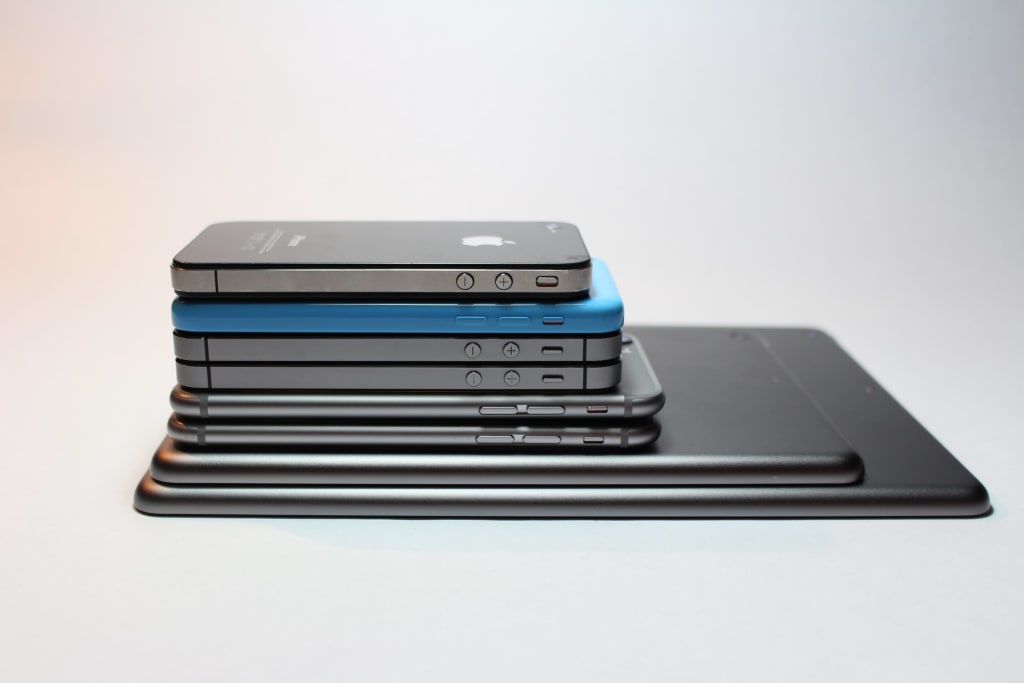
There are endless ways to reduce our carbon footprint. Many say save the turtles by banning plastic usage to minimally necessary levels. Others say we should stop eating meat. However, I believe that technology education is what will make the biggest impact on the slowing of CO2e emissions. We love technology and often spend most days using it for upwards of 12 hours. We want the latest and greatest flagship phones. We are loyal to our tech giants. As a Computer Information Systems major, I am here to tell you why we need to be more loyal to our oceans than our electronics. My personal goal to reduce my own carbon footprint is by teaching as many people as possible about how to lower theirs.
Carbon Dioxide and Co.

So, what exactly is a greenhouse gas, and how do we measure them with a fair weight if they are all comprised of different chemical composition?
Carbon dioxide is the biggest emission pollutant on the planet. It can change the amount of water vapor in our atmosphere, which can have a direct impact on global warming. To compare greenhouse gases, we convert all of them into what are called CO2e, or Carbon Dioxide equivalent. This conversion helps us to identify the amount of warming caused by each individual gas. Per the Environmental Protection Agency, as of 2019 electronics manufacturing caused 5.8 million metric tons of CO2e. This is hard to picture if you are unfamiliar with environmental pollutants, but if you have heard the phrase ‘metric ton,’ you know it is about something massively overbearing. This is that overbearing weight, multiplied over five million times. Emissions converted to CO2e are gases like Nitrous Oxide, Hydrofluorocarbons, Perfluorocarbons, Sulfur Hexafluoride, Nitrogen Trifluoride, and other fully fluorinated greenhouse gases. You may not be familiar with each of these, but they are just as harmful as they sound. We are allowing these harmful gases into our oceans and into the atmosphere.
Though we know CO2e are harmful to our environment from manufactured electronics, there are a few things slowing us down from getting everybody on board. Per ACS Publication’s Environmental Science and Technology article entitled Comparing Embodied Greenhouse Gas Emissions of Modern Computing and Electronics Products it’s not feasible to make a persuasive argument against CO2e impacts from electronics manufacturing due to “disagreement across studies regarding the magnitude of impacts of ICT (Information Communication Technology) products; lack of coverage for newer products; and lack of transparency in studies.”
Should We Stop Using Electronics?

Absolutely not. Technology in today’s world is a necessity for work, school, and communication. We do everything from our cell phones and laptops, but that is not why I think you should keep using them. Usage of electronics just isn’t statistically harmful enough to justify disuse of our devices. In fact, according to a Microsoft developer blog on carbon footprints of electronic devices, 85-95% of the lifetime carbon footprint of the device is from the manufacturing process. According to this same blog, it would take about 10 years on a smartphone or 11.7 years on a Surface laptop to equal the emissions from the manufacturing process.
How do we know which electronics are more environmentally costly to manufacture? The answer to this is simple, albeit a little strange. Mass plays the largest factor in the device’s greenhouse gas emissions during the manufacturing process, according to the aforementioned ACS Publication article. Unfortunately, devices continue to grow larger with every new flagship phone. We are all about bigger, brighter screens. Along with smartphones, we are also seeing increased sizes and masses in devices such as phablets, laptops, smart watches, smart vehicles, tablets, and more. Whereas there was once a time when smaller phones were more convenient, we now use Pop Sockets because our phones are too large and bulky to use singlehandedly without the help of a phone grip.
Why are new versions of the same devices released so often?

I think it is safe to say we all know why newer phones keep coming out before the old ones are even near obsolete.
In 2016, cell phone revenue alone for Samsung was 80.9 billion, and Apple’s sat at 158.5 billion. By 2018 Samsung increased cell phone revenue to 86.9 billion while Apple raked in an astonishing 176.8 billion. This increase was facilitated by the manufacturing of newer, slightly smarter phones. From 2016-2018 both Apple and Samsung released multiple phones with several being updated versions of phones released either the year prior or even during the year the newest flagships were introduced. Both manufacturers sold between 10-86.3 million cell phones per model during this two-year period. One thing we know for sure is that the combined millions of phones sold just between these two manufacturers were not for first time cell phone users. Cellular carriers have migrated towards monthly “upgrade anytime” business models for qualified customers through programs such as T-Mobile’s JUMP! On Demand or Sprint’s iPhone Forever. Carriers not only get monthly payments for phones, but they also get to keep the original phones upon upgrade while keeping their customers perpetually paying for phones that they never end up owning. Carriers encourage their customers to do this because they want to make phone sales. These plans cause continuous supply and demand chains on the demand side, which is because we feel like we need the biggest and best version of everything that comes out. Apple and Samsung moved from innovative occasional releases to charging hundreds more for a slightly larger or faster version of any given phone model that has successfully been kept on the market. These include series such as the Apple iPhone, Samsung Note, and Samsung S Series. By Samsung throwing in a ‘+’ or Apple throwing in the word ‘Pro’ you feel like you need that product so you don’t have the “worst of the best” device in your pocket, regardless of the specs on the standard model versions. There was a time when a phone release was so rare that people raved about it. Now, with major manufacturers releasing new versions so often it is hard to tell which is the newest version before another one comes out and you feel the urge to trade in for that beautiful new larger screen. This constant size increase also has its faults due to mass being directly proportional to the amount of CO2e from the manufacturing process.
Wait, Don’t Upgrade Yet!

We love getting new phones as soon as they come out and we sometimes may even lie a little to ourselves about the performance of our current devices. Now we will go over exactly why you should wait to upgrade your phone.
Ask yourself the following questions:
- Is this worth trading in your perfectly fine current device? You are likely going to gain maybe 2MP on your camera or faster charging, along with a higher instant purchase or monthly cost. As we all know, supply and demand end with higher demand and limited supplies of new phones causing insane price points for new arrivals. Try to wait until at least two model updates or longer before upgrading your device.
- If my device is worth trading in, is it worth the carbon footprint from manufacturing and adding to the demand? Remember, it takes over a decade of usage for the average smartphone to equal the CO2e from the manufacturing process! This means the smaller, lighter versions are more environmentally friendly!
- Is my device really as bad as I think it is? Chances are, you have a nice phone from trading in already if you have an upgradable cell phone plan. So what if your phone does not have the built in new purple interface or a personal assistant built in? We consider our phones ‘good’ if they have more features we will use once and likely forget about instead of considering that at its core, it’s a phone. Can you make calls? Can you text? Can you use the web? What else is it lacking beyond that in which it would cause you to dump your device?
- Is my phone broken permanently? Maybe your phone is not as fast as it once was. Maybe the screen freezes, or the touch screen seems to be a little off center, or the speaker is not what it used to be. These are valid, legitimate problems. However, going out and buying a new phone is not the answer if it can be fixed.
Troubleshooting and Storage Solutions

• My phone is slow, and I closed everything: Slow performance could be from a multitude of factors. The good news is that they are almost all fixable! For slow phones or even laptops you can try closing all applications. This does not just mean the ones you can see. Sometimes, applications can be constantly running in the background. If this is the case and these applications have permissions like GPS or Camera access, your battery and speed will suffer. Check your settings on your phone to see currently running apps, or on a laptop you can use Ctrl+Alt+Del and use your task manager to review running apps. Once all applications are closed, restart your device to power cycle.
• My phone is slow, and I just got it: One reason new phones are often slow is because they need to be updated. Check for updates to both your operating system and applications.
• Every time I try to switch to iPhone it is such a hard process: If you switch manufacturers often, it will be an adjustment every time. Though companies such as Apple and Samsung are adamant rivals, they also work together to make the transitions as quickly as possible when it comes to data transfer. However, think of it like moving to a new house every single year. All your information has to be moved over with the post office. The new house will also need to have all contents of your prior address moved. You know your neighbors, but you are not sure if they’re saved in your phone anymore. It is a little bit of chaos. Try sticking to one phone manufacturer if you have trouble switching back and forth.
• My phone won’t let me use any network features, but I can still use everything that doesn’t require internet or cellular service: Your device is not broken. It's in airplane mode.
• My phone will not charge quickly anymore: Are you using a brand name charging cable that has been approved by the manufacturer? Is your charging port clean? Are you using your phone for battery intensive tasks while it is charging? Have you tested the wall socket where your phone charger is plugged in? Are you in need of maybe purchasing a lightning cable? Have you tried allowing your phone to charge while powered off?
• My phone is slow and will not open all my files: One of the most common reasons for a phone to be slow is inadequate storage. Move your files to a cloud-based storage like Drop Box or OneDrive. Your files will now be accessible from any of your devices and when you remove transferred files from your phone you will have space for more selfies your most important files on your newly faster phone!

• I clicked a pop-up link on my laptop and now everything is slow: You likely clicked a phishing link. If you are on a corporate computer, disconnect from the network immediately. Run anti-malware software. Try to only click on links from trusted sources and when in doubt, hover over the icon you want to click to view the address where it will take you.
• The new phone I want has this specific feature: Check the app store for similar features that you can download on your current device!
• My touch screen is off center: Go into your phone settings and recalibrate your device’s touch screen. If you are using a laptop, replace the digitizer if recalibrating does not produce expected results.
• I do not like where the buttons are: Little known fact, but most phones are completely customizable. This includes switching out features you do not use for features you do use on the buttons on the side of your phone!
• I do not like Samsung Bixby: Nobody likes Bixby. Luckily, it can be disabled in your phone settings! Consider using another personal assistant for your Android device, such as Amazon’s Alexa or Google Assistant. If you have an iPhone, you should not have Bixby, and you’ll have our OG hero, Siri.
Repurposing

Factory Reset Before Giving Away!
Bring old cell phones to homeless and domestic violence shelters. Basic functions such as Wi-Fi and emergency services can be accessed with no SIM card!
Give your old cell phone to your child to show responsibility before giving them a top-notch phone.
Use your old laptop as a virtual machine to teach children basic computing skills, or even for you to learn some programming!
Use your old phone as a music device with Wi-Fi.
Consider donating no longer needed computers to local schools.
In conclusion

Manufacturing of electronics is a major factor in CO2e emissions, and due to the many viewpoints that are convinced the impact is small this is not an issue that will go away anytime soon. I reduce my own carbon footprint by educating others on their trusted devices. This is a free and easy way to spread the word on helping our oceans to a very widespread audience. Do our planet a favor. Reevaluate your reaction to wanting a new phone or laptop every time a new model comes out. Keep your smaller phone. Do not be lulled in by a plus sign at the end of the model. Troubleshoot and try to fix your device before giving up on it. If you must upgrade, repurpose your old device if it is not on a plan that makes you trade in your current phone. Let’s reduce our carbon footprints together by using our voices!
____________________________________________________
Sources:
https://www.epa.gov/ghgreporting/ghgrp-electronics-manufacturing
https://pubs.acs.org/doi/10.1021/es303012r
https://pubs.acs.org/doi/10.1021/es303012r
https://www.ooma.com/home-phone/cell-phone-cost-comparison/
https://en.wikipedia.org/wiki/List_of_best-selling_mobile_phones#2016
About the Creator
Keep reading
More stories from Brandy Enn and writers in Earth and other communities.
Feeding America with Leftovers
This article was difficult to write. Seeing these numbers made me feel everything from anger, to sadness, to incredulity. The solution to funding the United States’ hunger problem can be solved for years with the help of just ten people, yet we allow it to continue.
By Brandy Enn5 years ago in Earth



Comments
There are no comments for this story
Be the first to respond and start the conversation.