
Recycling Reinvented: Pyrolysis Solutions for Tires, Plastics, Oil Sludge, and Biomass
Unlocking the Potential of Pyrolysis Technology
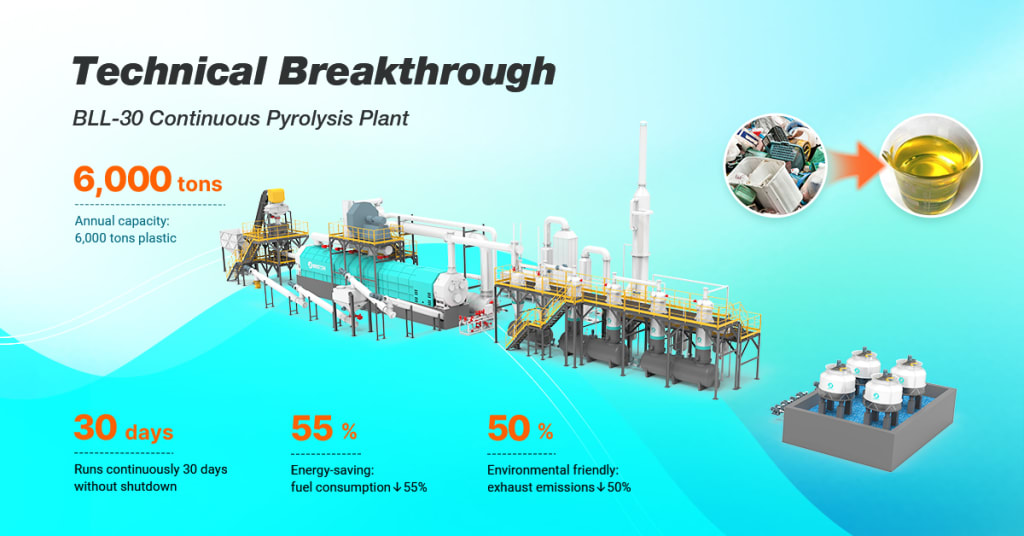
In today’s world, waste management is no longer just about disposal—it’s about resource recovery. With global attention on sustainability and the circular economy, industries are looking for advanced technologies that not only solve environmental challenges but also generate new economic opportunities. One of the most promising solutions is pyrolysis technology, a process that converts waste into fuel oil, carbon black, biochar, and syngas.
What is Pyrolysis Technology?
Pyrolysis is a thermal decomposition process carried out in the absence of oxygen. Instead of burning waste, it breaks down complex materials into simpler, valuable products. This makes it suitable for handling difficult-to-recycle waste streams like tires, plastics, oil sludge, and even biomass.
Unlike incineration or landfilling, pyrolysis minimizes harmful emissions and leaves behind products that can be reused across industries. More in pyrolysis machinery.
Key Waste Streams Pyrolysis Can Handle
1. Waste Tires
- Problem: Every year, millions of tons of end-of-life tires are discarded, creating a serious environmental hazard.
- Pyrolysis Solution: Tires can be processed into pyrolysis oil (alternative fuel), carbon black (industrial filler), steel wire (recyclable metal), and syngas (energy source).
- Benefit: Reduces tire stockpiles and creates valuable by-products for fuel and manufacturing industries.
2. Waste Plastics
- Problem: Plastics are durable and non-biodegradable, contributing heavily to pollution. Many types are not suitable for traditional recycling.
- Pyrolysis Solution: Converts plastics into liquid fuel oil and gases, which can be used as an energy source or further refined.
- Benefit: Offers a way to recycle mixed or contaminated plastics that would otherwise end up in landfills.
3. Oil Sludge
- Problem: Oil sludge from refineries, drilling, and storage tanks is hazardous and difficult to manage.
- Pyrolysis Solution: Safely processes sludge into fuel oil while reducing overall waste volume.
- Benefit: Turns hazardous waste into a usable product, lowering disposal costs and environmental risks.
4. Biomass
- Problem: Agricultural and forestry residues are often burned or discarded, wasting potential energy.
- Pyrolysis Solution: Converts biomass into biochar, bio-oil, and syngas.
- Benefit: Biochar can improve soil fertility, while syngas can be used to power the system itself, making the process more energy-efficient.
Building a Circular Economy with Pyrolysis
The future of waste management is not just about disposal—it’s about closing the loop. Instead of treating discarded materials as an end point, a circular economy views them as the starting point for new value creation. Pyrolysis plays a vital role in this transformation by turning waste into usable products, supporting both economic growth and environmental protection.
1. Reduce Environmental Pollution
Pyrolysis prevents large volumes of tires, plastics, oil sludge, and biomass from ending up in landfills or being incinerated. This reduces soil and water contamination, lowers greenhouse gas emissions, and contributes to cleaner cities and communities.
2. Recover Valuable Resources
What was once considered waste can now be transformed into fuel oil, carbon black, steel, syngas, or biochar. These recovered products can re-enter industrial supply chains, replacing virgin raw materials and conserving natural resources.
3. Lower Waste Management Costs
Traditional disposal methods such as landfilling or incineration are costly and provide little to no return. Pyrolysis, on the other hand, not only reduces disposal expenses but also generates revenue streams from the sale of by-products.
4. Support Global Sustainability Goals
As governments and industries push toward net-zero targets, pyrolysis aligns perfectly with climate and sustainability agendas. By converting waste into renewable energy and recyclable materials, it helps industries meet stricter environmental regulations and ESG commitments.
Conclusion
Pyrolysis technology is more than a waste treatment method—it’s a sustainable, profitable pathway to transform waste into wealth. Whether it’s tires, plastics, oil sludge, or biomass, pyrolysis offers a cleaner and smarter solution for today’s waste challenges.
The question is no longer “Can we afford pyrolysis?” but rather “Can we afford not to adopt it?”
About the Creator
Honey, I Shrunk the Datacentres: Is Small the New Big?
When most people think of datacentres, they picture sprawling warehouses full of servers, humming fans, and mountains of cabling. These massive facilities power everything from Netflix streams to artificial intelligence, but they also consume enormous amounts of energy and space. Now, a new trend is emerging: micro-datacentres. Tiny, modular, and often portable, these “datacentre in a box” solutions are challenging the old assumption that bigger is always better. Could small really be the new big in the world of computing? What Are Micro-Datacentres? Micro-datacentres are compact computing hubs designed to perform the same essential functions as traditional datacentres but in a fraction of the space. Think of them as miniaturized cloud factories — smaller, energy-efficient, and often placed closer to the users they serve. Key characteristics include: Compact size: Often no larger than a shipping container or even a cabinet. Energy efficiency: Use less power by focusing on localized computing needs. Modularity: Can be scaled horizontally by adding more units rather than expanding a single huge facility. Edge computing readiness: Positioned closer to where data is generated, reducing latency for IoT devices, AI applications, and streaming services. In short, micro-datacentres take the power of traditional computing and shrink it to fit modern, flexible infrastructure demands. Why Companies Are Embracing Smaller Datacentres There are several reasons the tech world is warming up to smaller datacentres: Energy and Cost Savings – Traditional datacentres consume massive amounts of electricity, sometimes as much as a small town. Micro-datacentres use less power and generate less heat, reducing both energy bills and cooling costs. Local Speed and Low Latency – For applications like AI, gaming, and streaming, milliseconds matter. By placing computing resources closer to users, micro-datacentres reduce latency and improve performance. Flexibility and Rapid Deployment – Big datacentres take years to build. Micro-datacentres can be deployed in weeks, allowing companies to respond quickly to spikes in demand or to expand into new regions. Resilience and Redundancy – Smaller, distributed units reduce the risk of a single point of failure. If one micro-datacentre goes down, others can pick up the load. Sustainability Goals – With energy efficiency at their core, micro-datacentres are often paired with renewable energy, making them an attractive option for companies seeking greener operations. From Data Warehouses to Data Cabinets Historically, the datacentre arms race has been about size. Companies like Amazon, Google, and Microsoft built massive facilities housing hundreds of thousands of servers. These centers achieved economies of scale but came with high energy use, long construction timelines, and heavy regulatory scrutiny. Micro-datacentres, on the other hand, flip the script: instead of one mega-facility, you deploy many smaller units closer to users. This is sometimes called edge computing, and it’s particularly useful for AI applications, smart cities, and the Internet of Things (IoT). Imagine self-driving cars, smart traffic lights, or factory robots. These devices generate enormous amounts of data that can’t be efficiently sent to a distant datacentre for processing. A nearby micro-datacentre solves the problem in real-time, enabling faster decisions and smoother operations. Real-World Examples Several companies are already experimenting with smaller datacentres: Google’s Edge Nodes: Google has deployed compact datacentres in regional locations to speed up cloud services. Microsoft Azure Stack Edge: A modular datacentre solution that brings cloud computing capabilities closer to businesses. Amazon Web Services (AWS) Snowcone: A portable computing and storage unit that can operate in remote or temporary locations. Even municipalities and hospitals are exploring micro-datacentres for localized applications like traffic management, healthcare data storage, and emergency services. Challenges of Going Small While micro-datacentres have many advantages, they’re not without challenges: Limited capacity: They can’t match the raw scale of traditional datacentres, so some large-scale AI training tasks still require mega-facilities. Security concerns: Smaller units distributed across many locations require robust cybersecurity protocols. Maintenance and monitoring: Managing multiple small units can be more complex than running a centralized datacentre. Energy trade-offs: If not designed efficiently, multiple micro-datacentres can sometimes use more energy than a single optimized large facility. Despite these challenges, many experts argue that the benefits — speed, flexibility, and reduced environmental impact — outweigh the downsides for many applications. Why “Small” Could Be the Future The rise of micro-datacentres signals a broader shift in how we think about computing infrastructure. Instead of centralized, monolithic powerhouses, the future may look like a network of small, smart, and sustainable units. This trend aligns with several larger tech movements: Edge computing – Computing closer to the user or device. Green technology – Reducing energy consumption and carbon footprints. AI proliferation – Handling massive data loads locally to enable faster processing. For companies, governments, and communities, the message is clear: smaller doesn’t mean weaker — it can mean smarter, faster, and more adaptable. Conclusion: Small but Mighty Micro-datacentres may not replace all mega-facilities, but they are carving out an essential niche in the computing ecosystem. They offer speed, flexibility, and sustainability that large datacentres can’t always provide, particularly for localized applications and edge computing. As technology evolves and energy concerns intensify, these “datacentres in a box” could become a core component of how we process, store, and access data in the 21st century. So the next time someone asks if small is the new big, the answer might just be yes — at least when it comes to datacentres.
By Muhammad Hassan5 days ago in Earth


Comments
There are no comments for this story
Be the first to respond and start the conversation.