
Punjab Conducts Successful Artificial Rain Trial: A Breakthrough in Tackling Smog and Weather Challenges
Punjab's Cloud Seeding Trial Marks a Milestone in Environmental Innovation to Combat Smog and Enhance Water Resources
Punjab Successfully Conducts Trial for Artificial Rain Experiment: A Glimmer of Hope as It Tackles the Challenges of Smog and Weather
After all, it is a big step that the government of Punjab has taken toward the new challenges of environmental degradation through successfully conducting the local technology trial for artificial rain. The experiment was carried out in all key districts of Punjab such as Jhelum, Chakwal, Talagang, and Gujar Khan by applying the latest cloud seeding technology. And within merely a few hours of its implementation, rainfall was witnessed not only in Jhelum but also in Gujar Khan.
What is Cloud Seeding?
It is a weather modification technique of dispersing substances such as silver iodide or sodium chloride into clouds to induce precipitation. In regions afflicted by drought or inadequate rain, this improves the natural process of rain. In an artificial rain trial over Punjab, the idea was not only to bring rain but to give relief from the acute problem of smog that has tormented the region for the past couple of years.
A Collaborative Endeavor
The successful artificial rain trial is a result of coordinated effort put together by several institutions, including the Punjab government, the scientific research and development experts of the Pakistan Army, Army Aviation, PARCO, and the Environmental Protection Agency (EPA). Since they utilized what was individually available to them in meteorology, technology, and environmental science, the entire cloud seeding operation was able to be executed.
Special mention has to be made of the cooperation provided by the Punjab government along with the scientific community of the Pakistan Army. The latter's science and development wing played a crucial role in the development of the technology used for cloud seeding. Also, assistance from Army Aviation helped initiate the project in the way it required support in terms of logistics and air support for dispersing cloud-seeding agents.
Record Time Rainfall:
The cloud seeding activity was performed throughout Punjab, and the best results were witnessed in Jhelum and Gujar Khan. Only within a couple of hours after the dispersal of cloud seeding agents, clouds in the said area began forming precipitation eventually bringing rain. Such an immediate and effective outcome reflects the possibility of artificial rain to be used as a means to mitigate environmental issues in Pakistan.
This technology, in this regard, has been witnessed to have borne fruit through the recently concluded trial, thus leaving one to hope that maybe this technology could just prove a game-changer for the country, at least concerning the issues of water scarcity, smog, and pollution, considering its capacity for producing rainfall on demand and mitigation of adverse effects of climate change, particularly in drought-stricken areas like Punjab.
Message by Punjab Chief Minister Maryam Nawaz Sharif
Punjab Chief Minister Maryam Nawaz Sharif had congratulated all the scientific experts and concerned institutions on the successful trial of artificial rain technology. In her message, she underlined that this achievement signifies the hope of the people of Punjab and Pakistan as a whole. This achievement, she reminded, speaks not only for the technological breakthrough but also for further developments in environmental science and the weather modification techniques.
The Chief Minister added that its success would ultimately move Pakistan's environmental policy down the much-needed long-term course. With advanced technologies such as cloud seeding, it will eventually help the country achieve its goal of minimizing the negative effects of climate change, improving air quality, and ensuring available water resources for agricultural purposes as well as daily needs.
Future of Artificial Rain in Pakistan
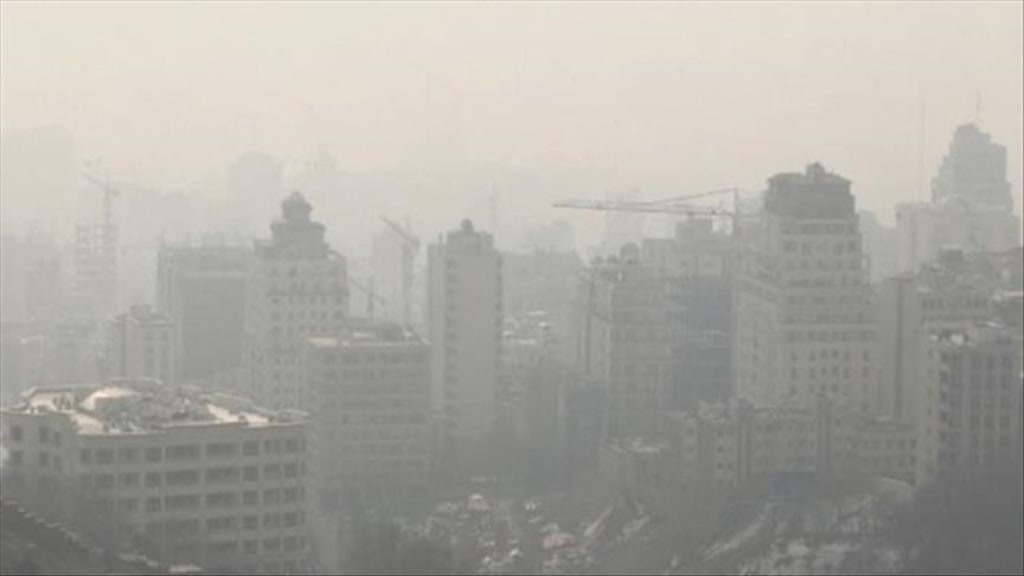
Artificial rain successfully tested in Punjab has opened new avenues for technological advancement in the country. It has brought a message of hope with regards to tackling the recurring issue of smog seriously threatening major cities of Punjab, such as Lahore, for years. Smog, primarily caused by vehicular emissions, industrial pollution, and stubble burning, has really devastated public health due to respiratory problems and reduced visibility.
The successful induction of rainfall through cloud seeding can help in reducing the severity of smog and improve air quality. Additionally, this technology can be applied to regions facing water scarcity, especially in arid areas where traditional rainfall is not adequate for agricultural and human consumption requirements.
Conclusion
The successful trial of artificial rain in Punjab, made possible through the services of advanced technologies, is one of the remarkable achievements that can possibly contribute to solving environmental challenges. Scientific and governmental institutions' cooperation opened further progress in weather modification, which may have a radical effect on reducing climate change, lowering pollution levels, and ensuring water security. Perhaps through Punjab seeking possibilities of artificial rain, this can help set precedents throughout Pakistan and even the other parts of the world, thus working towards a more positive solution to some of the world's most severe environmental dilemmas.
It reflects the boldness and approach of the Pakistan government towards the application of innovative technologies for environmental conservation and weather modification activities that would help deal with climate change and any other issue concerning public health. The successful trial of cloud seeding over Punjab may well prove only to be a precursor to such technological solutions in the bright future ahead.
About the Creator
El Niño is likely to return in 2026. Here's what that means for Houston and Texas.
La Niña has been active since mid-October. However, according to the January update from the National Oceanic and Atmospheric Administration, it’s likely to end over the next couple of months, and a transition to El Niño is likely to occur later this year.
By Dena Falken Esq4 days ago in Earth
Icy Chaos in Central and Eastern Europe
Winter has unleashed its fury across central and eastern Europe, leaving travelers frustrated and transport networks struggling to keep up. Over the past few days, freezing rain and ice have wreaked havoc on airports, train stations, and highways — forcing flight diversions, delaying trains, and making roads treacherously slippery. From Vienna to Budapest, Prague to Bratislava, this icy grip has brought travel to a near standstill. Let’s take a closer look at what’s happening, how it’s affecting people on the move, and what it tells us about winter travel in Europe. A Sudden Winter Blow A sudden wave of freezing rain swept across the region, coating runways, rail tracks, and roads with a dangerous layer of ice. Major airports in Austria, Hungary, Slovakia, and the Czech Republic were particularly affected. At Vienna International Airport, operations were temporarily suspended when runways became too slick for flights to land safely. Travelers already in the air had to divert to alternative airports in Munich, Frankfurt, and Venice. Meanwhile, Budapest’s Ferenc Liszt International Airport paused all arrivals and departures, and Prague’s Václav Havel Airport continued operating but at limited capacity. Trains Crawling Through Ice Rail networks weren’t spared. Across Austria, Hungary, and the Czech Republic, ice on tracks and power lines caused delays and cancellations. Austria’s national rail operator, ÖBB, urged passengers to postpone non-essential journeys. In the Czech Republic, travelers at Prague’s main station faced long waits as trains struggled to maintain schedules. Hungary’s tram and suburban rail services were temporarily suspended due to ice buildup on power lines. This combination of black ice, frozen switches, and heavy snowfall has tested the limits of winter infrastructure in Europe. Roads Turn Into Skating Rinks The icy weather didn’t just affect public transport — roads became treacherous, too. Authorities in Slovakia and the Czech Republic warned residents to avoid non-essential travel as highways turned into slippery skating rinks. Accidents and minor collisions were reported, and emergency services were busy responding to dozens of injuries from slips and falls. Even schools weren’t immune: parts of Romania shifted to online learning, keeping children safe during the extreme temperatures, which dropped to around -13°C in some areas. Why This Weather Is So Disruptive Meteorologists point to several factors that made this storm particularly severe: Freezing rain on top of existing snow creates an icy layer that’s extremely hard to clear. Rapidly refreezing surfaces make conditions unpredictable. Temperatures hovering around freezing prevent efficient melting during the day. This “perfect storm” scenario underscores just how vulnerable transport systems are to extreme weather. Even well-prepared airports and rail networks can struggle when weather transitions from snow to freezing rain. Voices From the Ground Passengers took to social media to express their frustration: Crowded airports as travelers scrambled to rebook flights. Train stations packed with delayed commuters, unsure when the next train would depart. Warming centers opened to provide shelter and hot drinks for stranded travelers. For many, a simple trip turned into a test of patience and resilience. Tips for Traveling in Freezing Conditions If you must travel during winter storms, experts recommend: Check flight and train schedules regularly, as delays can change quickly. Allow extra time for travel to avoid missing connections. Consider travel insurance that covers weather-related disruptions. If driving, carry winter essentials: blankets, food, water, and check road conditions before departure. Most importantly, prioritize safety over schedules — icy conditions can change rapidly, making travel risky. A Reminder From Winter This recent chaos in central and eastern Europe serves as a stark reminder of how interconnected transport systems are, and how vulnerable they can be to extreme weather. Flights grounded, trains stalled, and highways turned icy show that winter can bring travel to a halt — sometimes with very little warning. As Europe continues to face volatile winter conditions, travelers and authorities alike are reminded: preparation and flexibility are key. Sometimes, the weather truly has the final say. ❄️🛫🚆
By Muhammad Hassan4 days ago in Earth
Center Stage with Paul Stewart
*** I'm keen to republish the interviews I did for my series with Vocal creators. It's been a few years and I thought it might be nice to revisit these wonderful conversations. I'll be releasing them one at a time for a few weeks/months.
By Heather Hubler3 days ago in Interview



Comments
There are no comments for this story
Be the first to respond and start the conversation.