
Pumas Are Back in Patagonia and Penguins Are Paying the Price
Return of top predators reshapes coastal ecosystem as Magellanic penguins face novel threats from puma predation in Argentina’s Monte León National Park.
Subtitle
In the windswept coastal plains of Patagonia, Argentina, a dramatic ecological story is unfolding: pumas (Puma concolor) — once driven from the region — have returned to the land and begun preying on Magellanic penguins (Spheniscus magellanicus). This new predator‑prey interaction is providing scientists with a rare glimpse into how the comeback of an apex carnivore can reshape ecosystems in unexpected ways — and what it means for a beloved bird species.
Resurgence of a Top Predator
For much of the 20th century, pumas were scarce in coastal Patagonia. Widespread sheep ranching and targeted hunting pushed these large felines inland, away from the Atlantic shoreline where Magellanic penguins once ventured freely with few natural threats. Over recent decades, as ranching declined and protected areas like Monte León National Park were established, pumas have increasingly re‑established territories along the coast — rediscovering areas they historically occupied.
Once repopulated, these pumas encountered vast colonies of penguins that had increasingly nested on mainland beaches, confident in the absence of large land predators. The result has been a new ecological relationship that researchers are only just beginning to understand.
Penguins at Risk: Scale of Predation
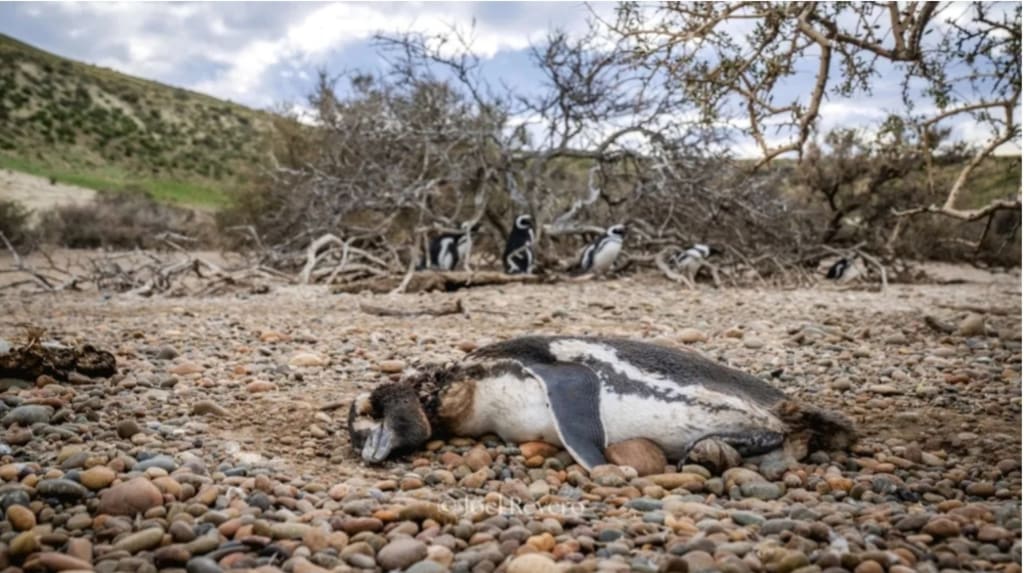
A long‑term study combining carcass counts and population modelling shows that more than 7,000 adult penguins were killed by pumas over a four‑year period, representing roughly 7.6 % of the adult population in the Monte León colony. Intriguingly, researchers found that many of these penguins were killed but not eaten, a behavioural phenomenon known as surplus killing, where predators kill prey beyond their immediate nutritional needs.
Surplus killing is most often observed when vulnerable prey are dense and easy to catch — as breeding penguins are — enabling the usually solitary pumas to make quick kills with little effort. While the vast majority were adults, the findings raise concerns about how repeated predation over time could affect penguin demography.
Ecosystem Dynamics: Beyond Simple Predator‑Prey
The implications of these interactions go beyond direct mortality figures. Recent research reveals that pumas eating penguins are behaving differently than their traditional counterparts, with noticeable changes in space use and interactions. Because penguin colonies offer a dense and predictable food source during breeding season, penguin‑eating pumas tend to concentrate their movements near the colony, reducing their territorial ranges compared to those hunting traditional prey like guanacos.
This localized concentration affects social dynamics too: pumas that dine on penguins are more likely to encounter each other and show greater tolerance near the colony, a stark contrast to their typical solitary nature. Researchers tracked significantly more interactions among penguin‑eating individuals than among those feeding on other prey — suggesting that abundant prey can alter even apex predator behaviour.
Such behavioural adaptations could influence broader food web structures, potentially affecting competition with other carnivores and herbivore dynamics across the Patagonian landscape.
What This Means for Penguin Populations
Despite the alarming predation figures, population modelling suggests that puma predation alone is unlikely to drive the penguin colony to extinction. Instead, breeding success and juvenile survival are far more critical factors influencing long‑term population viability. Under scenarios of poor reproductive success and low juvenile survival, the combined effects of natural mortality and puma predation could push colonies toward decline.
Environmental pressures, including climate change, shifts in food availability, and changing ocean conditions, further complicate the picture. These factors can reduce chick survival or breeding success, making penguin populations more vulnerable to additional threats like predation.
Scientists emphasize the need for ongoing monitoring to detect early signs of population decline, especially as predator‑prey dynamics evolve. Early intervention could help prevent cascading ecological effects that might destabilize already sensitive seabird colonies.
Broader Lessons in Conservation
The return of pumas to Patagonia illustrates a broader challenge in ecological restoration: restoring predators into landscapes that have changed significantly since their historical presence can lead to novel interactions that scientists did not anticipate. In this case, pumas rediscovered a prey source — penguins — that had flourished in their absence, leading to an unexpected shift in both predator behaviour and prey vulnerability.
This dynamic highlights how rewilding and predator recovery must be paired with careful research and adaptive management to guide conservation decisions. Protecting one iconic species — like the puma — can inadvertently place pressure on another — the Magellanic penguin — underscoring the complexity of natural systems.
Future Research and Conservation Strategies
Scientists agree that continued research and long‑term monitoring are essential to balance the health of both predator and prey. Ongoing studies aim to unravel how seasonal fluctuations in penguin breeding, climate variability, and broader ecosystem changes influence these interactions. They also seek to understand how rising puma densities near colonies might affect predation rates and if certain behavioural adaptations in penguins — such as shifting breeding timing or nesting strategies — could mitigate risk.
Beyond Patagonia, similar dynamics may emerge in other regions where large predators are returning to coastal zones or changing their diets in response to human‑driven environmental change. These case studies serve as reminders that conservation is rarely straightforward and that ecological outcomes can defy simple expectations.
Conclusion
The return of pumas to Patagonia signals a successful resurgence of a top predator but also brings new conservation challenges. As Magellanic penguins find themselves confronting a land‑based threat they evolved without, scientists are racing to understand the long‑term implications for both species and the broader ecosystem. This unfolding story of predator and prey underscores the delicate balance of nature — a balance that can shift in surprising ways when the cast of characters changes.
About the Creator
Keep reading
More stories from Sadaqat Ali and writers in Earth and other communities.
Greenland Declares State of Emergency as Orca Surge Signals Ice Collapse, Fishermen Reap a New Gold Rush, and Climate Activists Call for Total Fishing Ban
Greenland has declared a state of emergency after scientists linked a dramatic surge in orca activity along its coasts to rapidly collapsing sea ice, a stark signal of how quickly the Arctic environment is transforming. What for researchers is an alarming ecological red flag has, paradoxically, become an economic windfall for fishermen, who describe the moment as a “new gold rush” driven by expanding fishing grounds and booming catches. Meanwhile, climate activists are demanding a total fishing ban, arguing that exploiting a warming Arctic risks pushing fragile ecosystems past the point of no return.
By Sadaqat Aliabout 2 hours ago in Earth
Super Intelligent Aliens
For centuries, humanity has gazed at the night sky with a mixture of wonder and curiosity. The question of whether we are alone in the universe has fascinated philosophers, scientists, and storytellers alike. With recent advancements in astronomy, artificial intelligence, and space exploration, the possibility of extraterrestrial life no longer belongs solely to science fiction. Among the many hypotheses about alien life, one of the most unsettling is the existence of super intelligent aliens—beings whose intellectual, technological, and strategic capabilities far surpass those of humans. While the idea may seem speculative, the potential threat posed by such entities raises serious concerns about human survival, autonomy, and the future of civilization.
By Ibrahim Shah 3 days ago in Earth
The Angry Man in Your House
"If you grow up with an angry man in your house, there will always be an angry man in your house" This statement has caused plenty of controversy online, people say its a statement that blames victims while also undermining those who break traumatic cycles to form health relationships... but if I'm honest now that I'm in my 30s it makes more sense to me than ever, and I'd argue that its not just about fathers and uncles.
By S. A. Crawford2 days ago in Humans




Comments
There are no comments for this story
Be the first to respond and start the conversation.