
Powerful Hailstorm Hits Northern Punjab and Islamabad: A Wake-Up Call from Nature
Hailstorm and heavy rains hit Islamabad and Northern Punjab, damaging crops, homes, and power lines—experts link the extreme weather to climate change.

Introduction: Storms Shake the Region
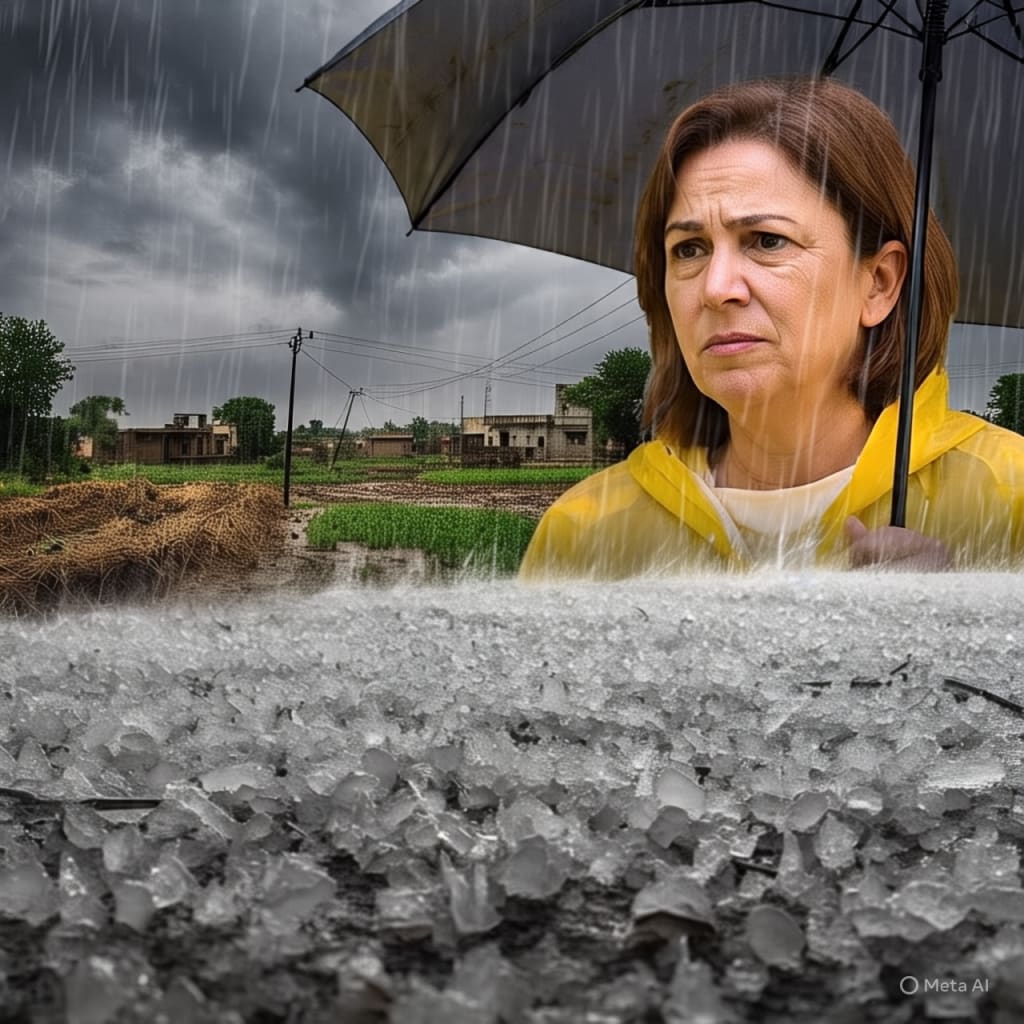
On May 24, 2025, a strong hailstorm and thunderstorm hit Northern Punjab and Islamabad. This sudden and powerful weather event surprised many people. Heavy rain, large hailstones, and strong winds caused damage to homes, crops, and daily life. The storm also created traffic problems and power failures in many areas. This article will explain what happened during the storm, how it affected the region, and why it may be a sign of bigger climate changes.
Storm Details: What Exactly Happened?
The storm began in the late afternoon. Dark clouds quickly covered the skies of Islamabad, Rawalpindi, Chakwal, Attock, and surrounding areas. Within minutes, strong winds started blowing, followed by heavy rainfall and large hailstones. Many people were caught off guard.
In Islamabad, roads were flooded, and traffic came to a halt. Motorists struggled to see due to the intense rain. In Rawalpindi, many trees fell, and electricity poles broke due to strong winds. In rural areas of Chakwal and Attock, hail destroyed wheat fields and damaged fruit orchards.
The Pakistan Meteorological Department (PMD) had issued a warning earlier, but the storm turned out to be stronger than expected. Hailstones as large as 2 to 3 centimeters were reported in some places. This caused damage to rooftops, car windows, and crops. Videos of the storm quickly spread on social media, showing scenes of white hail covering roads like snowfall.
Damage to Property and Agriculture
The hailstorm caused serious damage to property and agriculture. In Islamabad and Rawalpindi, many homes reported broken windows and damaged solar panels. The storm also brought down power lines, causing electricity outages in many parts of the cities. Residents had to wait several hours for power to return.
Farmers in Northern Punjab faced the worst impact. Wheat crops that were ready to be harvested were damaged. Fruit orchards, especially those with mango and guava trees, lost much of their produce. In Attock and Chakwal, where agriculture is a major part of life, the loss will affect the income of many families. Experts say it could take weeks to fully calculate the loss.
Public Reaction: Fear and Concern
People were shocked by the sudden intensity of the storm. Many residents said they had not seen such a strong hailstorm in years. Schools and markets closed early in some areas. Emergency services received hundreds of calls about fallen trees, blocked roads, and minor injuries.
Citizens shared their experiences on social media platforms like Twitter and Facebook. Some videos showed people taking shelter under bus stops and bridges. Many expressed concern about future weather patterns, wondering if such storms are becoming more common.
Experts Warn About Climate Change
Weather experts and scientists are linking such extreme weather events to global climate change. According to PMD officials, rising global temperatures can cause sudden and severe storms. Warmer air can hold more moisture, leading to heavier rainfall and stronger hailstorms.
Climate specialists say Pakistan is one of the countries most at risk from climate change. Northern areas like Punjab and Islamabad may see more irregular and dangerous weather in the coming years. These include unexpected heatwaves, cold spells, and intense storms.
Dr. Noman Ahmed, a weather analyst, stated, "The hailstorm is a reminder that climate patterns are shifting. We need to prepare better for such natural disasters. Early warning systems and public awareness can help reduce the damage."
Government Response and Future Steps
The government has taken notice of the damage caused by the storm. Local authorities in Islamabad and Punjab have started cleaning the roads and restoring power. Relief teams are helping those whose homes or crops were damaged.
The Ministry of Climate Change has also advised farmers to follow weather updates closely and use crop protection methods. Insurance programs for crops are being discussed so that farmers can recover their losses after such events.
Experts are urging the government to invest in better weather prediction tools and build strong emergency systems in cities and rural areas. Early warning and fast response can save lives and reduce damage in future storms.
Conclusion: A Warning We Must Not Ignore
The hailstorm in Northern Punjab and Islamabad is more than just a one-day event. It is a reminder that our weather is changing and becoming more dangerous. While nature cannot be controlled, its impact can be reduced through better planning, awareness, and action.
Citizens, farmers, and government agencies must work together to face the challenges of extreme weather. Protecting our environment, improving weather systems, and preparing for emergencies are now more important than ever. This storm was a wake-up call, and we must not ignore it.
About the Creator
Saad
I’m Saad. I’m a passionate writer who loves exploring trending news topics, sharing insights, and keeping readers updated on what’s happening around the world.
Greenland: New Shipping Routes, Hidden Minerals – and a Frontline Between the US and Russia?
Once seen as a remote and largely isolated Arctic territory, Greenland is rapidly emerging as a focal point of global geopolitics. Climate change, melting ice, and technological advances are transforming the island into a strategic hub defined by new shipping routes, vast mineral resources, and growing rivalry between major powers, particularly the United States and Russia. As the Arctic opens up, Greenland’s geographic position and untapped potential are pushing it to the center of international attention, raising questions about security, sovereignty, and sustainable development. Melting Ice and the Opening of New Shipping Routes One of the most visible impacts of climate change in the Arctic is the reduction of sea ice, which is making previously inaccessible waters navigable for longer periods each year. New Arctic shipping routes, including passages near Greenland, promise shorter travel times between Europe, Asia, and North America. Compared to traditional routes like the Suez Canal, Arctic pathways can reduce shipping distances by thousands of kilometers, cutting fuel costs and emissions. For global trade, this could be transformative. Greenland’s coastal waters are increasingly important as potential transit corridors and support hubs for these routes. However, the expansion of Arctic shipping also raises concerns about environmental risks, maritime safety, and the lack of robust emergency infrastructure in the region. Hidden Mineral Wealth Beneath the Ice Beyond shipping, Greenland holds significant reserves of critical minerals, many of which are essential for modern technologies and the global energy transition. These include rare earth elements, lithium, graphite, uranium, and other strategic resources used in electric vehicles, wind turbines, batteries, and defense systems. As demand for these materials grows, Greenland is being viewed as a potential alternative to existing supply chains dominated by a small number of countries. This has increased interest from Western governments seeking to diversify mineral sourcing and reduce strategic dependencies. However, mining in Greenland is controversial. Local communities and policymakers must balance economic opportunities with environmental protection and cultural preservation. Greenland’s harsh climate and fragile ecosystems make resource extraction both technically challenging and politically sensitive. The United States’ Strategic Interest in Greenland The United States has long considered Greenland strategically vital, largely due to its location between North America and Europe. The US already maintains a military presence at Pituffik Space Base (formerly Thule Air Base), which plays a key role in missile warning systems and space surveillance. In recent years, Washington has renewed its focus on Greenland, emphasizing Arctic security, infrastructure investment, and cooperation with Denmark, which oversees Greenland’s foreign and defense policy. US interest is driven by several factors: protecting transatlantic security routes, countering rival powers in the Arctic, and ensuring access to critical minerals. Greenland is increasingly viewed as a frontline in maintaining Western influence in the High North. Russia’s Arctic Ambitions Russia, meanwhile, sees the Arctic as central to its economic and military strategy. It has invested heavily in Arctic military bases, icebreaker fleets, and energy projects, particularly along its northern coastline. Although Greenland is geographically distant from Russia’s main Arctic territories, Moscow closely monitors developments there. The island’s proximity to key Arctic sea lanes and North Atlantic routes makes it strategically relevant in any broader confrontation between Russia and NATO. As tensions between Russia and the West remain high, Greenland’s location places it near the intersection of competing security interests, increasing its geopolitical significance. Greenland Between Global Powers The growing attention from major powers puts Greenland in a delicate position. While the island seeks greater economic independence and development, it must navigate complex relationships with Denmark, the United States, and other international actors. Greenland’s government has emphasized the importance of maintaining control over its resources and ensuring that development benefits local populations. At the same time, geopolitical competition risks turning Greenland into a strategic chessboard rather than a partner in decision-making. This balancing act is becoming more difficult as Arctic competition intensifies. Environmental and Social Challenges Greenland is on the front lines of climate change. Melting ice sheets contribute to global sea-level rise, while local communities face changes to traditional livelihoods such as fishing and hunting. The expansion of shipping and mining could bring jobs and infrastructure, but it also threatens fragile ecosystems and raises concerns about pollution, habitat disruption, and long-term sustainability. Any future development in Greenland will require careful regulation, international cooperation, and meaningful engagement
By Aarif Lashari4 days ago in Earth


Comments
There are no comments for this story
Be the first to respond and start the conversation.