
Poverty and Global Politics
How Powerful Nations Use Poverty as a Weapon to Control Weaker States

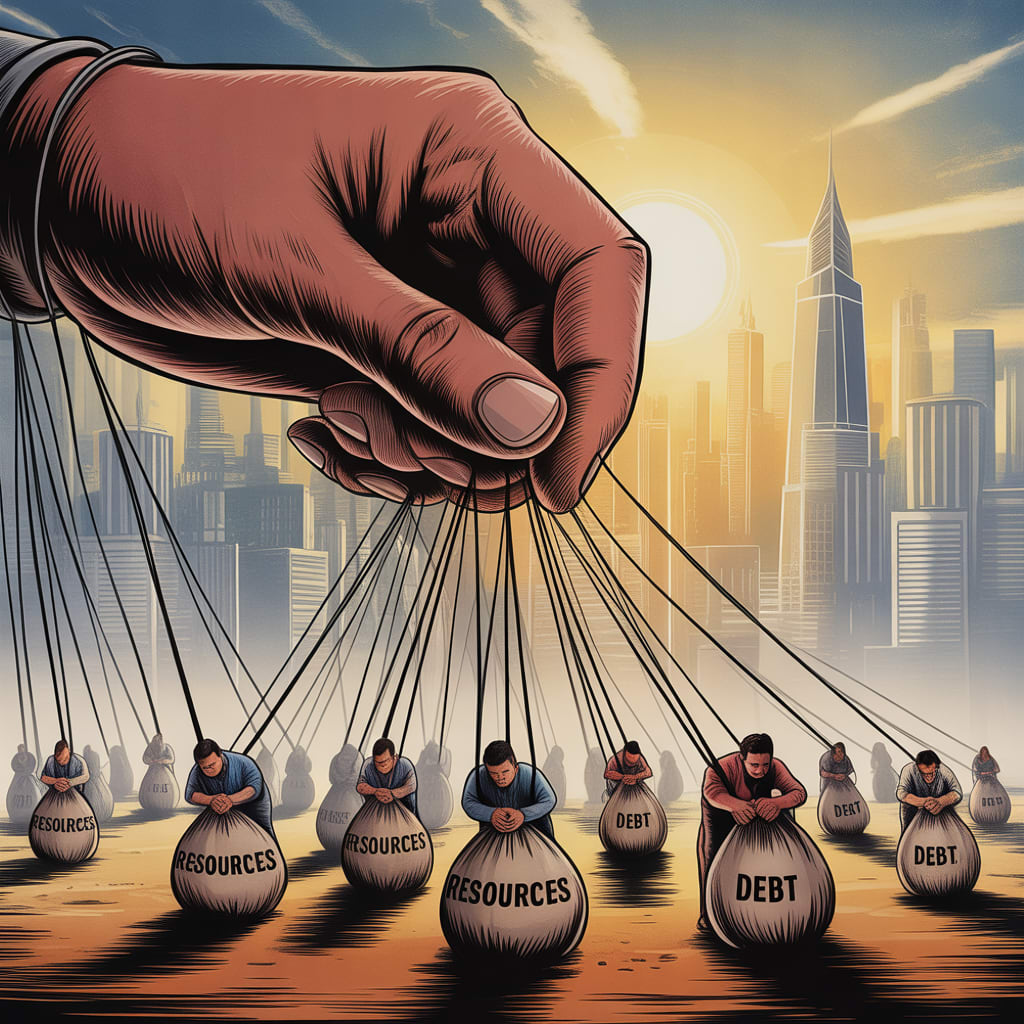
The history of the world has always revolved around power, wealth, and politics, and the larger nations have always influenced the smaller and poorer ones. The truth is that poverty is not merely an economic issue but also a weapon that powerful nations use for their own interests. Most of the world’s poor regions have always been victims of the policies of major powers, and the fruits of their labor often end up in the accounts of the wealthy nations. To keep their economies strong, powerful countries buy resources cheaply from weaker states, exploit the cheap labor of their workers, and then use various tactics to keep them politically under control. This is why many regions of Africa, South Asia, and the Middle East remain trapped in poverty and backwardness. The people of these regions work day and night, but the true results of their earnings are reaped by powerful countries, while the local populations remain in misery.
Even the aid given to poor countries is a political weapon. Such aid is never purely based on sympathy; it always comes with conditions. Donor countries or institutions want poor nations to adopt their preferred policies, accept the dictates of their institutions, or sign agreements they propose. In this way, poor countries lose their independence and sovereignty, and their rulers begin making decisions under foreign pressure rather than for the benefit of their people. This is why the policies of poor states are often shaped in the interests of powerful nations instead of their own citizens.
The link between poverty and global politics is also deeply tied to wars and civil conflicts. When poverty increases in a country, unemployment, hunger, and despair spread as well. Such despair gives rise to extremism and instability, which powerful nations exploit for their own benefit. The examples of Afghanistan, Iraq, and Syria are before us, where poverty and weakness gave major powers the opportunity to intervene for their political and military objectives. Thus, poverty not only traps ordinary people in hardships but also paves the way for external powers.
Education and healthcare are also caught in the grip of global politics. Powerful nations often create trade agreements that prevent poor countries’ industries from developing. They are forced to remain sellers of raw material and cannot advance their scientific and educational capabilities. When a nation lacks quality education and basic healthcare, it remains dependent on others. This is why people in poor countries are still deprived of good treatment and education, and their deprivation strengthens the political dominance of powerful nations.
Looking at international institutions also reveals the dominance of powerful nations. Whether it is the United Nations, the IMF, or the World Bank, most of their policies push poor countries deeper into debt. The loans they provide are presented as tools for development, but they come with such high interest rates and strict conditions that poor nations can never move forward. Through this political system, they are deliberately kept weak and dependent.
The greatest burden of all these conditions falls on ordinary people. Those who spend their days and nights worrying only about earning bread have neither the time nor the strength to question governments or global policies. Their voices are silenced, and their poverty becomes the biggest guarantee for the powerful. When people are deprived of basic needs, they can never hold their leaders accountable, and thus corrupt rulers remain in power for years.
The question now is: how can poor nations escape this trap? The most important step is to improve their internal policies. They must focus on education, healthcare, and local industries so that they do not rely on others. Along with this, poor nations need to establish unity among themselves. If they strengthen trade and relations with one another, their dependence on major powers will decrease. For example, if African nations create strong trade ties among themselves, they can achieve opportunities for progress without being subjected to the conditions of Europe or America.
On the other hand, major powers must also realize that if the world’s poor countries remain perpetually backward and deprived, global peace will never be achieved. Poverty breeds extremism, terrorism, and illegal migration, which threaten the entire world. Therefore, it is essential that powerful nations help poor countries in genuine development rather than burdening them with debt and harsh conditions, so that balance and peace can prevail in the world.
In the end, it can be said that poverty and global politics are interlinked. Poverty is a weapon for powerful nations, and global politics is a chain for poor countries. Until this chain is broken, justice and peace cannot be established in the world. True development can only occur when every nation is able to make its own decisions and every individual has access to the basic necessities of life. Without eliminating poverty, neither balance can be brought to global politics nor can real peace be established in the world.
By Muhammad Yar
About the Creator
Keep reading
More stories from Muhammad yar and writers in Earth and other communities.
Titanic Tragedy
It was the spring of 1912. On the coast of Southampton, England, stood a magnificent ship that left people in awe. This was the very ship the world had declared “unsinkable.” Its name was Titanic. It was a masterpiece of modern technology, luxury, and grandeur. Thousands of workers had spent years building it, and its owners proudly claimed it was the greatest achievement of human engineering. Inside, the cabins looked more like royal palaces. The wealthiest passengers enjoyed golden chandeliers and lavish halls, while the middle-class and poor passengers were delighted to find a cheap yet safe route for their journey. Everyone believed that this ship could never fall victim to the merciless waves of the sea.
By Muhammad yar5 months ago in History
Man (22) Charged With Murder of English Tourist in Temple Bar
Arrest and Formal Charges A 22-year-old man has been charged with the murder of an English tourist following a fatal incident in Dublin’s Temple Bar area. The charge comes after an intensive Garda investigation into events that unfolded in one of Ireland’s busiest and most popular nightlife districts.
By Aarif Lashari7 days ago in Earth




Comments
There are no comments for this story
Be the first to respond and start the conversation.