
Pollution in Asia: Confronting a Crisis in the World’s Most Populous Continent
Tackling Air, Water, and Soil Challenges with Innovation in 2025


Introduction: Asia’s Pollution Battleground
In 2025, Asia, home to 4.8 billion people (60% of the global 8.2 billion), grapples with severe pollution, impacting health, ecosystems, and economies. Contributing 70% of global air pollutants and 50% of ocean plastic, Asia faces a crisis costing $1.8 trillion annually, per a 2024 UNEP report. From Delhi’s smog to the Pacific’s plastic gyres, the continent’s rapid industrialization and urbanization drive pollution, yet innovative solutions offer hope. This post explores Asia’s air, water, and soil pollution challenges, their impacts, and the transformative efforts shaping a cleaner future.
Air Pollution: A Regional Health Crisis
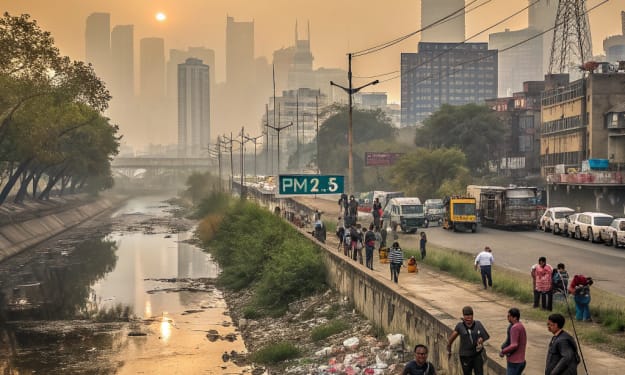
Air pollution is Asia’s deadliest issue, causing 4.5 million premature deaths yearly, per a 2024 WHO report. Cities like Delhi, Beijing, and Jakarta record PM2.5 levels of 80–120 µg/m³, exceeding WHO’s 5 µg/m³ limit. Coal plants in China and India produce 60% of global sulfur dioxide emissions, while vehicle exhausts in Southeast Asia add 30% of nitrogen oxides, per a 2024 IPCC study. Health costs, including 15% higher respiratory disease rates, burden economies by $500 billion annually. Solutions like China’s 450 GW renewable energy capacity and India’s 100 GW solar push reduce emissions, but coal dependency remains a hurdle.
Water Pollution: Rivers and Oceans Under Siege
Water pollution affects 1.2 billion Asians, with 40% lacking clean water access, per a 2024 UN report. Rivers like the Ganges and Yangtze carry 90% of global plastic waste to oceans, with 8 million tons entering annually from Asia. Industrial runoff and untreated sewage contaminate 70% of India’s rivers and 50% of China’s, per a 2024 ADB study. Microplastics threaten 85% of marine species, impacting food security. Initiatives like China’s $20 billion river cleanup and ASEAN’s plastic reduction pact, cutting waste by 10% in 2024, show progress, but enforcement lags in rural areas.
Soil Pollution: Threatening Food Security
Soil pollution degrades 20% of Asia’s arable land, with China’s 15% contaminated by heavy metals like lead, reducing crop yields by 12%, per a 2024 FAO report. India’s pesticide overuse affects 10% of farmland, while 1.5 billion tons of municipal waste annually exacerbate land degradation. Japan’s 90% recycling rate and India’s $5 billion soil restoration programs, using biochar, improve fertility, but Asia’s 300 million tons of plastic waste demand broader action. Soil remediation costs $100 billion yearly, straining developing nations’ budgets.
Urban Challenges and Innovations
Asia’s urbanization, with 2.4 billion city dwellers, intensifies pollution. Noise pollution in cities like Tokyo and Mumbai, exceeding 70 decibels, increases stress-related illnesses by 10%. Light pollution disrupts 80% of urban ecosystems. Solutions include South Korea’s smart grids, cutting energy waste by 10%, and Singapore’s 1 million urban trees, reducing heat islands. China’s $50 billion green finance and India’s $10 billion clean air programs promote electric vehicles (200 million in Asia) and renewables, but rural areas, with 20% lacking waste management, require infrastructure investment.
Challenges: Scale and Enforcement
Asia’s pollution crisis is compounded by its scale, with 60% of global emissions from China and India. Enforcement gaps in Southeast Asia, where 30% of waste is mismanaged, hinder progress. Climate change, threatening 100 million coastal residents, amplifies pollution spread. Cybersecurity for smart city systems, with 1 million attacks in 2024, demands $50 billion in defenses. Asia’s $400 billion green tech investments and policies like China’s 2060 net-zero goal drive change, but coordination across 50 nations remains critical.
Conclusion: A Cleaner Asia Rising
In 2025, Asia’s 4.8 billion people face a pollution crisis costing $1.8 trillion, yet innovation offers hope. From renewable energy to river cleanups, China, India, and Japan lead with $500 billion in sustainability investments. Despite enforcement and scale challenges, Asia’s commitment to green tech and policies signals a cleaner future. This fight is not just environmental—it’s a pledge to health and equity, forging a sustainable path for the world’s most populous continent.
About the Creator
Arjun. S. Gaikwad
Truth Writing unveils reality beyond illusion, power, and propaganda words that awaken conscience and challenge comfort. Fearless, honest, and thought-provoking, it explores politics, humanity, and spirit to inspire awareness and change.
Keep reading
More stories from Arjun. S. Gaikwad and writers in Earth and other communities.
Pollution in 2025: A Global Crisis Demanding Urgent Action
Introduction: The Escalating Pollution Crisis In 2025, pollution remains one of humanity’s greatest challenges, threatening health, ecosystems, and economies across the globe’s 8.2 billion population. With 9 million premature deaths annually attributed to pollution, costing $4.6 trillion in global GDP (6% of total), per a 2024 Lancet study, the crisis spans air, water, soil, and noise pollution. From smog-choked cities to plastic-laden oceans, the impact is profound, yet innovative solutions offer hope. This post explores the state of global pollution, its causes, consequences, and transformative efforts to forge a cleaner, sustainable future.
By Arjun. S. Gaikwad6 months ago in Earth
Ghana Wheat Market Size & Forecast 2025–2033
Introduction Ghana’s wheat market is steadily emerging as an essential segment of the country’s food economy. Driven by rapid urbanization, changing dietary habits, and the expansion of bakeries, fast-food outlets, and packaged food manufacturing, wheat has become a key ingredient in everyday Ghanaian diets. According to Renub Research, the Ghana wheat market was valued at US$ 46.20 million in 2024 and is projected to reach US$ 79.89 million by 2033, growing at a compound annual growth rate (CAGR) of 6.27% during 2025–2033.
By Marthan Sir5 days ago in Earth
Met Office Issues Yellow Fog Warnings After Parts of UK Battered by Rain
After days of relentless rainfall sweeping across large parts of the United Kingdom, the Met Office has issued yellow fog warnings, cautioning residents and travelers to prepare for reduced visibility and hazardous conditions. The sudden shift from heavy rain to dense fog highlights the volatile nature of the UK’s winter weather and underscores the challenges it poses to transport, public safety, and daily life. From Heavy Rain to Thick Fog The recent spell of intense rain saturated the ground across England, Wales, and parts of Scotland, leaving rivers swollen and fields waterlogged. As calmer weather followed the downpours, a combination of high moisture levels, falling temperatures, and light winds created ideal conditions for fog formation. According to meteorologists, this type of fog—often called radiation fog—develops when moisture near the ground condenses overnight, forming thick, low-lying clouds that can linger well into the morning. The Met Office’s yellow warning signals that fog could significantly reduce visibility, in some areas dropping below 100 meters. While not the most severe level of weather alert, yellow warnings are designed to prompt awareness and caution, particularly for motorists, cyclists, and pedestrians who may be caught off guard during early morning commutes. Travel Disruptions and Safety Concerns Fog is one of the most dangerous weather conditions for road travel, as it can dramatically shorten reaction times and obscure hazards. Authorities have urged drivers to slow down, use fog lights appropriately, and maintain greater distances between vehicles. Motorways and rural roads alike are vulnerable, with sudden patches of thick fog appearing without much warning. Rail services may also experience delays, as drivers are required to reduce speeds when visibility drops. At airports, fog can disrupt flight schedules, causing delays or cancellations, particularly during peak morning hours. Aviation authorities closely monitor visibility thresholds, and even a short-lived fog bank can ripple through tightly scheduled operations. Emergency services have emphasized that pedestrians and cyclists should wear reflective clothing where possible, especially during early mornings and evenings. With darker winter days already limiting visibility, fog compounds the risks for vulnerable road users. Why Fog Follows Heavy Rain Meteorologists explain that fog warnings often follow periods of heavy rainfall. When rain saturates the ground, it leaves behind large amounts of surface moisture. If skies then clear and winds ease, the ground cools rapidly overnight, allowing moisture to condense into fog. This pattern is becoming increasingly familiar in the UK, where weather systems are growing more erratic. Climate scientists note that a warming atmosphere holds more moisture, increasing the likelihood of intense rainfall events followed by fog, frost, or sudden temperature drops. Regional Impact Across the UK The yellow fog warnings are not uniform across the country. Low-lying areas, river valleys, and rural regions are particularly susceptible. Parts of southern England, the Midlands, and eastern regions are among those most at risk, though localized fog could appear almost anywhere conditions align. In Scotland and northern England, lingering wet ground combined with colder overnight temperatures raises the possibility of fog forming alongside icy patches. This mix of hazards further complicates travel and increases the risk of accidents. What a Yellow Warning Really Means A yellow weather warning does not mean severe disruption is guaranteed, but it does indicate a heightened likelihood of impacts. The Met Office uses yellow alerts to encourage the public to stay informed and take sensible precautions. For fog, that means checking travel updates, allowing extra journey time, and staying alert to rapidly changing conditions. Weather experts stress that fog can be highly variable. One area may experience clear skies while another, just a few miles away, is blanketed in thick mist. This unpredictability is what makes fog particularly dangerous. Looking Ahead: More Changeable Weather Forecasts suggest that unsettled weather will continue in the coming days, with further spells of rain interspersed with calmer, colder nights—conditions that could lead to additional fog warnings. While no prolonged severe weather is currently expected, the pattern reflects the broader trend of increasingly changeable winters in the UK. For many residents, this serves as another reminder that winter weather is no longer defined by just cold or snow. Instead, a mix of heavy rain, flooding risks, fog, and sudden temperature shifts is becoming the new normal. Staying Prepared The Met Office advises the public to regularly check forecasts, especially before traveling, and to remain flexible with plans during periods of weather warnings. Simple measures—such as cleaning car windows, ensuring lights are functioning, and staying updated via official channels—can significantly reduce risk. As the UK continues to navigate this wet and fog-prone winter, awareness and preparation remain the best defenses. While the fog may lift by midday in many areas, its early impact serves as a timely reminder that even seemingly mild weather hazards can have serious consequences.
By Fiaz Ahmed 3 days ago in Earth
Wild Card Weekend Recap: What Happens Now?
I think I figured out why I love Wild Card Weekend so much. It's because it's the first playoff anything of the calendar year. The NFL season starts in the fall, and once upon a time, the champion was crowned either on or slightly before New Year's. The evolution of the NFL schedule has resulted in the playoffs starting just into the New Year, and currently, the final week of the season falls on the first weekend of the New Year, with Wild Card Weekend coming a week after that. So yes, chronologically, the NFL's Wild Card Weekend serves as the first playoff anything of the calendar year.
By Clyde E. Dawkins6 days ago in Unbalanced



Comments
There are no comments for this story
Be the first to respond and start the conversation.