
plants you should not keep at home
plants you ought not to have indoors


Bonsai

Bonsai trees, while admired for their small stature and intricate designs, are frequently associated with stunted growth and slow progress, especially professional development.
Here are some details about Bonsai ki that means "tray planting."
- Bonsai plants are grown in small containers and are trained to remain small.
- These plants are often confused with dwarf plants, but dwarf plants are permanently genetically miniaturized versions of the original plant species, whereas bonsai plants are regular plants trained to be small.
- Bonsai plants are shaped and trained to meet the aesthetic standards of the artform, which emphasizes the tree itself, rather than the scenery.
- Bonsai plants can be created from nearly any perennial, woody-stemmed tree or shrub species.
- Popular species for bonsai plants include trees with small leaves or needles, as they fit better in the compact scope of the bonsai aesthetic.
Cotton

Cotton plants and their buds are deemed hazardous due to their potential to cause cuts and abrasions, making it advisable to refrain from keeping them indoors.
Here are some details about cotton plants ¹:
- Family: Cotton is a member of the mallow family, Malvaceae.
- Appearance: Cotton is a soft and fluffy fiber that grows in a protective case, known as a boll, around the seeds of the plant.
- Composition: The fiber is nearly pure cellulose and may also contain waxes, fats, pectins and water.
- Origin: The plant is a shrub native to tropical and subtropical regions around the world, including the Americas, Africa, Egypt and India.
- Types: There are four commercially grown species of cotton: upland cotton, extra-long staple cotton, tree cotton and Levant cotton.
- Uses: The fiber is spun into yarn or thread and used to make a soft, breathable and durable textile.
Cactus
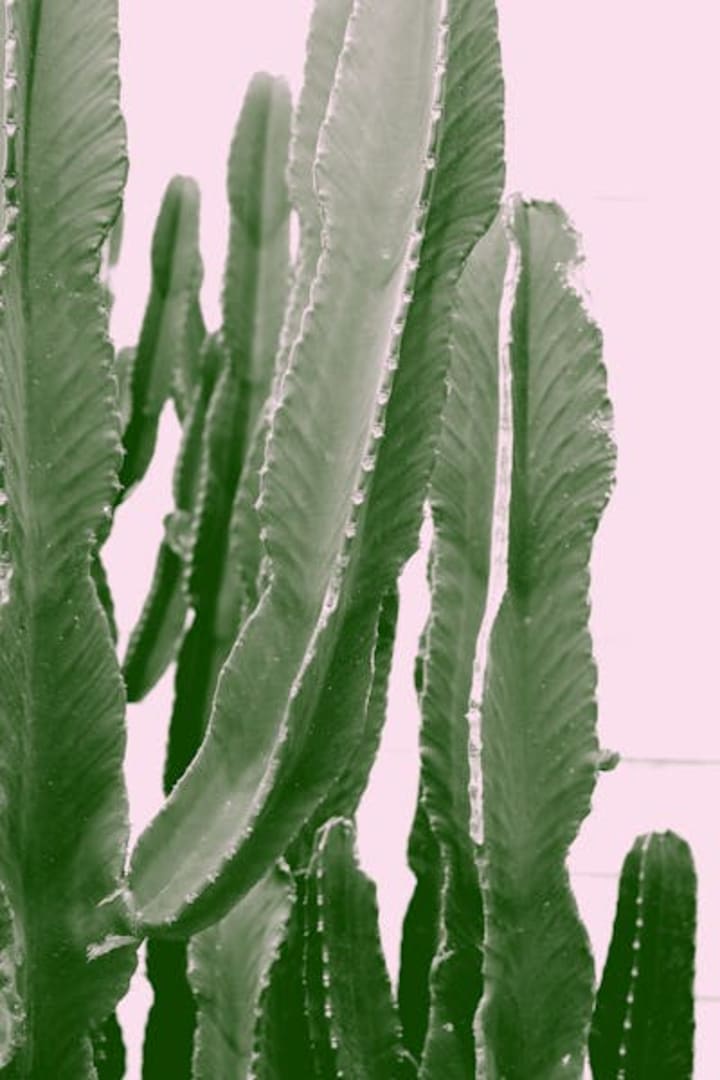
Despite their popularity as indoor decorations, cacti can be prickly and cause injury. particularly in households with children or pets.
Here are some interesting details about cactus plants:
1. Family: Cactaceae
2. Origin: Americas, from British Columbia to southern South America
3. Species: Over 1,500 species
4. Stem: Thick, fleshy, and water-storing
5. Leaves: Usually absent or modified into spines
6. Spines: Sharp, protective, and can be colorful
7. Flowers: Showy, funnel-shaped, and often fragrant
8. Fruits: Berries or capsules containing seeds
9. Size: From small and globular to tall and columnar (up to 66 feet)
10. Adaptations: Specialized roots, stems, and leaves for water conservation and protection from predators
11. Habitat: Deserts, dry forests, and rocky areas
12. Uses: Ornamental, medicinal, food source (e.g., prickly pear fruits), and natural fences
13. Care: Infrequent watering, well-draining soil, and full sun to partial shade
14. Symbolism: Endurance, resilience, and protection
Some popular types of cacti include:
- Saguaro (Carnegiea gigantea)
- Prickly Pear (Opuntia spp.)
- Christmas Cactus (Schlumbergera bridgesii)
- Pincushion Cactus (Mammillaria spp.)
- Snake Cactus (Cleistocactus spp.)
Remember to handle cacti carefully, as their spines can be sharp and cause injury!
Tamarind

Tamarind trees, known for their expansive growth, may not be suited for indoor environments. as their foliage tends to attract pests and demands regular upkeep.
Here are some details about the tamarind plant ¹:
- Scientific name: Tamarindus Indica
- Family: Fabaceae (leguminous)
- Appearance: A medium-growth tree with a maximum crown height of 25 meters, an irregular, vase-shaped outline of dense foliage and bright green, elliptic-ovular leaves
- Origin: Tropical Africa, but has been naturalized in Asia
- Description: A long-living evergreen tree that grows well in full sun and prefers clay, loam, sandy, and acidic soil types
- Fruit: Brown, pod-like, indehiscent legume containing a sweet, tangy pulp, seeds and a hard, brown shell
- Size: Height of 25 meters (80 feet) and fruit that is 12 to 15 cm (4+1⁄2 to 6 in) in length
- Wood: Hard, dark red heartwood and softer, yellowish sapwood
- Flowers: Red and yellow elongated flowers that are 2.5 cm (1 in) wide and have five petals
- Uses: Metal polish, woodworking, traditional medicine, and food and beverages
Weeping Fig

Weeping Figs, though common indoor fixtures, require diligent maintenance due to their waxy leaves, which readily accumulate dust and dirt.
Here are some details about Weeping Fig plants ¹ ²:
- Scientific name: Ficus benjamina
- Family: Moraceae
- Appearance: A tree with gracefully drooping branches, oval glossy leaves and light gray and smooth bark
- Origin: Native to Asia and Australia
- Description: Reaching 30 meters tall in natural conditions, with leaves 6–13 cm in length, and oval with an acuminate tip
- Uses: Often cultivated for urban situations, and a popular houseplant due to its elegant growth and tolerance of poor growing conditions
- Cultivation: Needs bright and sunny conditions, moderate watering in summer, and protection from strong drafts and cold
- Fruit: Orange-red collective fruit that is edible, but the plant is not usually grown for its fruit
- Leaves: Sensitive to small changes in light, and will drop many leaves and replace them with new leaves adapted to the new light intensity
- Allergy: A major source of indoor allergens, ranking third after dust and pets, and can cause symptoms such as rhinoconjunctivitis and allergic asthma
Rubber Plant
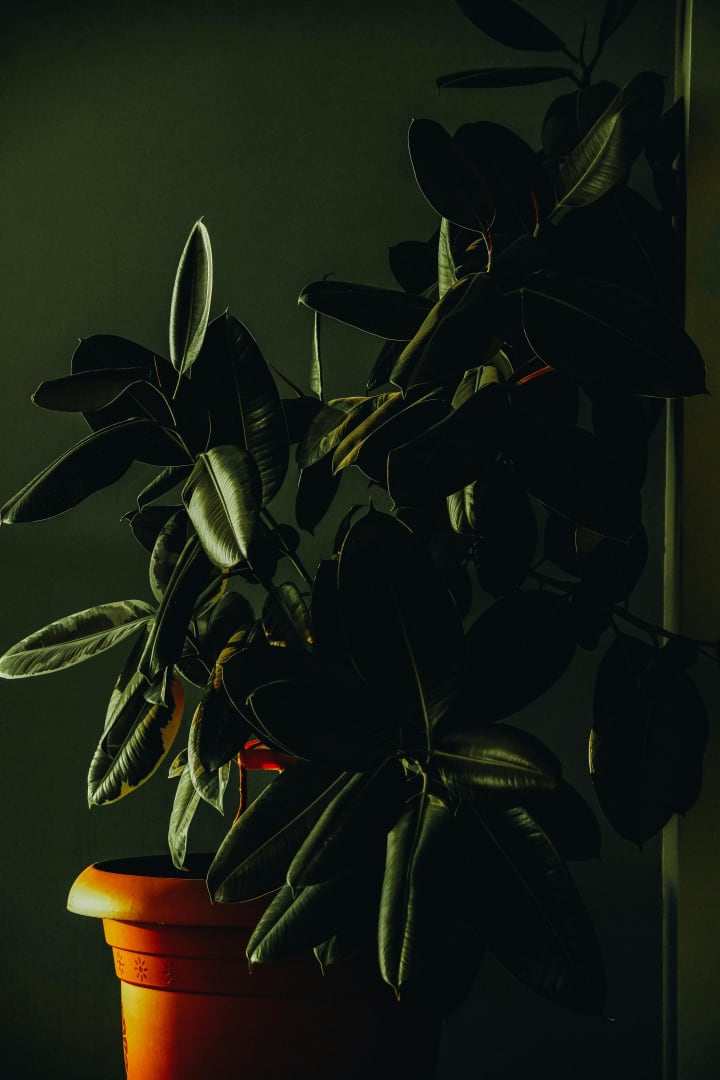
While prized for their shiny foliage and air-purifying qualities, rubber plants can be toxic to pets if consumed, so pet owners are advised to exercise caution.
Here are some details about the Rubber Plant (Ficus elastica) ¹ ² ³:
Features:
- Large tree of the family Moraceae
- Can grow up to 30–40 m (100–130 ft) tall
- Has a stout trunk up to 2 m (6 ft 7 in) in diameter
- Broad shiny oval leaves 10–35 cm (4–14 in) long and 5–15 cm (2–6 in) broad
- Leaves are largest on young plants
- Aerial and buttressing roots to anchor it in the soil and help support heavy branches
- The trunk and stems exude a milky sap, or latex
Origin:
- Native to eastern parts of South and Southeast Asia
- Has become naturalized in Sri Lanka, the West Indies, and the US state of Florida
Cultivation:
- Grown around the world as an ornamental plant
- Prefers bright sunlight but not hot temperatures
- Has a high tolerance for drought, but prefers humidity and thrives in wet, tropical conditions
- Can be grown indoors in colder climates as a houseplant
- Can be propagated by cuttings or by layering
Other Names:
- India rubber tree
- Rubber fig
- Rubber bush
- Rubber tree
- Indian rubber bush
- Indian rubber tree
Dieffenbachia

Dieffenbachia, admired for its vibrant leaves, contains calcium oxalate crystals that can cause skin irritation.
Here are some details about the Dieffenbachia plant ¹ ²:
- Other names: Dumb Cane, Leopard Lily
- Origin: Tropical regions of Central and South America
- Growth Habit: Evergreen perennial that grows upright
- Size: 3 to 6 feet tall (90-180 cm) in an indoor setting
- Foliage: Large, glossy leaves reaching up to a foot in length with variegated patterns
- Hardiness: Hardy in USDA zones 10-12, not frost-tolerant
- Temperature: Requires temperatures between 65°F and 75°F (18-24°C)
- Lighting: Prefers bright, indirect sunlight for optimal growth
- Watering: Keep the soil consistently moist but not waterlogged
- Humidity: Prefers a humid environment, ideally 60% humidity
- Fertilization: Can benefit from a balanced fertilizer once a month
- Propagation: Can be propagated through stem cuttings or air-layering
- Toxicity: Toxic to humans and pets, sap can cause skin irritation and oral and gastrointestinal issues if ingested
About the Creator
mukesh jaiswar
you are tite then you can try your future bright
Keep reading
More stories from mukesh jaiswar and writers in Earth and other communities.
Global Warming Fact or Fiction - You Decide
Global Warming Fact or Fiction Global Warming Fact or Fiction is the question we are going to try and get to the bottom of today. There are many special opinions about this concern and every has simply as many unique views to it similarly complicating the issue. If you are asking your self what is world warming, don't worry we will get to that.
By mukesh jaiswar4 years ago in Earth
Top Australian Writers’ Festival Cancelled After Palestinian Author Barred
One of Australia’s most respected literary festivals has been cancelled following a fierce backlash over the decision to bar a Palestinian author from participating. What began as a programming dispute quickly escalated into a national debate about free speech, cultural inclusion, and political pressure in the arts. The cancellation has sent shockwaves through Australia’s literary community, raising urgent questions about whose voices are allowed on public platforms and at what cost.
By Aarif Lashariabout 12 hours ago in Earth
The Trans Youth Athletes in the US Fighting for Their Rights: ‘Playing Is an Act of Resistance’
Across the United States, sports have become an unexpected front line in the fight over transgender rights. For many trans youth athletes, simply stepping onto a field, track, or court is no longer just about competition—it is an act of resistance. As state legislatures debate and pass laws restricting transgender participation in school sports, young athletes are finding themselves at the center of a national culture war that reaches far beyond the locker room.
By Aarif Lashariabout 12 hours ago in Earth




Comments
There are no comments for this story
Be the first to respond and start the conversation.