
When talking about sustainability and preserving the natural environment, it’s often easier to repeat shocking statistics and sensational buzzwords than it is to wade through the muck of the media conversation and take actual steps towards highlighting objective truth. Much of what we see and hear is the result of differing political opinions, and which side of the fence each outlet sits. I think we can all agree that it is in our best interest to care for our natural environment – right? I don’t see any benefit any of us could reap if we disagreed here. I would also suggest that we are currently not doing the best that we could be. People are already engaging in many proactive steps towards more sustainable practices, but is this enough? A recent study, coming out of Oxford University – the most comprehensive study ever done regarding foodstuffs and the resources they consume – has concluded that cutting animal-based products from our lives is probably the single most effective thing we can do to reduce our environmental footprint (Poore & Nemecek 2018). The study spanned four years, over 100 countries, 40 food products and almost 40 000 farms around the world. It became apparent that from the milks studied, the least sustainable plant-based milk is more sustainable than the most sustainable dairy milk (Poore & Nemecek, 2018). This alone says more about the reality of our unsustainable ways than any news headline has. I should note that the man leading the study was consuming animal products at the beginning of the process and arrived at the conclusion based on the evidence. He now does not consume animal products. The big picture is this – using animals as resources is one of, if not the biggest contributing factor, to air pollution, water pollution, deforestation and greenhouse gas emissions (Poore & Nemecek, 2018). Simply by choosing to avoid animal products, we as individuals can reduce our harmful impacts on the environment more than if we were to use an electric car or stop traveling on planes (Poore & Nemecek, 2018). That is no small thing.
There are hundreds of thousands of people all around the world, concerned over the way big business prioritises profit over sustainable practice and the governments that make it easy for them to do so, and yet most of these people are still contributing to the world’s leading cause of environmental pollution. While I agree, things need to change at a legislation level regarding sustainable use of what our world has to offer, I cannot take someone’s plea for government action seriously, if they themselves are not willing to address the most harmful of their own habits. What that communicates is that not even they take their own plea seriously. And so, they must ask themselves – why should anyone else?
But, perhaps more importantly than the degradation of our environment, the use of animals as products is actually contributing to a destructive relationship with life and each other. The lesson that any life is less valuable than our pleasure or convenience cannot build any constructive ideals or cultures. If any group believes that another is less significant than themselves, the two groups will arrive at some form of conflict. Whether it be physical or ideological, one-sided or reciprocal - it is an eventuality. It is the root of many, if not all prejudices present in today’s world. Whether it be based on species, race, gender or class, it grows from the same idea – the same seed. The idea that difference justifies exploitation is this seed. I suggest that when killing becomes unnecessary it becomes unjustified. Morality needs to be built on more than pleasure, and more than suffering. It needs to serve to protect the vulnerable, and as moral beings we need to uphold this standard and keep ourselves accountable; and I mean really accountable.
Some argue that there is a distinct difference between humans and non-humans, and that this makes our use of non-humans more reconcilable, but this argument is weak, and ill-thought-out. First, let us imagine that this difference did exist. What would this mean? Well, if we are in fact superior to non-humans, we should think carefully and clearly about how we answer this question. This does not mean that we lay claim over all else. Instead, it ought to imply responsibility as stewards of those who are more vulnerable. It should strengthen the argument for our protection and defence of non-humans. If we in fact are more than they, then how cowardly and malicious must we truly be to abuse and consume them. We would be monsters. If this is the path of logic we choose to go down, then we cannot fall back on naturalistic notions of food-chains and might makes right. We cannot both be above non-humans, and beneath our instincts.
On the other hand, if we are no better than non-humans then we need to treat them in alignment with that belief. We need to treat them as though their lives matter just as much as our own. Any other argument I have heard for the justification of how we treat and view non-humans is based in ill-thought-out logic, such as the might makes right argument. The argument goes, that we can do what we like to non-humans simply because we are able to. We are in a position that makes this treatment easy and convenient for us, and so this justifies it. This might appear to evade the issue of whether or not non-human lives are equally valuable as human lives, but if we follow this logic to its natural conclusion, it becomes clear that this thinking is essentially a logical cop-out. In no other area of morality might we consider this to be currently acceptable reasoning. To commit to this logic, we would have no need for prisons, as the stronger, and more violent of our world would also be the most successful, the most difficult to dethrone. Might does not make right, and it doesn’t take much to figure this out.
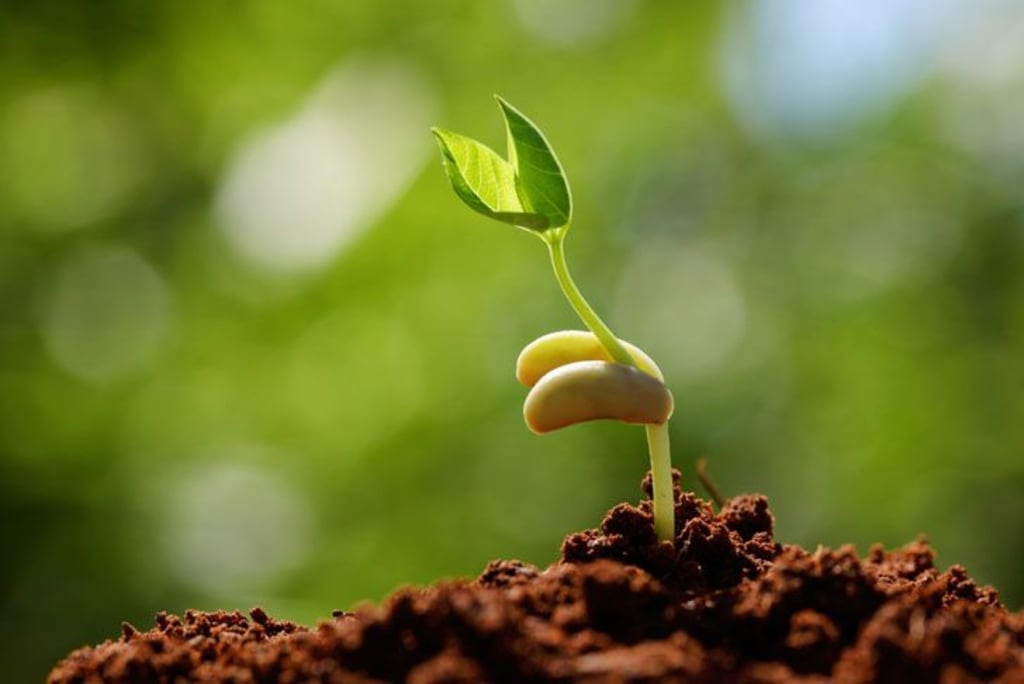
And so, we arrive at our earlier conclusion; we either treat non-humans as though we are no different, or we come to terms with the responsibility that our superiority comes with. We either treat non-humans as significant, living beings because we too are they, or, we step up to the challenge as something more and start acting like we can handle the responsibility. We cannot be both weak and lay claim to unmatched strength or superiority. Either way, we need to address our genocidal consumption of the innocent. It will not sustain our world, or our hearts, and eventually, we will reap what we have sown. So, I say we plant some better seeds.
References
Poore, Joseph, and Thomas Nemecek. 2018. "Reducing Food’s Environmental Impacts Through Producers And Consumers". Science 360 (6392): 987-992. doi:10.1126/science.aaq0216.
About the Creator
Keep reading
More stories from writers in Earth and other communities.
Without Democracy, Donald Trump’s Venezuelan Oil Quest Will Fail
Donald Trump’s renewed interest in Venezuelan oil may seem, on the surface, like a hard-nosed geopolitical calculation. Venezuela holds the world’s largest proven oil reserves, and amid global energy uncertainty, access to those resources is undeniably tempting. But history, economics, and politics all point to the same conclusion: without democratic reform in Venezuela, any attempt by a Trump-led US administration to secure reliable Venezuelan oil will ultimately fail.
By Aarif Lashari2 days ago in Earth



Comments
There are no comments for this story
Be the first to respond and start the conversation.