
Pet goldfish invade North America, and the ecology of the Great Lakes is almost collapsed
Goldfish who don't talk about martial arts


The Great Lakes in North America are the largest group of freshwater lakes in the world, with a total area of 245,200 square kilometers. Because these five lakes are connected to each other, aquatic animals can communicate freely among them.
This brings portability to the expansion of some invasive species, and because the Great Lakes are not in the same country, which makes governance extremely difficult, species invasions in the Great Lakes of North America have always been severe.
Among the worst invaders are Asian carp and zebra mussels, which grow to 50 kilograms in the Great Lakes and cost millions of dollars a year to treat.
And zebra mussels are even more terrifying. These mussels will grow wildly in water intake pipes and block them. Because of this feature, they have forced nuclear power plants to stop several times. Canada (28% of the Great Lakes area is in Canada) only cleans the pipes every year. The zebra mussels will cost around $250 million.
However, there's one more obscure animal that's already troubling the native species of North America's Great Lakes, and that's the goldfish—the kind of pet goldfish we usually keep, isn't it a bit unexpected.
According to a 2018 statistic, there are 40-50 million goldfish in Lake Ontario, the smallest of the Great Lakes, although they do not like to destroy human facilities like zebra mussels, nor do they grow as large as Asian carp (it is believed that In some North American lakes, Asian carp account for about 50% of the total weight of all fish), but the damage to the lake ecology by goldfish cannot be underestimated, because their behavior is so unethical.
Why can goldfish be an invasive species?
About 1,000 years ago, goldfish were first domesticated in southern China. Because of their high appearance and not squeamishness, they were quickly brought to all parts of the world with the advent of globalization. Today, they are the most popular in the world. one of the ornamental fish.
Although most of the time goldfish is mainly golden in appearance, but in fact people have cultivated a very diverse color, and the appearance has also become very diverse.
Because of their diverse appearance, goldfish are hard to think of their wild relatives. In fact, they are domesticated species of the carp family Carp, and their wild relatives are still active in the wild and on the dinner table.
In fact, most of the time we are deceived by the goldfish in the fish tank. Many species of the carp family have strong survivability, and the goldfish is no exception. This is reflected in several aspects:
First, they are highly adaptable to the environment.
Goldfish have very wide water temperature requirements. They can adapt to a water temperature of about 0 °C. As long as the pond is not completely frozen, goldfish can survive the winter. At the same time, they can withstand a water temperature of up to 30 °C.
Although goldfish have relatively high requirements for dissolved oxygen in water compared to other ornamental fish, they are very tolerant and can survive for several months in the presence of almost no oxygen.
In addition to this, they are not very sensitive to turbidity of water, pH changes, so they can adapt to most habitats.
Second, their gregarious living patterns make them very smart.
Goldfish are one of the most studied fishes, and researchers have found that these fish are very intelligent, and they have strong associative learning abilities, as well as social learning abilities.
They can coordinate with their own groups and adjust their behaviors such as feeding, breeding and avoiding predators, so they are very generalist species that can adapt to a variety of different habitats.
In addition, goldfish have a relatively long memory time, which can be maintained for at least 3 months, and can distinguish different shapes, colors and sounds.
In fact, goldfish are one of the few species of fish that can recognize their owner, not only when they get close to the tank, but they also use a variety of methods to ask for food.
Third, goldfish are not very picky eaters, and their reproductive ability is also very good.
In fact, there are many invasive species, and species are brought to different areas almost every day, but few can really cause damage.
One thing in common among those animals that cause ecological damage is that they are not picky eaters, and it is clear that goldfish fit this criteria.
The goldfish menu ranges from fish eggs to worms to insects, as long as their mouths can swallow animals they eat, plus plankton, algae and aquatic plants.
Another feature of destructive invasive species is their strong reproductive ability. Although goldfish do not lay too many eggs at a time—generally larger goldfish lay about 1,000 eggs at a time, but they hatch very quickly, and the ideal water temperature is 48 - The baby goldfish hatched in 72 hours.
On top of that, goldfish have long lifespans, reaching up to 30 years in the wild in North America, where disease and predators are lacking, which greatly increases their reproductive frequency.
Therefore, when someone releases pets into the wild, goldfish floods with the trend.
Goldfish who don't talk about martial arts
We think the reason why goldfish have no invasive ability may be their size. After all, the goldfish in the fish tank are often very small, so what kind of storm can they cause.
But in fact, goldfish can grow very large in the wild. No one knows why goldfish in aquariums are difficult to grow. It may be because of limited food supply, or because they release some kind of growth inhibitor in a cramped environment. Pheromones.
In conclusion, goldfish in the wild are different from those in a fish tank. Goldfish can grow very large in the wild. Now the largest goldfish caught in North America is nearly 10 kilograms, and individuals of 2-4 kilograms are very common.
So, although the infestation of goldfish does not affect humans as much as Asian carp and zebra mussels, and is often overlooked, this seemingly harmless pet is already quite destructive in the wild.
Due to the swarming lifestyle of goldfish, they eat up their food like a locust plague wherever they go, which is a vicious competition for animals in the same ecological niche.
The goldfish we usually see often surface to eat, but in the wild, a large number of goldfish actually look for food at the bottom of the lake. ·
Because they eat everything, the aquatic animals that lay their eggs on the bottom of the lake suffer, and the impact on some frogs, fish, turtles, salamanders is very significant, and the number of new hatches is decreasing every year (because the number of goldfish increases every year).
Goldfish are very "united" fish, they are considered to hardly attack their own kind, but they are very aggressive to the seedlings of other fish in the ecosystem, and these native fishes lack the defense psychology and defense skills for goldfish, can Said to be slaughtered.
In fact, not only do goldfish like to use this method of cutting off their descendants when dealing with protozoa, but also with plants. Another part of their diet is aquatic plants.
In order to eat the bottom worms and the roots of plants, goldfish can dig as deep as 1 meter. Many plants are eaten by their roots, and the lake water is extremely turbid. Some animals and plants that require high water quality are made difficult to survive. .
In addition, due to some defects in the digestive system of goldfish (goldfish have no stomach), they cannot absorb food nutrients well, so they eat a large amount of food every day, in other words, they are very destructive.
In addition, for other native animals and plants, goldfish are also carriers of diseases and parasites. When the number of goldfish reaches a certain density, their ability to spread diseases is very amazing.
Finally: North American coping strategies
Now people have become more and more aware that goldfish cannot be allowed to develop at will, so some targeted fishing is often carried out, and sometimes one catch can reach 500,000 goldfish.
But it is difficult to manage invasive species by fishing, so there are some isolated water bodies, and extreme measures are also used locally - spraying poison, which is very effective for goldfish, but it also kills other fish in the water.
According to a worker who sprayed poison in Canada's Little Lacombe Lake, they had no choice but to have goldfish in the lake, including Asian carp, which had threatened their water security.
However, it is impossible for them to take this extreme approach to the Great Lakes, so the problem of species invasion in the Great Lakes is still unsolved, the ecology is almost collapsed, and the local area can only regularly organize large-scale targeted fishing.
About the Creator
suzanne darlene
Take you to understand scientific knowledge
Keep reading
More stories from suzanne darlene and writers in Earth and other communities.
The navel is not connected to the intestines at all, why does my stomach hurt when I pick it?
Since ancient times, no matter where the culture is, people have a very special aesthetic for the belly button. For example, in ancient China, people liked the sunken belly button, because people at that time felt that the deeper the belly button, the more blessed.
By suzanne darlene3 years ago in Earth
Britain in Talks With NATO to Boost Arctic Security
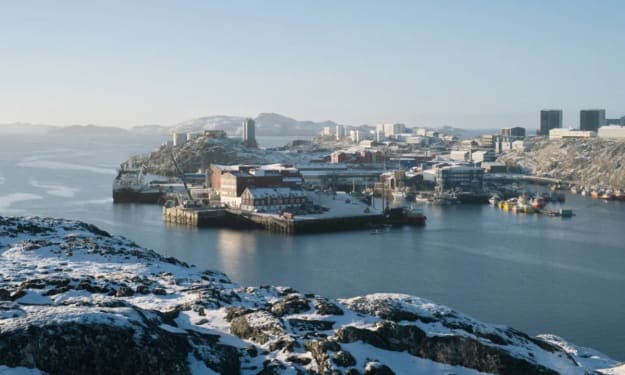
The Arctic Is No Longer a Frozen Backwater For decades, the Arctic sat quietly on the margins of global politics—remote, frozen, and largely ignored. That era is over. Britain is now in talks with NATO to strengthen Arctic security, acknowledging growing risks posed by Russia and China. In a notable shift, London’s assessment aligns closely with warnings long emphasized by Donald Trump, particularly as he continues to express strategic interest in Greenland. What once sounded like an eccentric fixation has evolved into a serious geopolitical conversation. The Arctic is rapidly becoming one of the world’s most contested regions, and Britain is positioning itself to play a larger role. Why Britain Is Paying Attention Now Although the UK is not an Arctic nation, it is an Arctic-adjacent power with significant strategic interests. British officials increasingly view the High North as critical to national and allied security. Melting ice is opening new shipping routes, exposing untapped natural resources, and making military movement easier than ever before. Britain’s talks with NATO focus on intelligence sharing, joint exercises, surveillance capabilities, and protecting undersea infrastructure such as communication cables and energy pipelines. These are not abstract concerns. Any disruption in the Arctic could have immediate consequences for European security and global trade. In short, what happens in the Arctic does not stay in the Arctic. Russia’s Expanding Arctic Footprint Russia is the dominant military power in the Arctic, and it is not slowing down. Moscow has reopened Soviet-era bases, deployed advanced missile systems, expanded its icebreaker fleet, and increased patrols across the region. The Arctic coastline represents a core part of Russia’s nuclear deterrent, making it strategically vital to the Kremlin. From NATO’s perspective, this military buildup creates both risk and uncertainty. Britain, which has long been vocal about Russian aggression—from Ukraine to cyber warfare—sees the Arctic as another front where deterrence must be strengthened before tensions spiral. The concern is not necessarily an immediate conflict, but miscalculation. In a region with harsh conditions and limited communication infrastructure, even minor incidents could escalate rapidly. China’s Quiet but Steady Arctic Ambitions While Russia’s presence is overt, China’s Arctic strategy is more subtle—and equally concerning to Western planners. Beijing calls itself a “near-Arctic state,” a label that has raised eyebrows in Europe and North America. Through investments, research stations, and partnerships, China is laying the groundwork for long-term influence. Britain shares NATO’s concern that China could use civilian projects for dual-use purposes, blending scientific research with intelligence gathering and infrastructure control. As Arctic shipping routes become commercially viable, China’s interest in controlling parts of the supply chain only grows. London’s alignment with these concerns reflects a broader shift in UK foreign policy: China is no longer viewed solely as an economic partner, but as a strategic competitor. Trump, Greenland, and Strategic Reality Donald Trump’s repeated interest in Greenland—most famously his suggestion that the United States should buy it—was widely mocked at the time. Yet behind the headlines was a strategic logic that many Western governments now openly acknowledge. Greenland sits at the heart of the Arctic, hosting vital air and naval routes between North America and Europe. It is also rich in rare earth minerals critical for modern technology and defense systems. As ice recedes, Greenland’s strategic value only increases. Britain’s current position, which aligns with Trump’s warnings about Arctic vulnerabilities, shows how quickly political perceptions can change. What once seemed unconventional now appears prescient. NATO’s Arctic Awakening NATO has traditionally focused on Eastern Europe and the North Atlantic. The Arctic, despite its importance, received less coordinated attention. That is changing. Britain’s talks with NATO reflect a broader alliance effort to integrate Arctic defense into its core strategy. This includes: Increased joint military exercises in cold-weather environments Enhanced monitoring of Russian and Chinese activity Strengthening cooperation with Arctic nations like Norway, Canada, and Denmark Protecting critical undersea and satellite infrastructure For Britain, this is also about credibility. As a leading NATO member and a key military power, the UK wants to demonstrate that it can contribute meaningfully beyond its immediate geography. Climate Change as a Security Multiplier One of the most striking aspects of Arctic security is how closely it is tied to climate change. Melting ice is not just an environmental issue—it is a strategic one. New sea lanes shorten travel between Asia and Europe, while access to oil, gas, and minerals becomes easier. This transformation increases competition and reduces natural barriers that once limited military movement. Britain’s involvement reflects recognition that climate-driven changes are reshaping the security landscape faster than traditional institutions were designed to handle. In this sense, Arctic security is a preview of future global challenges where environmental change and geopolitics collide. Domestic and Diplomatic Balancing Acts Britain’s Arctic engagement is not without challenges. Increased military involvement raises questions about defense spending, priorities, and escalation risks. Diplomatically, London must balance deterrence with dialogue, avoiding actions that could unnecessarily provoke Russia while still protecting allied interests. There is also the question of public awareness. Arctic security lacks the visibility of conflicts like Ukraine, making it harder to sustain political attention. Yet policymakers increasingly argue that prevention is cheaper—and safer—than crisis response. What This Means Going Forward Britain’s talks with NATO mark an important shift in how the Arctic is viewed: not as a distant frontier, but as a central arena in 21st-century security. Agreement with Trump-era assessments on Russia, China, and Greenland underscores how geopolitical realities can outlast political controversies. As competition intensifies, the Arctic will likely become a testing ground for cooperation, deterrence, and strategic foresight. Britain’s involvement signals that mid-sized powers are no longer content to watch from the sidelines. Final Thoughts The Arctic is warming faster than any other region on Earth—and so are the geopolitical tensions surrounding it. Britain’s move to boost Arctic security with NATO reflects a growing consensus that ignoring the High North is no longer an option. Whether driven by Russia’s militarization, China’s quiet expansion, or lessons drawn from Trump’s blunt warnings, one truth stands out: the future of global security may well be shaped at the top of the world, where ice, ambition, and power now intersect.
By Muhammad Hassan8 days ago in Earth



Comments
There are no comments for this story
Be the first to respond and start the conversation.