
Our Fragile Planet: Why Protecting the Natural Environment is Our Best Defense Against Climate Change
Climate change is no longer a distant threat it’s here. Protecting the natural environment is the key to survival, not just for the planets, but for us.
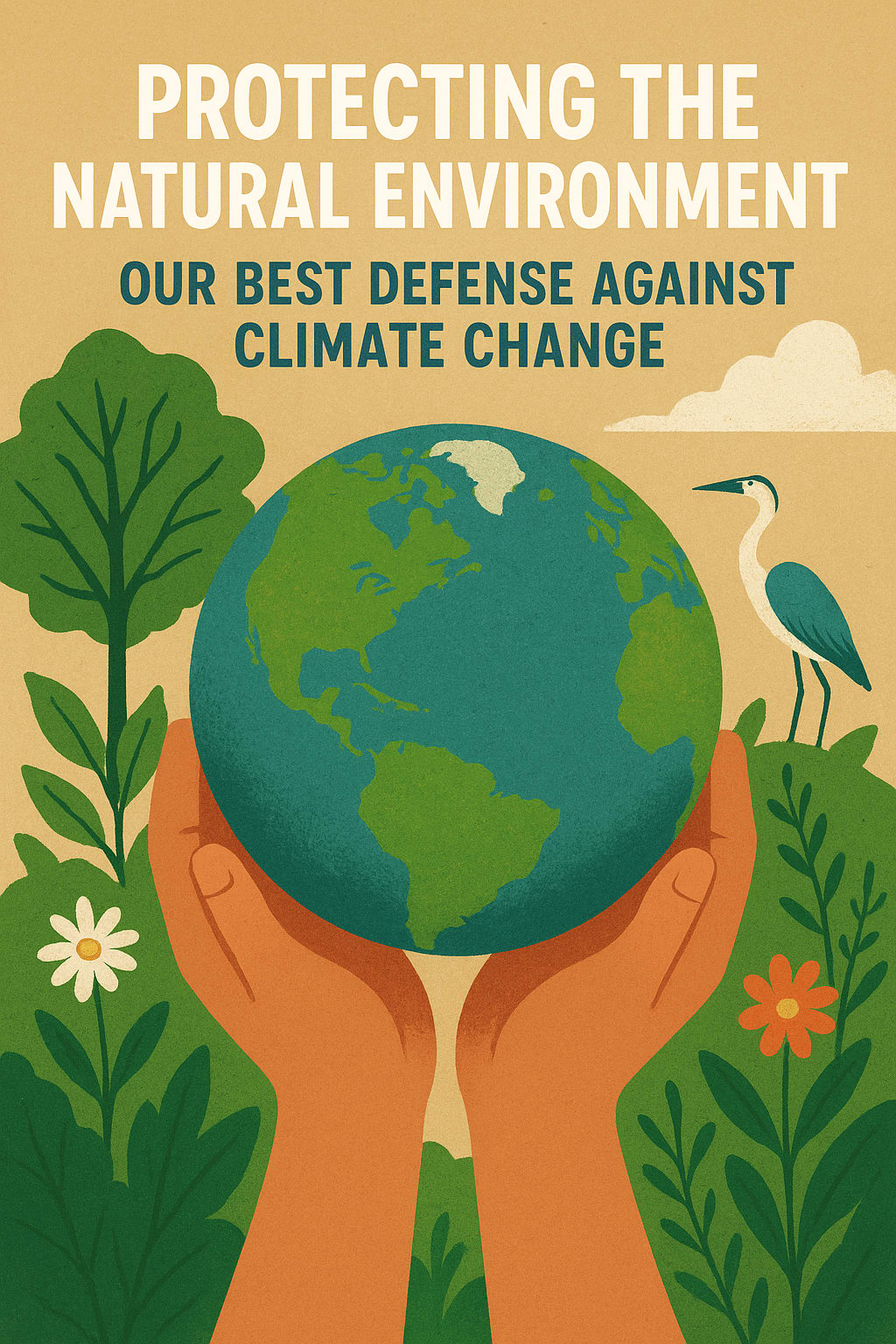
Wildfires, rising sea levels, record breaking heatwaves, climate change is no longer a theory; it’s our reality. Every year, we see its effect more clearly, from devastating floods to extended droughts. And yet, amid all this, one solution stands quietly in front of us: protecting the natural environment.
The forests, oceans, and ecosystems we often overlook are not just beautiful, they’re our greatest defense against a warming planet. If we fail to care for them, we fail to care for ourselves. Without urgent action, these fragile systems will collapse further, leaving humanity with fewer resources, harsher conditions, and shrinking chance at long term survival.
Nature as climate protection
The natural environment plays a critical role in regulating Earth’s climate. Forests act as carbon sinks, absorbing vast amounts of carbon dioxide from the atmosphere. Wetlands store flood waters and filter pollution. Oceans regulate global temperatures, absorbing more than 90% of the excess heat trapped by greenhouses gases.
When we destroy these systems through deforestation, pollution, or over exploitation, we weaken the very shields that protect us from climate change. Protecting nature isn’t just environmentalism, it’s self preservation. Every tree cut, every coral reef destroyed, and every polluted river strips away our natural defenses, leaving communities vulnerable to irreversible climate shocks.
The cost of inaction
The cost of ignoring climate change is staggering. The United Nations warns that global temperatures are on track to rise well above 1.5•C, the threshold scientists say will trigger irreversible damage. That means stronger hurricanes, harsher droughts, and food insecurity for millions of people.
The World bank estimates that by 2050, over 200 million people could be displaced by climate related disasters. These aren’t just environmental issues but they’re humanitarian crises in the making.
Resilience in nature
Despite the damage, nature has shown an incredible ability to bounce back—if we give it the chance. Forests can regrow, coral reefs can begin to recover, and species can adapt when habitats are protected. Every tee planted, every wetland restored, and every coastline conserved is a step toward resilience.
The lesson is clear: the sooner we act, the greater nature’s ability to recover and the better our chances of surviving the climate crisis.
What we can do
Solving climate change feels overwhelming, but real change begins with small actions multiplied by millions of people. Here’s how individuals can make a difference.
1. Reduce carbon footprints. Use energy wisely, walk or cycle when possible, and support renewable initiatives.
2. Protect forests. Support reforestation projects and avoid product linked to deforestation.
3. Eat sustainably. Cutting back on meat and food waste lowers greenhouse gas emissions.
4. Advocate for change. Push for policies that support clean energy, conservation, and emission reductions.
5. Support climate education. Sharing knowledge awareness and drives collective action. Each action may seem small, but collectively, they have the power to shift the future.
A collective responsibility
Climate change doesn’t respect borders. It affects rich and poor, north and south, young and old. Protecting the environment is not the job of scientists, activists, or government alone—it’s a shared responsibility.
If future generations are not to inherit a livable planet, we must act today. That means rethinking how we live, consume, and retreat the natural world.
The natural environment is our ally in the fight against climate change—but only if we give it the chance to survive. Protecting forests, oceans, and ecosystems isn’t charity; it’s a necessity.
We often look for technological fixes to climate change, but the truth is, nature already provides the most powerful tools we need. The question is whether we shall act time to protect them.
- Written by Uwimana Eric (2025).
- This article was drafted with the assistance of AI and edited by the author for clarity and engagement.
Sources: UN Climate Change, World Bank climate migration report, IPCC 2023.
About the Creator
Keep reading
More stories from Uwimana Eric and writers in Earth and other communities.
Artificial intelligence
Ai in African banking Artificial intelligence (AI) is rapidly catalyzing a paradigm shift within the African the African banking sector, moving beyond a futuristic concept to a present-day reality. This technological wave is fostering an ecosystem ripe with enhanced operational efficiency, fortified security measures, and unprecedented levels of financial inclusion. Driven by a dynamic fintech landscape and increasing digital adoption, banks across the continent are strategically deploying AI, unlocking substantial economic and social dividends.
By Uwimana Eric6 months ago in Futurism
Greenland's ice loss is being silently accelerated by airborne dust.
The warmer air isn't the only reason why Greenland's ice is melting. By feeding dark algae blooms that absorb sunlight and accelerate ice loss, tiny particles carried by the wind can subtly alter surface conditions.
By Francis Damia day ago in Earth



Comments
There are no comments for this story
Be the first to respond and start the conversation.