


It’s been a stressful day. I’m awaiting a refill on my anxiety medication; this amplifies even the most minor of situations. I’m unemployed despite hours of applying for jobs, and I’m overwhelmed when I think about my finances. I need something to take my mind off things and still my shaking hands.
A box in the corner of my room holds stacks of paper from notebooks I’ve cleaned out, junk mail, or scraps I no longer need. With a coffee can between my legs, I plop myself down on the floor and carefully cut the paper into little squares or strips. This easy, mindless activity paired with Set It Off blaring in the background is able to calm me from my anxious state.
If a stranger were to walk into my room and see this silly coffee can full of paper scraps, they might suggest it go in the garbage, but I have a much better, eco-friendly use for it.
According to a study done by the University of Southern Indiana, approximately one billion trees-worth of paper are thrown away each year just in the United States! How much of this paper is wasted by credit card companies begging for money via mail? How many colleges, businesses, and banks print one-sided, doubling the amount of paper they actually need? And how many people don’t think twice about chucking it in the trash when they’re done with it?
I am lucky enough to have a recycling bin just a block from my house, but for some, the process of recycling is much more extensive. If recycling costs more money and effort than simply feeding a dumpster, why would someone go through the trouble of recycling? I can’t exactly say when it occurred to me to do more than lug boxes of paper to the recycling bin, but I can say that I felt instant guilt every time I tossed a piece of paper without using it to its full potential.
That’s why I recycle my own paper by remaking it into new paper. On April 22nd this year, I saw a little 20-second video on how to make “seed paper,” something you can plant when you’re done using it! This inspired me to try it myself (seeds optional)!
When I fill my coffee can with paper, I grab a blender (I bought one for two dollars at a thrift store specifically for paper, but you can use your everyday blender for this), pour a couple of inches of water in the bottom, sprinkle some paper in there, and blend! There is no perfect paper-water ratio, so I just eyeball it. If it seems too watery, I add more paper. If the motor sounds like the blender is working too hard, I add more water. My philosophy is, I’d rather have wet, soggy pulp than too-dry, crumbly.
I have a cookie sheet lined with either wax paper or parchment paper, ready to go. After dumping the blender’s contents into a strainer (over a receptacle to catch the water, which can be reused!), I plop the strained pulp onto the cookie sheet. My first couple of times, I made the mistake of trying to ring out the pulp because I thought it was too wet, but then the paper turned out too brittle and crumbly to use.
Whenever I’m ready, I press the pulp flat on the cookie sheet and repeat my entire blending-straining-pressing process until the cookie sheet is covered in my almost-paper. A microfiber cloth is necessary for the next part: I press the flat cloth onto my flattened pulp to absorb as much moisture as possible. The nice thing about microfiber is, even when it feels too wet to use, the water can be rung out and used again for the next batch of paper—nothing has to go to waste!
While the pulp is still moist, I use a spatula to score the batch so that later, when I cut it into the shapes I want, it’s a little easier. (It also dries faster this way). The cloth doesn’t get all the moisture out, but if it’s a nice sunny day, I set the cookie sheet outside for hours! An alternative is to set it in front of a fan or two. In a few hours, I’m ready to separate the dry (or mostly dry) paper from the parchment and flip it over to make sure it’s dry on both sides. It is a little tough to cut, but I have to remember to be gentle so I don’t destroy my paper. If I start to get frustrated, I need to walk away. If I accidentally ruin a piece or it’s too crumbly to use, I can just tear it up and blend it all over again!
The end result is actual paper that I can use to write on, paint, turn into a book. Right now, for example, I’m making a poetry book for my sister. Some of my paper did turn out a little crumbly, so I coated one side with ModPodge. When that dried, I began painting, coloring, and writing.
I love making my own paper because it costs me nothing, and it’s something my nieces can help with (under supervision, of course). It’s exciting to get to teach kids about taking care of our planet and show them ways that we personally can reuse and recycle.
Making paper is just one way that I calm my nerves when I’m feeling anxious or overwhelmed. Another thing that puts a pit into my stomach is throwing away single-use plastic that can never be recycled, such as bread bags, plastic packaging, and plastic straws. If these things even make it to the recycling center, they’re thrown away anyway; they’re too thin and flimsy to be reused!
That is until 29-year-old Nzambi Matee from Kenya invented a machine to turn plastic waste into bricks five times stronger than concrete! Since I don’t have a fancy machine, I use a technique called “bottle bricking.” Here’s what that looks like:
Just like my extra paper, any time I come across single-use, flimsy plastic (as long as it’s clean), I cut it into two-inch pieces and pack them into a two-liter plastic bottle. The idea is to pack the bottle as full as possible. It’s good to have a stick or wand of some sort to push and pack things down. Bottle bricking is easier than making paper because there are fewer steps to follow and less mess, but bottle bricking is a little more particular on the rules.
Both making my own paper and creating bottle bricks are ways to save the planet without costing me any money. The small act of cutting up paper or plastic is enough to help me focus my breaths and stop my shaking. Not only that, but it’s something I can do while listening to music, watching TV, or talking on the phone.
Taking care of the beautiful planet on which I live is very close to my heart. Making my own paper and bricks that can be used to help someone in need is rewarding and something that my young relatives can help with. For anyone struggling to find a healthy way to cope with anxiety, I highly recommend shredding, tearing, or cutting paper and single-use plastic in a way that can change our world.
About the Creator
Hannah Pugh
“So many scenarios, characters, and ideas live inside my head. I can’t possibly keep them there. Putting them on paper is my way of giving them life.”
That’s why I write.
Keep reading
More stories from Hannah Pugh and writers in Earth and other communities.
What It Takes to Be a Bear
My Bedtime Anytime Storybook by V. Gilbert Beers is a collection of stories that follows six friends—Bru the bear, KaWally the koala, McWhiskers the mouse, PJ the zebra, Puddles the hippo, and Tux the penguin—who learn lessons about friendship, sharing, forgiveness, and working together. It’s a fun storybook with the occasional subtle nod to God being the Creator of all living things.
By Hannah Pugh5 years ago in Fiction
China’s Ambitious Satellite Plan: 200,000 Satellites and Counting
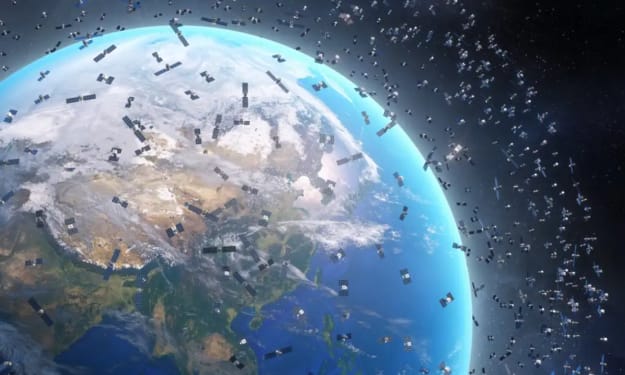
China has submitted an astonishing application to the International Telecommunication Union (ITU) to launch 200,000 satellites over the coming years. To put this into perspective, the entire world currently operates far fewer than this number. Even SpaceX’s Starlink project, one of the largest satellite networks globally, has plans for around 42,000 satellites. China’s proposal signals an unprecedented escalation in space activity and raises important questions: what are these satellites for, and what implications do they hold for global technology, security, and the environment? The Purpose Behind the Numbers At first glance, launching 200,000 satellites may seem excessive, but China’s goals are strategic and multifaceted. Experts suggest that these satellites could serve several purposes: 1. Global Internet Coverage China is aiming to build a massive low-Earth orbit (LEO) satellite network, similar to Starlink and OneWeb. By positioning thousands of satellites closer to Earth, they can provide high-speed internet to remote regions, rural areas, and even ships or aircraft in the oceans. This could help China expand its digital influence globally, offering connectivity in areas where traditional internet infrastructure is weak or non-existent. 2. Enhanced Military and Surveillance Capabilities A satellite network of this scale is also a game-changer for defense and surveillance. Satellites can monitor troop movements, track ships, and provide early warning systems. China’s military has been investing heavily in space-based technology, and these satellites could be a crucial part of modernizing its intelligence, surveillance, and reconnaissance (ISR) capabilities. 3. Scientific Research and Earth Observation Some of these satellites may be dedicated to Earth observation, collecting data on climate, agriculture, natural disasters, and urban development. With thousands of satellites constantly orbiting the planet, China could achieve near real-time monitoring of environmental changes and resource management, giving scientists and policymakers an unprecedented level of insight. 4. Competition in the Commercial Space Sector China’s plan is not purely for government use. The commercial potential of satellite networks is massive, from providing satellite internet services to supporting the burgeoning space economy. Companies under Chinese state and private ownership could leverage this infrastructure to offer services domestically and internationally, challenging Western tech giants in global space markets. The Scale of the Ambition Launching 200,000 satellites is not just ambitious; it’s historic. If approved and executed, China would operate more satellites than all other countries combined, fundamentally reshaping how space is utilized. However, there are serious logistical challenges. Manufacturing, launching, and maintaining hundreds of thousands of satellites requires enormous resources, advanced technology, and careful orbital planning to avoid collisions. China has made major progress in its space launch capacity, with frequent missions through the Long March rocket family and ongoing developments at the Wenchang and Jiuquan Spaceports. Yet, sustaining such a colossal fleet will test even the most advanced space programs. Global Implications The potential consequences of China’s satellite plan are profound, both technologically and geopolitically. 1. Space Traffic Management A network of 200,000 satellites could drastically increase the risk of collisions in orbit. Space debris is already a growing concern, and introducing tens of thousands of new satellites may exacerbate this problem. International cooperation and sophisticated traffic management systems will be essential to prevent catastrophic accidents in space. 2. Geopolitical Tensions China’s space ambitions may intensify global rivalry in space technology, particularly with the United States, Europe, and other spacefaring nations. Control over satellite networks can translate into strategic advantages, from military surveillance to dominance in global communications infrastructure. This may lead to a new phase of space competition reminiscent of the Cold War’s space race. 3. Impact on Astronomy Astronomers have already expressed concern over satellite mega-constellations interfering with observations. Thousands of bright satellites moving across the night sky can distort telescope images and hinder research into deep space phenomena. If China proceeds with 200,000 satellites, the challenge to professional and amateur astronomers will be enormous. 4. Global Connectivity Revolution On the positive side, if managed responsibly, China’s satellite network could revolutionize global connectivity, bringing internet access to millions of people who currently have none. It could accelerate digital development in underserved regions, support education, and foster global commerce in unprecedented ways. Regulatory Hurdles The ITU regulates global satellite usage, including frequency allocation and orbital slots. For China to launch 200,000 satellites, it must secure approval from the ITU, which evaluates whether such an immense network could interfere with other countries’ satellites or violate international agreements. This is not a mere formality—approval for a project of this scale could take years and may require negotiations with multiple nations. Conclusion: A Bold Step Toward the Future China’s application to launch 200,000 satellites is a bold statement about the future of space and global technology. It reflects the country’s ambition to dominate in digital infrastructure, military capability, and commercial space enterprise. While challenges abound—from space debris and regulatory hurdles to geopolitical tensions—the potential benefits are significant, particularly for connectivity and scientific advancement. As the world watches China’s next steps, one thing is clear: the age of satellite mega-constellations is here. How humanity navigates the risks and rewards of this new frontier will shape the future of communication, security, and our presence in space for decades to come.
By Muhammad Hassanabout 8 hours ago in Earth
New Snow and Ice Warning for Friday and Saturday: What You Need to Know
The UK is bracing for another round of disruptive winter weather as meteorologists issue fresh snow and ice warnings for Friday and Saturday. Across England, Scotland, and Wales, residents are being advised to prepare for hazardous conditions, with local authorities urging people to limit travel and stay safe. The latest forecasts indicate a combination of heavy snowfall, freezing temperatures, and icy patches, all of which could affect daily routines, public transport, and emergency services.
By Fiaz Ahmed 6 days ago in Earth
A Dart at Dusk
Seconds ago, the sullen sun set on the two of us… my exuberant furry companion and me. A fresh breeze embraces us, delivering welcome relief from the day’s oppressive heat. His typical stumbling and staggering along — apace with a sloth — has turned into trip-trapping, high-stepping, almost skipping along.
By Angie the Archivist 📚🪶a day ago in Petlife



Comments
There are no comments for this story
Be the first to respond and start the conversation.