
North Korea joined up with RUSSIA
N Korea confirms it sent troops to fight for Russia in Ukraine war
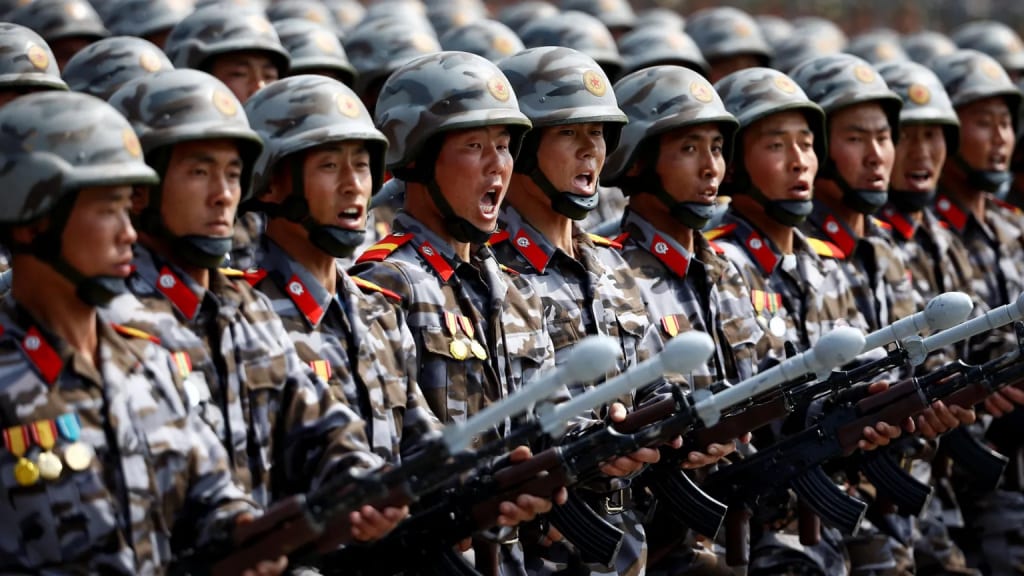
In a startling revelation, North Korea has officially confirmed that it has sent military personnel to support Russian forces in the ongoing Ukraine war. This announcement raises serious geopolitical concerns and marks a significant escalation in Pyongyang's involvement in the conflict. The move underscores the deepening military cooperation between North Korea and Russia, two nations increasingly isolated by Western sanctions.
This article examines the implications of North Korea’s decision, the potential motivations behind it, and how this development could reshape the dynamics of the Ukraine war and broader international relations.
The Confirmation from North Korea and Russia's Response On [insert date], North Korean state media released a statement acknowledging that it had dispatched troops to assist Russia in Ukraine. While the exact number of soldiers remains unclear, reports suggest that North Korean forces are primarily engaged in support roles, including engineering, logistics, and possibly artillery operations.
Russia has not officially commented on the deployment, but Western intelligence sources have long suspected that North Korean soldiers, along with weapons supplies, have been playing a covert role in the conflict. The confirmation from Pyongyang removes any remaining ambiguity and signals a more overt military alliance between the two nations.
Why is North Korea Sending Troops?
Several factors may explain North Korea’s decision to send troops to Ukraine:
Strengthening Ties with Russia
Since the start of the war in Ukraine, North Korea and Russia have become closer, with Pyongyang providing Moscow with artillery shells, missiles, and other weapons. In return, Russia has provided political support at the UN, blocked sanctions against North Korea, and possibly supplied advanced military technology.
Sending troops could be seen as a further gesture of solidarity, reinforcing this strategic partnership.
gaining experience in combat North Korea’s military has not seen large-scale combat since the Korean War (1950-53).
Deploying troops to Ukraine could allow North Korean soldiers to gain real battlefield experience, which could be valuable for future conflicts, particularly against South Korea or the U.S.
Economic and Military Benefits
Reports suggest that North Korea may be receiving financial compensation, energy supplies, or weapons technology in exchange for its support.
This would help Pyongyang mitigate the impact of international sanctions while modernizing its military capabilities.
Undermining U.S. and Western Influence
The United States of America is a common foe for both North Korea and Russia. By aiding Russia, North Korea weakens Western efforts to support Ukraine, aligning with its broader anti-U.S. foreign policy.
How Will This Impact the Ukraine War?
The direct involvement of North Korean troops could have several consequences:
Increased Russian Manpower
While the number of North Korean soldiers is likely limited, their presence could help fill gaps in Russia’s forces, particularly in defensive operations.
Escalation of Western Concerns
This may be viewed as a risky escalation of the conflict by the United States and its allies, which could result in increased sanctions or military assistance for Ukraine. Risk of North Korean Casualties
If North Korean troops suffer significant losses, it could create domestic backlash in Pyongyang, where the regime tightly controls information.
Possibility of North Korean Weapons Testing
Some analysts speculate that North Korea may use the war as an opportunity to test new weapons in real combat conditions.
International Reactions
The confirmation of North Korean troops in Ukraine has drawn strong reactions:
United States & NATO – Condemned the move as a destabilizing act, warning of further sanctions.
South Korea & Japan – Expressed alarm, seeing it as a direct security threat given Pyongyang’s aggressive posture.
China – Remained cautious, neither endorsing nor condemning the deployment, reflecting its balancing act between Russia and the West.
Historical Context: North Korea’s Military Deployments Abroad
This is not the first time North Korea has sent troops to support an ally in a foreign conflict:
Korean War (1950-53) – Fought alongside Chinese forces against U.S.-led UN troops.
Vietnam War (1960s-70s) – Reportedly sent pilots and anti-aircraft units to assist North Vietnam.
Middle East Conflicts – Allegedly provided military advisors to Syria and other Soviet-aligned states during the Cold War.
However, the Ukraine deployment is notable because it marks the first major overseas troop commitment in decades, signaling a more assertive North Korean foreign policy.
Legal and Ethical Concerns
The use of foreign fighters in Ukraine raises legal questions:
Violation of Sanctions – UN resolutions prohibit North Korea from arms exports, yet Pyongyang has openly flouted these restrictions.
Mercenary Allegations – If North Korean troops are operating under Russian command, they could be classified as mercenaries, which may violate international laws.
What Happens Next?
The long-term implications depend on several factors:
Scale of Deployment – If North Korea sends larger numbers, it could significantly bolster Russian forces.
Western Countermeasures – The U.S. may increase pressure on nations facilitating North Korea-Russia military ties, such as China.
Impact on Korean Peninsula Tensions – South Korea may respond by strengthening its military posture, raising the risk of clashes.
Conclusion
North Korea’s admission that it has sent troops to fight for Russia in Ukraine marks a dangerous new phase in the war. This move not only deepens the Moscow-Pyongyang alliance but also introduces new risks for global security. As Western nations assess their response, the conflict in Ukraine continues to evolve into a broader proxy war, with implications far beyond Europe.
The world will be watching closely to see whether this partnership escalates further—and how it might reshape the balance of power in an increasingly fractured international order.
About the Creator
Keep reading
More stories from Abdullah Al Sadik and writers in Earth and other communities.
Clash between ISRAEL and Beirut
Regional Tension Escalation Introduction On [insert date], Israel conducted a targeted air strike in Beirut, Lebanon, marking a significant escalation in regional tensions. The attack reportedly hit a high-profile target linked to Hezbollah, a Iran-backed militant group that has been engaged in cross-border clashes with Israel since the outbreak of the Israel-Hamas war in October 2023. Israel defends its actions as necessary for national security, despite condemnation from Lebanon and other Arab nations for the strike, which has raised fears of a larger regional conflict. This article examines the details of the attack, the regional implications, the reactions from key stakeholders, and the potential for further escalation. Details of the Air Strike According to Lebanese security sources and Israeli military statements, the strike targeted a building in a southern suburb of Beirut, a known stronghold of Hezbollah. At least [X] people are said to have been killed in the attack, including a senior Hezbollah commander who was planning attacks on Israel. Target: The strike focused on a high-ranking Hezbollah official, similar to previous Israeli operations aimed at disrupting the group’s military capabilities. Method: Precision-guided missiles were reportedly used to minimize collateral damage, though civilian areas were still affected. Hezbollah’s Response: The group vowed retaliation, warning of "severe consequences" for Israel’s aggression. This attack follows months of escalating exchanges between Israel and Hezbollah along the Lebanon-Israel border, where near-daily rocket and drone attacks have displaced tens of thousands on both sides. Regional and International Reactions The Lebanese government The Lebanese government condemned the strike as a "blatant violation of sovereignty" and called for an emergency United Nations Security Council meeting. Prime Minister [Name] warned that such actions risk dragging Lebanon into a full-scale war. Hezbollah’s Stance Hezbollah leader Hassan Nasrallah has previously warned that any assassination of its leaders on Lebanese soil would trigger a massive response. The group has a vast arsenal of rockets and drones, posing a direct threat to Israeli cities. Israel’s Justification An "imminent threat" posed by Hezbollah's military activities, according to Israeli officials, prompted the operation. Israel would "not allow terrorist groups to operate freely along its borders," according to Defense Minister Yoav Gallant. International Responses United States: The Biden administration expressed concern over the escalation but reiterated support for Israel’s right to self-defense. Iran: Hezbollah’s main backer condemned the attack and warned of repercussions. United Nations: The UN called for restraint from all parties to avoid further destabilization. The Conflict Between Israel and Hezbollah The latest strike is part of a long-standing conflict between Israel and Hezbollah, which includes: 2006 Lebanon War: A 34-day war triggered by Hezbollah’s kidnapping of Israeli soldiers, resulting in heavy casualties on both sides. Ongoing Skirmishes: Since October 2023, Hezbollah has launched attacks in solidarity with Hamas, prompting Israeli counterstrikes. Assassinations: Israel has a history of targeting Hezbollah leaders, including the 2008 killing of Imad Mughniyeh and the 2020 death of a Hezbollah operative in Damascus. Risk of Wider War The Beirut strike increases the likelihood of a full-scale Israel-Hezbollah war, which could draw in Iran and other regional actors. Key risks include: Hezbollah’s Rocket Arsenal: The group possesses an estimated 150,000 rockets capable of hitting deep into Israel. Iran’s Involvement: Tehran may escalate support, including weapons transfers or direct intervention. Impact on the Gaza War: An additional front in Lebanon may put Israeli military resources under strain. Civilian Displacement: Further clashes could force more Lebanese and Israelis to flee border areas. Conclusion Israel’s air strike on Beirut marks a dangerous escalation in an already volatile region. Hezbollah and Lebanon view the attack as an act of aggression that calls for retaliation, while Israel portrays it as a necessary defensive move. The international community faces urgent calls to mediate and prevent a wider war that could destabilize the Middle East further. As tensions remain high, the coming days will be critical in determining whether diplomacy can prevail or if the region is headed toward another devastating conflict.
By Abdullah Al Sadik9 months ago in Journal
Malfunction Forces Japan to Take Restarted Nuclear Plant Offline: What It Means for Energy Security and the Future of Nuclear Power
Japan's efforts to revive its nuclear energy sector suffered a significant setback recently when a malfunction forced a restarted nuclear plant offline, highlighting the challenges the country faces as it works to balance energy security, environmental goals, and safety standards. This development has raised questions about the reliability of nuclear power in the post-Fukushima era and the nation’s ambitious plans to reduce its dependence on fossil fuels.
By Muhammad Hassan7 days ago in Earth
Tragic Chapter on the Trains Sends Rail Superpower Spain Into Crisis
Spain, long celebrated as a railway superpower thanks to its high-speed AVE network and extensive commuter services, is now grappling with a rail crisis following a series of tragic incidents. Recent events have triggered public outrage, investigations, and calls for urgent reforms, highlighting vulnerabilities in what was once considered one of Europe’s safest and most efficient rail systems.
By Aarif Lashari5 days ago in Earth


Comments
There are no comments for this story
Be the first to respond and start the conversation.