

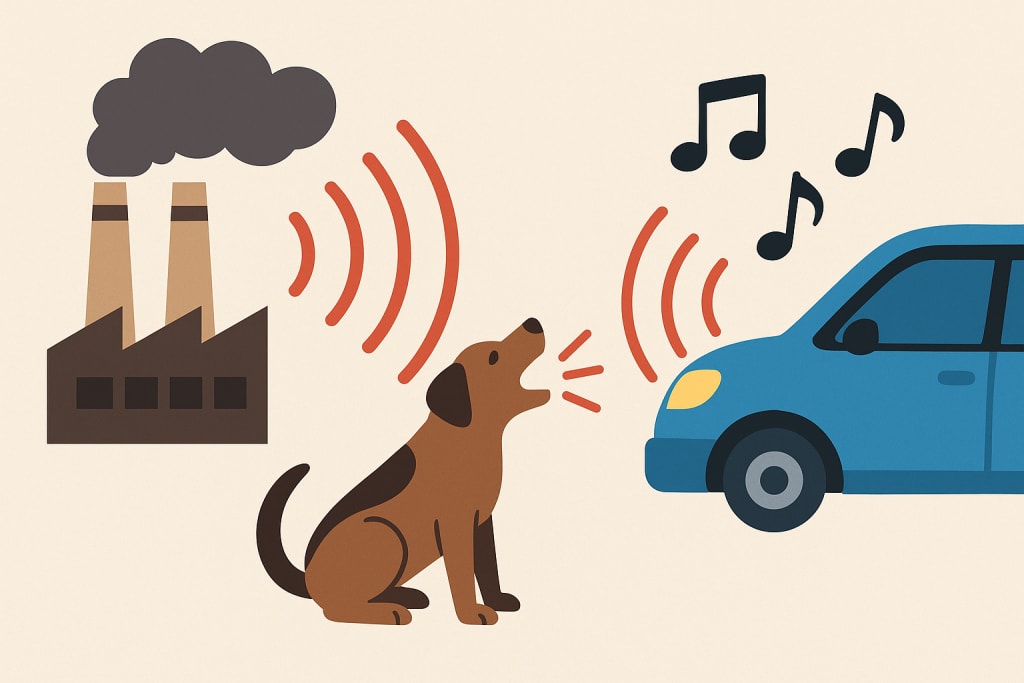
The habit of hearing noise in urban areas has now become a daily ordeal, almost inescapable for many people. In cities, the sounds of traffic, construction, loudspeakers, and human activity blend into a constant background hum that never truly disappears. Noise pollution is increasingly felt, especially by those living near busy roads, train station, or industrial zones. In small island as well as big country, the nuisance of noise sometimes surpasses air pollution and wastewater pollution, since unlike those forms of contamination, it is more immediate and directly affects our senses. Unlike smoke or waste, which may be avoided or treated, noise penetrates our environment and our bodies in ways that are often underestimated.
According to Professor Hamou Ahmed, noise pollution is defined as “the introduction into the environment of excessive, repeated, or prolonged noise that disrupts the balance of human, animal, or plant life and harms health and well-being.” Similarly, the World Health Organization (WHO) highlights that “noise is an underestimated threat that can cause serious effects on human health. Noise pollution is defined as exposure to harmful levels of sound that may lead to physiological, psychological, and social disorders.” These definitions remind us that noise should not be dismissed as a simple inconvenience but recognized as a genuine environmental hazard, on par with other more visible forms of pollution.
The consequences of noise pollution are numerous and wide-ranging. On human health, the effects extend far beyond temporary irritation. For example, constant exposure to high levels of noise can cause hearing loss, one of the most direct and irreversible impacts. In addition, it disrupts sleep patterns, leading to insomnia, fatigue, and reduced concentration during the day. Over time, chronic exposure to noise may trigger stress, anxiety, and even depression, since the body remains in a state of tension without adequate rest. Studies have also shown links between noise and cardiovascular diseases, such as hypertension and heart attacks. Noise, therefore, is not simply a matter of comfort; it directly undermines the quality and expectancy of life.
Animals are also deeply affected. Land animals, such as birds, often change their communication patterns or even migrate from areas where human noise is dominant, leading to disruptions in ecosystems. Marine life suffers from shipping traffic and sonar systems that interfere with whales’ and dolphins’ ability to navigate and communicate. In this way, noise pollution not only harms humans but also destabilizes the natural world.
Several measures have already been implemented to raise awareness among the public as well as industrial operators. Industries that use pumps, compressors, or heavy machinery are under increasing pressure to apply soundproofing technologies and respect environmental standards. Yet industrial noise remains a constant nuisance, especially in densely populated areas. Public and private events, such as concerts, parties, or religious gatherings, also contribute significantly to noise levels, which vary by day and location. Even repetitive sounds from animals—like barking dogs or roosters crowing at dawn—add to the disturbance. Most persistent, however, is traffic noise: the roaring of motorcycles without mufflers, honking horns, or speeding cars. In many regions, these actions are considered criminal offenses that may result in fines, though enforcement is often inconsistent.
Reducing noise pollution requires a collective effort. Governments can strengthen regulations, improve urban planning, and encourage the use of quieter technology. Communities can support awareness campaigns, mediation programs, and neighborhood initiatives to reduce unnecessary noise. On a personal level, individuals can contribute by avoiding excessive use of horns, respecting quiet hours, and being mindful of the impact of their activities on others. Simple measures, when adopted collectively, can make a significant difference.
In conclusion, noise pollution can be either short-term or long-lasting, but in both cases, it remains harmful and far-reaching. It is a threat that affects not only comfort but also physical and mental health, as well as the balance of ecosystems. As human beings, we must ask ourselves: should we wait until the damage is irreversible, or should we adopt effective prevention methods now to reduce and perhaps one day eliminate this form of pollution? The answer should be clear. Let us take the time to reflect, act responsibly, and protect our environment from this invisible yet powerful threat before its consequences become permanent.
About the Creator
😊Digital Islander ❤️🏝️🏔️
Hola!! Digital Islander is here to provide digital content in various topic like personal lifestyle, socio-political, environmental and any other topics. Blend research and narrative to engage readers and promote informed, mindful living.
Keep reading
More stories from writers in Earth and other communities.
Prince Archie’s Ex-Nanny Lifts Lid on Truth of Working for Prince Harry and Meghan
Public interest has intensified following claims from a former nanny linked to Prince Archie, who has reportedly spoken about her experience working for Prince Harry and Meghan, the Duke and Duchess of Sussex. While details remain subject to interpretation and public discussion, the story has sparked wider conversations about privacy, media scrutiny, and the realities of working in high-profile households.
By Aarif Lashari3 days ago in Earth
Catherine O’Hara at 71: Celebrating a Comedy Icon as False Death Rumors Circulate
Catherine O’Hara, the beloved actress known worldwide for her unforgettable roles in Schitt’s Creek and Home Alone, has recently been the subject of false online reports claiming she died at the age of 71. These claims are untrue. O’Hara is alive, active, and continues to be celebrated as one of the most influential comedic performers of her generation.
By Aarif Lashari4 days ago in Earth
Self Help: Grifters' Gospel
On Self-Help, Snake Oil, and the Illusion of Change Psychology professionals and students can be imagined on two opposite sides of a line called self-help books: likely a larger group opposes pop-science and step-by-step manuals filled with talk of success, journaling, and not giving a f**k; others love them, but they aren’t many.
By Avocado Nunzella BSc (Psych) -- M.A.P 2 days ago in BookClub




Comments
There are no comments for this story
Be the first to respond and start the conversation.