
NISAR Satellite Launch Marks New Era in Climate Monitoring
NASA‑ISRO’s high‑resolution radar mission begins mapping Earth in unprecedented detail, empowering environmental forecasting and disaster response
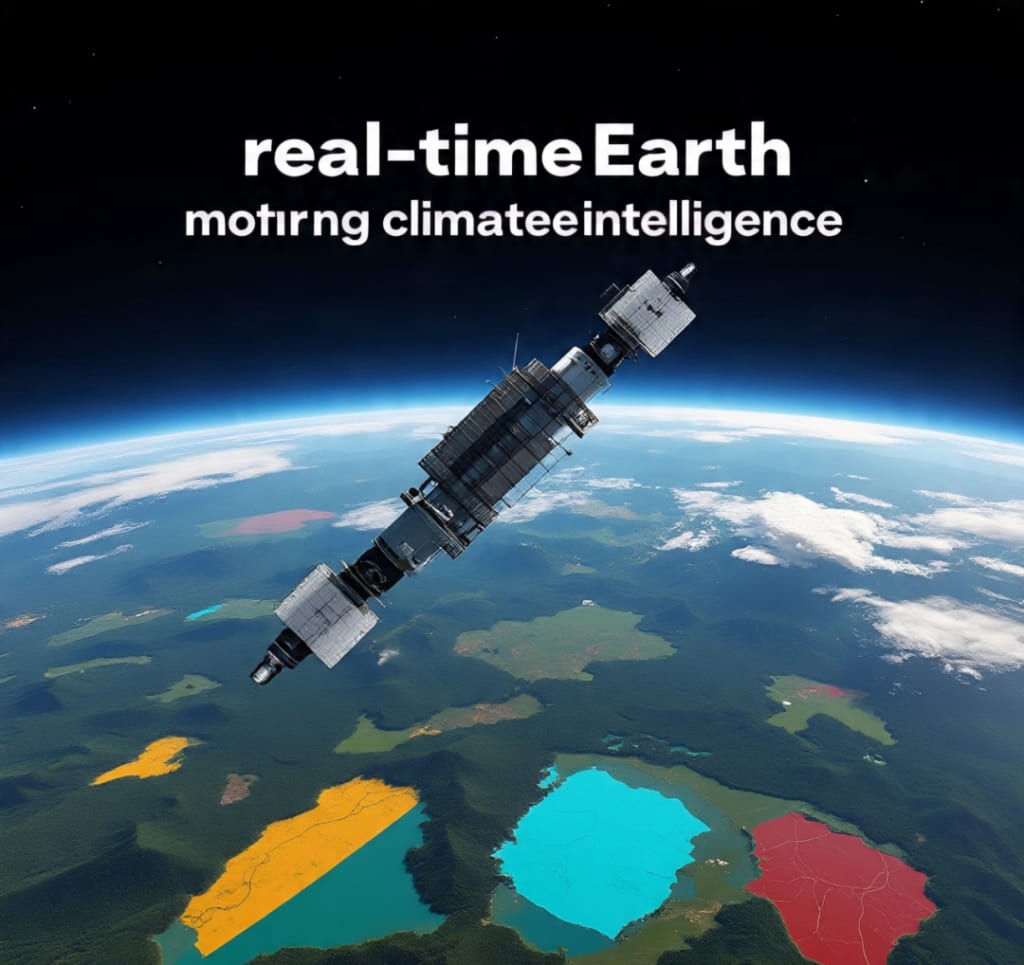
NISAR Satellite Launch Marks New Era in Climate Monitoring
NASA‑ISRO’s high‑resolution radar mission begins mapping Earth in unprecedented detail, empowering environmental forecasting and disaster response
On August 2, 2025, a historic moment in Earth observation unfolded high above our planet. The NASA-ISRO Synthetic Aperture Radar (NISAR) satellite — a landmark collaboration between the United States’ National Aeronautics and Space Administration (NASA) and the Indian Space Research Organisation (ISRO) — successfully launched into orbit, marking the beginning of a new era in climate monitoring and disaster preparedness.
The NISAR satellite, weighing nearly 3,000 kilograms, was launched from the Satish Dhawan Space Centre in Sriharikota, India, aboard the GSLV Mk II rocket. Its mission is ambitious and transformative: to use cutting-edge radar imaging to monitor changes on Earth with unprecedented precision, capturing movements of the planet’s surface as small as a few centimeters.
The Power of Radar from Space
Unlike traditional optical satellites, which rely on sunlight to capture images, NISAR uses dual-band Synthetic Aperture Radar (SAR) — both L-band and S-band — enabling it to observe Earth in any weather, day or night. This capability is critical for monitoring areas often obscured by cloud cover, such as tropical rainforests and storm-affected regions.
The satellite will orbit Earth every 12 days, producing high-resolution maps that track shifts in land surfaces, ice sheets, forests, and even infrastructure. With these maps, scientists will be able to measure and predict critical environmental changes with a level of detail that was previously impossible.
“NISAR will be a game-changer,” said Dr. Anuradha Radhakrishnan, project scientist at ISRO. “From glaciers melting in the Himalayas to the sinking of coastal cities, we’ll be able to see the planet breathe and move.”
A Tool for Climate Action
NISAR’s primary scientific goal is to help humanity understand the dynamic systems of our planet — and to act accordingly. By tracking how Earth’s surface deforms over time, the satellite will allow scientists to better understand the impact of climate change, including:
Glacial retreat and sea-level rise: NISAR will map ice sheets in Antarctica and Greenland, allowing scientists to monitor ice loss and predict future sea-level rise with greater confidence.
Deforestation and ecosystem change: With high-resolution forest data, conservationists can track illegal logging, biodiversity loss, and the health of critical ecosystems such as the Amazon and Congo basins.
Earthquakes and natural hazards: NISAR will be able to detect ground shifts associated with earthquakes, volcanic activity, and landslides, supporting disaster preparedness and early warning systems.
Urban infrastructure movement: In cities, it can monitor subsidence and infrastructure stress, helping governments plan safer and more sustainable urban development.
NASA Administrator Bill Nelson praised the mission's potential: “NISAR will provide the most detailed global measurements of land surface changes ever made. This data is vital to tackling the biggest challenge of our time — climate change.”
Global Collaboration for a Global Challenge
NISAR is a flagship example of international scientific cooperation. While NASA provided the L-band radar system, ISRO developed the S-band radar, satellite bus, and launch services. The instruments were integrated in India, showcasing a seamless collaboration between two spacefaring nations.
The data collected by NISAR will be freely available to scientists, governments, and the public around the world. This open-access model ensures that communities from the most advanced research institutions to grassroots environmental organizations can benefit from the satellite’s insights.
Dr. Rani Patel, a climate policy analyst in Nairobi, Kenya, underscored the importance of this access: “For countries vulnerable to climate shocks — floods, droughts, coastal erosion — NISAR will provide the evidence we need to plan smarter, respond faster, and advocate for global action.”
Real-time Benefits and Long-term Vision
Already, NISAR’s early data is being processed to support regional disaster response planning in South Asia and East Africa. In flood-prone regions of Bangladesh and Assam, the satellite will help monitor river swelling and guide evacuation efforts. Meanwhile, scientists are using NISAR data to update geological models of fault lines across California, Indonesia, and the Middle East.
Looking forward, NISAR’s continuous data stream is expected to play a pivotal role in reaching several United Nations Sustainable Development Goals (SDGs), including climate action (SDG 13), life on land (SDG 15), and sustainable cities and communities (SDG 11).
A Vision for the Planet
Perhaps the most exciting aspect of the NISAR mission is not just the science — but what it represents. In a time when the planet is facing unprecedented environmental and social challenges, the mission symbolizes a proactive, cooperative approach to understanding and safeguarding Earth’s future.
“This isn’t just about data,” said Dr. Marcia Thompson, a NASA Earth Science mission director. “It’s about giving humanity the tools to see what’s changing, why it matters, and how we can make better choices for the generations to come.”
As the NISAR satellite begins its journey across the skies — quietly scanning the Earth’s pulse from 747 kilometers above — it carries with it the hopes of scientists, communities, and future generations. With each orbit, it reminds us that knowledge is power — and in the case of our planet, it may be the key to preservation.
About the Creator
Keep reading
More stories from Muhammad Saad and writers in Earth and other communities.
Rising Together: The Growth of County Positions
Rising Together: The Growth of County Positions How Strategic Development and Community Investment Are Expanding Opportunities Across the County Over the past several years, counties across the country have witnessed a steady increase in job opportunities within local government—an encouraging sign of progress that reflects both population growth and a deepening investment in community services. From public health and safety to infrastructure and social programs, the growth in county positions marks a turning point in how local governments are responding to the evolving needs of their residents. In [Your County Name], the expansion of county positions has not only strengthened essential services but also created a more dynamic, diverse, and resilient workforce. According to the County Human Resources Department, more than 150 new positions have been added in the past five years, covering areas such as environmental services, mental health support, emergency management, public works, and community outreach. Meeting Community Needs Through Strategic Growth At the heart of this growth is a deliberate, strategic effort by county leaders to anticipate and address long-term community needs. County Administrator Lisa Morales explained that the growth in positions wasn’t a coincidence—it was the result of careful planning. “We looked closely at population trends, service requests, infrastructure demands, and public feedback,” Morales said. “What we saw was a clear need to invest more in human capital if we were going to keep up with demand and deliver the quality of service our residents deserve.” For example, the Public Health Department alone has seen a 30% increase in staffing since 2020, driven largely by the ongoing public health challenges and the county’s commitment to accessible, preventative care. This has allowed the department to open new community clinics, expand mental health counseling services, and launch mobile health units that bring care directly to underserved neighborhoods. Creating Career Pathways and Local Economic Impact The expansion of county positions has also opened doors for local residents seeking meaningful careers. For many, county jobs offer stability, benefits, and a chance to make a direct impact in their own communities. “We’ve hired dozens of people who used to drive an hour or more to find good work,” said Human Resources Director Jamal Thompson. “Now, they’re finding careers right here—careers with room to grow.” The county has invested heavily in training and workforce development to support new and existing employees. Initiatives include paid internships for high school and college students, tuition reimbursement for continuing education, and internal mentorship programs that promote professional advancement. These efforts have had ripple effects on the local economy. As more residents secure stable, well-paying county jobs, local businesses have also benefited from increased spending and a stronger sense of community investment. A Focus on Diversity, Equity, and Inclusion As the county expands, it has made diversity, equity, and inclusion (DEI) a central part of its hiring and management practices. The County DEI Office, established in 2022, works closely with department heads to ensure hiring processes are equitable and outreach efforts reach historically underrepresented communities. “We want our workforce to reflect the community we serve,” said DEI Officer Maria Gomez. “That means looking beyond traditional recruitment channels and creating spaces where everyone feels welcomed and valued.” Since the office was formed, there’s been a measurable increase in the representation of women, people of color, and individuals from underrepresented backgrounds in leadership roles within the county. Looking Ahead Looking to the future, the county is planning even more strategic hires to support major upcoming projects—including a new regional transit hub, expanded broadband access in rural areas, and a climate resilience initiative aimed at protecting local infrastructure from extreme weather. “None of this can happen without people,” said Morales. “Our most valuable asset is our workforce. Investing in people is how we build stronger, safer, and more sustainable communities.” Residents are also seeing the results of these investments firsthand. Public spaces are cleaner and safer. Roads and bridges are being repaired faster. Services like child welfare and senior assistance are more responsive. The collective impact of these improvements has helped restore trust in local government and encouraged greater civic engagement. Conclusion The growth in county positions is more than just a hiring trend—it’s a reflection of a community rising to meet its potential. Through thoughtful planning, inclusive hiring, and a commitment to service, [Your County Name] is setting an example of how counties can grow in a way that benefits everyone. As county departments continue to evolve and expand, one thing remains clear: when people are put first, progress follows.
By Muhammad Saad 5 months ago in Earth
El Niño is likely to return in 2026. Here's what that means for Houston and Texas.
La Niña has been active since mid-October. However, according to the January update from the National Oceanic and Atmospheric Administration, it’s likely to end over the next couple of months, and a transition to El Niño is likely to occur later this year.
By Dena Falken Esq3 days ago in Earth
Icy Chaos in Central and Eastern Europe
Winter has unleashed its fury across central and eastern Europe, leaving travelers frustrated and transport networks struggling to keep up. Over the past few days, freezing rain and ice have wreaked havoc on airports, train stations, and highways — forcing flight diversions, delaying trains, and making roads treacherously slippery. From Vienna to Budapest, Prague to Bratislava, this icy grip has brought travel to a near standstill. Let’s take a closer look at what’s happening, how it’s affecting people on the move, and what it tells us about winter travel in Europe. A Sudden Winter Blow A sudden wave of freezing rain swept across the region, coating runways, rail tracks, and roads with a dangerous layer of ice. Major airports in Austria, Hungary, Slovakia, and the Czech Republic were particularly affected. At Vienna International Airport, operations were temporarily suspended when runways became too slick for flights to land safely. Travelers already in the air had to divert to alternative airports in Munich, Frankfurt, and Venice. Meanwhile, Budapest’s Ferenc Liszt International Airport paused all arrivals and departures, and Prague’s Václav Havel Airport continued operating but at limited capacity. Trains Crawling Through Ice Rail networks weren’t spared. Across Austria, Hungary, and the Czech Republic, ice on tracks and power lines caused delays and cancellations. Austria’s national rail operator, ÖBB, urged passengers to postpone non-essential journeys. In the Czech Republic, travelers at Prague’s main station faced long waits as trains struggled to maintain schedules. Hungary’s tram and suburban rail services were temporarily suspended due to ice buildup on power lines. This combination of black ice, frozen switches, and heavy snowfall has tested the limits of winter infrastructure in Europe. Roads Turn Into Skating Rinks The icy weather didn’t just affect public transport — roads became treacherous, too. Authorities in Slovakia and the Czech Republic warned residents to avoid non-essential travel as highways turned into slippery skating rinks. Accidents and minor collisions were reported, and emergency services were busy responding to dozens of injuries from slips and falls. Even schools weren’t immune: parts of Romania shifted to online learning, keeping children safe during the extreme temperatures, which dropped to around -13°C in some areas. Why This Weather Is So Disruptive Meteorologists point to several factors that made this storm particularly severe: Freezing rain on top of existing snow creates an icy layer that’s extremely hard to clear. Rapidly refreezing surfaces make conditions unpredictable. Temperatures hovering around freezing prevent efficient melting during the day. This “perfect storm” scenario underscores just how vulnerable transport systems are to extreme weather. Even well-prepared airports and rail networks can struggle when weather transitions from snow to freezing rain. Voices From the Ground Passengers took to social media to express their frustration: Crowded airports as travelers scrambled to rebook flights. Train stations packed with delayed commuters, unsure when the next train would depart. Warming centers opened to provide shelter and hot drinks for stranded travelers. For many, a simple trip turned into a test of patience and resilience. Tips for Traveling in Freezing Conditions If you must travel during winter storms, experts recommend: Check flight and train schedules regularly, as delays can change quickly. Allow extra time for travel to avoid missing connections. Consider travel insurance that covers weather-related disruptions. If driving, carry winter essentials: blankets, food, water, and check road conditions before departure. Most importantly, prioritize safety over schedules — icy conditions can change rapidly, making travel risky. A Reminder From Winter This recent chaos in central and eastern Europe serves as a stark reminder of how interconnected transport systems are, and how vulnerable they can be to extreme weather. Flights grounded, trains stalled, and highways turned icy show that winter can bring travel to a halt — sometimes with very little warning. As Europe continues to face volatile winter conditions, travelers and authorities alike are reminded: preparation and flexibility are key. Sometimes, the weather truly has the final say. ❄️🛫🚆
By Muhammad Hassan4 days ago in Earth
Center Stage with Paul Stewart
*** I'm keen to republish the interviews I did for my series with Vocal creators. It's been a few years and I thought it might be nice to revisit these wonderful conversations. I'll be releasing them one at a time for a few weeks/months.
By Heather Hubler3 days ago in Interview




Comments
There are no comments for this story
Be the first to respond and start the conversation.