

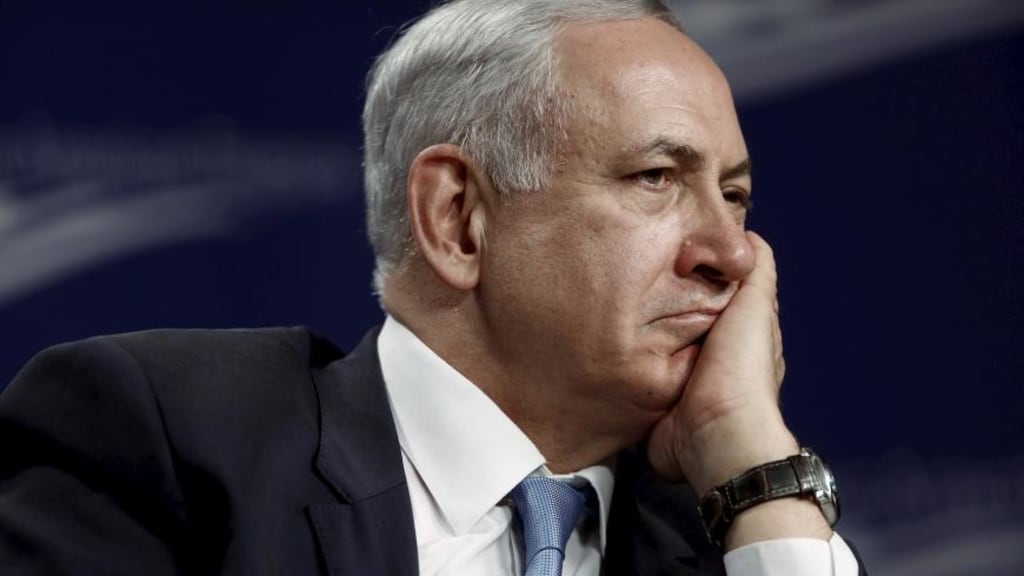
It took one tweet over the weekend for cracks to emerge within the Israeli political establishment.
Just after midnight on Sunday, Prime Minister Benjamin Netanyahu wrote that he had never been informed about warnings of Hamas’s assault on Israel on October 7. Netanyahu instead seemed to place the blame for the attack, where at least 1,400 people were killed, on his army and intelligence chiefs. They had assessed prior to the attack that Hamas “was deterred and ready for a settlement”, he noted.
The uproar caused by the statement prompted political leaders to criticize Netanyahu for engaging in political maneuvers during a challenging military campaign in Gaza. The outrage was so significant that the prime minister deleted the tweet and issued a sincere apology, acknowledging his mistake. This incident has further exposed a growing divide within the political and military establishment, casting doubt on Netanyahu's leadership abilities and his commitment to national security over personal interests. Yossi Mekelberg, an associate fellow at Chatham House, described the prime minister's behavior as a severe breach of conduct. The lack of trust in Netanyahu among government officials is a major concern for the cabinet during this difficult military operation. In response to the situation, Netanyahu formed an emergency war cabinet, including former senior military officers from the opposition, such as Benny Gantz, the former defense minister. Gantz promptly called for Netanyahu to retract his controversial post while expressing unwavering support for the army and the domestic intelligence agency, Shin Bet. Other leaders also criticized Netanyahu, with opposition lawmaker Avigdor Lieberman accusing him of prioritizing politics over security. The Israel army's top spokesperson, Daniel Hagari, declined to comment, emphasizing the ongoing state of war.
The recent displays of intense disagreement serve as the most recent indications of strain within Israel's political hierarchy, including the war cabinet, as it confronts the consequences of a significant intelligence lapse.
Many in the country's security apparatus have acknowledged their shortcomings, but Prime Minister Netanyahu has not. Prior to his controversial tweet, the Israeli leader conducted a news briefing on Saturday where he evaded the question of his responsibility, stating that everyone, including himself, will have to provide answers to difficult questions once the war concludes.
According to Alon Lien, a former director of Israel's Foreign Ministry, this is merely the beginning of what the Israeli establishment will face once the conflict ends. Lien believes that Netanyahu is laying the groundwork for his argument.
The relationship between the prime minister and a significant portion of Israel's public opinion has already been strained. The war emerged amidst a political crisis, with Netanyahu's far-right government advocating for controversial reforms that limited the judiciary's powers. Critics argue that these reforms pose a threat to democracy. For months, tens of thousands of protesters have taken to the streets to oppose these changes.
Among the opponents of the reforms were military reservists who even threatened to refuse volunteer duty. Some critics argue that the scale of the protests has impacted the military's readiness and capabilities.
Since October 7, thousands of reservists have joined the fight against Hamas, marking Israel's most significant military challenge since the October 1973 war against Egypt and Syria.
On Monday, the Israeli army announced that troops and armored vehicles were advancing further into Gaza as part of the "second phase of the war." This offensive follows over three weeks of relentless bombardments on the besieged enclave, resulting in the deaths of over 8,000 Palestinians and triggering a severe humanitarian crisis.
Analysts suggest that while there is unity within Israel against Hamas, this does not necessarily translate into support for Netanyahu's government. Prior to October 7, the government had already lost the confidence of a significant portion of society, and it has not gained much additional support since then. According to a recent poll by the Israeli Democracy Institute, trust in the government has reached a 20-year low, with only 20 percent of Israelis expressing trust in Netanyahu's cabinet, a decrease of eight percentage points since June. However, Netanyahu is known for his political survival skills, having served as prime minister for 13 of the last 14 years. Despite widespread opposition to him and his government's actions, it is important to acknowledge that he still maintains a significant level of public support. By including senior military members in his government, Netanyahu may not only be aiming to expand his political base, but also to shift responsibility for potential military failures to the security establishment once the war concludes.
About the Creator
Keep reading
More stories from Afeef Khan and writers in Earth and other communities.
What Measures Are Scientists Taking to Prepare for Apophis's Alarmingly Close Encounter with Earth?
In approximately five years, Earth will experience the close approach of a potentially dangerous asteroid known as Apophis. This celestial object will come within a distance of less than 20,000 miles (32,000 kilometers), which is remarkably close. During this extraordinary event, Apophis will be ten times nearer to Earth than the Moon. Scientists are eager to seize this opportunity and make the most of its visit.
By Afeef Khan2 years ago in Earth
Man (22) Charged With Murder of English Tourist in Temple Bar
Arrest and Formal Charges A 22-year-old man has been charged with the murder of an English tourist following a fatal incident in Dublin’s Temple Bar area. The charge comes after an intensive Garda investigation into events that unfolded in one of Ireland’s busiest and most popular nightlife districts.
By Aarif Lashari4 days ago in Earth




Comments
There are no comments for this story
Be the first to respond and start the conversation.