
National Security Trial for Hong Kong’s Tiananmen Activists Begins
Landmark Case Highlights Ongoing Struggle for Justice and Freedom in Hong Kong


A national security trial in Hong Kong has officially begun for activists who have long campaigned for justice regarding the Tiananmen Square crackdown of 1989. The trial marks a pivotal moment in the city’s ongoing struggle between preserving civil liberties and the increasing influence of Beijing over its legal and political systems.
The proceedings have drawn international attention, shedding light on the challenges faced by pro-democracy activists in Hong Kong and raising questions about freedom of expression under the city’s national security laws.
Background: The Tiananmen Activists
The activists on trial are part of a group that has spent decades advocating for recognition of the June 4, 1989, Tiananmen Square massacre in Beijing. While Hong Kong traditionally allowed public commemoration of the event, the situation changed following the 2020 imposition of a sweeping national security law by Beijing.
The law criminalizes acts of secession, subversion, terrorism, and collusion with foreign forces. Critics argue that its broad definitions have been used to target pro-democracy activists and silence dissenting voices, including those who peacefully campaign for historical accountability.
What the Trial Entails
The trial, held in a Hong Kong court, involves several prominent activists who have been charged under the national security law. Charges include alleged subversion and acts perceived as undermining state authority. The proceedings are expected to last several weeks, with the outcome likely to have far-reaching implications for Hong Kong’s civil society.
Observers note that this case is emblematic of the shrinking space for political activism in the city. Legal experts warn that convictions could deter future generations of activists from speaking out on sensitive historical or political issues.
Hong Kong’s Changing Legal Landscape
Hong Kong’s legal system has long been seen as a cornerstone of its autonomy, known as “one country, two systems.” The city’s courts were traditionally respected for their independence and adherence to common law principles. However, the national security law has dramatically altered this landscape.
Many legal analysts argue that the law gives authorities broad powers to define what constitutes a threat to national security, limiting judicial discretion and eroding long-standing protections for civil liberties. The Tiananmen activists’ trial is one of the first high-profile cases to test the law’s reach and its consequences for political expression.
International Reaction
The trial has elicited strong reactions from around the world. Human rights organizations, foreign governments, and international media have expressed concern over what they see as a crackdown on free speech and civic engagement in Hong Kong.
Statements from organizations like Amnesty International and Human Rights Watch emphasize that peaceful commemoration and historical advocacy should not be criminalized. Meanwhile, some governments have reiterated calls for Beijing and Hong Kong authorities to respect international human rights standards and allow activists to participate freely in political discourse.
Impact on Civil Society
For Hong Kong’s civil society, the trial is both a warning and a moment of reflection. Community groups and advocacy organizations fear that prosecutions under the national security law could create a chilling effect, discouraging citizens from participating in public debates or organizing commemorative events.
Despite these challenges, activists continue to push for transparency and accountability. Many are using digital platforms and international forums to raise awareness about the trial and maintain public engagement with Tiananmen-related issues.
Voices From the Activists
The defendants and their supporters have emphasized that their work is centered on remembrance, education, and human rights advocacy. They argue that commemorating the victims of the 1989 crackdown is a moral and civic duty, not a threat to national security.
Statements from family members and fellow activists highlight the personal risks involved in speaking out in Hong Kong today. They stress that the trial is not just about individual charges but represents a broader struggle for freedom of speech and the right to historical memory.
What’s Next
Legal experts predict that the trial could set important precedents for how Hong Kong applies its national security law in cases related to historical activism. The outcome may influence how other activists approach political expression, commemoration, and protest in the city.
International observers will be closely monitoring the proceedings, both for legal developments and for broader indications of Hong Kong’s political trajectory. The trial serves as a test of how the city balances security concerns with fundamental freedoms that have long defined its identity.
Conclusion
The national security trial for Hong Kong’s Tiananmen activists is more than just a courtroom event; it is a symbol of the ongoing tension between state authority and individual freedoms. As the proceedings unfold, the world is watching closely to see how Hong Kong navigates its commitment to justice, memory, and human rights under the pressures of political change.
For the activists, this trial is a continuation of a decades-long struggle to ensure that the events of Tiananmen Square are neither forgotten nor ignored. For the citizens of Hong Kong, it is a reminder of the fragile balance between freedom and security in a rapidly evolving political landscape.
About the Creator
Muhammad Hassan
Muhammad Hassan | Content writer with 2 years of experience crafting engaging articles on world news, current affairs, and trending topics. I simplify complex stories to keep readers informed and connected.
Keep reading
More stories from Muhammad Hassan and writers in Earth and other communities.
US Braces for Record-Breaking Winter Storm as Snow and Ice Threaten Multiple States
As winter takes hold of the United States, residents across several states are preparing for what could be one of the most powerful winter storms the country has faced in recent years. The storm, which is expected to bring a combination of heavy snow, freezing rain, and ice, is already being called a potential record-breaker. The storm threatens to disrupt travel, power, and daily life in multiple states, and meteorologists are warning that the severity of the conditions could cause significant damage. In this article, we’ll explore the details of the incoming winter storm, the states most affected, and how citizens and authorities are preparing for the extreme weather conditions. The Perfect Storm: What’s Coming? Meteorologists have described this upcoming winter storm as a "once-in-a-decade" event due to the intensity and the wide geographical reach it’s expected to have. The storm is expected to develop as a low-pressure system moves across the Midwest and toward the Northeast, bringing a combination of snow, sleet, and freezing rain. The heavy snow is likely to be the most significant threat in the central United States, while the ice and freezing rain will affect areas farther south and east. While the storm's track and intensity are still being monitored, forecasts suggest that it will be more impactful than typical winter weather events, with up to a foot or more of snow expected in certain regions. Freezing rain will be the most dangerous aspect of the storm, creating slick roads, downed trees, and widespread power outages. The threat of ice will also make travel extremely hazardous, especially for those who may be caught on the road during the storm’s peak. States at Risk: Who Will Be Affected? This winter storm is expected to hit a wide range of states, with the most dangerous conditions impacting parts of the Midwest, Northeast, and Southern US. The storm will likely bring dangerous conditions to major metropolitan areas, including Chicago, St. Louis, Indianapolis, Washington D.C., and New York City. 1. Midwest and Central US The Midwest is expected to bear the brunt of the snow, with Chicago, Detroit, and parts of Minnesota, Iowa, and Wisconsin seeing the heaviest accumulation. Some areas could receive 12–18 inches of snow, potentially making roads impassable and creating dangerous driving conditions. In addition to the snow, areas like St. Louis and Kansas City will be at risk for freezing rain and ice, making conditions even more treacherous. 2. Southern US Southern states, including Arkansas, Tennessee, and North Carolina, will experience the most significant threat from freezing rain. The ice accumulation could be enough to cause power outages and damage to infrastructure. Memphis and Little Rock could be hit particularly hard, with warnings in place for slick roads and dangerous driving conditions. 3. Northeast As the storm moves east, it is expected to reach the Northeast, where states like New York, Pennsylvania, and New Jersey will see a mix of snow and freezing rain. While the snow will likely be less intense than in the Midwest, the ice storm could still pose significant threats to transportation and utilities. Major cities like New York City could experience delays in both air travel and public transportation as freezing rain accumulates on roadways and rail lines. 4. Northeast Coastal Areas In coastal areas, particularly Boston and parts of Maine, snow will mix with rain, creating slushy conditions. Coastal flooding due to the storm surge will also be a concern, although the immediate threat from snow and ice will be the primary focus. The Dangers: More Than Just Snow While the snowfall from this storm will be significant, the biggest concern for many areas is the freezing rain and ice accumulation. Unlike snow, which can accumulate and be cleared relatively easily, ice presents a far greater challenge. 1. Power Outages One of the most dangerous aspects of this storm is the potential for widespread power outages. Ice accumulation on trees and power lines can cause branches to snap, leading to downed power lines and interruptions in service. Areas like Tennessee and Arkansas, where ice is expected to accumulate the most, are particularly vulnerable. Thousands of homes and businesses could be left without electricity for hours or even days, depending on the severity of the ice storm. 2. Travel Disruptions The ice and snow will also create hazardous driving conditions, leading to delays and road closures. Authorities are warning that highways and secondary roads could become impassable due to the accumulation of ice, snow, and sleet. Travelers in affected areas are urged to avoid non-essential trips and to stay off the roads unless absolutely necessary. Air travel will also be disrupted, with delays and cancellations expected at major airports in cities like Chicago, St. Louis, and New York. 3. Flooding Risks The freezing rain could also lead to flooding in some areas. As temperatures rise slightly, any accumulated snow or ice could melt, overwhelming local drainage systems and leading to flash flooding. This is particularly a concern for areas in the Northeast, where the storm is expected to bring rain after the ice storm. Preparing for the Storm: What to Do As the storm approaches, residents in affected areas are urged to take precautionary measures to ensure their safety. Here are some tips for preparing for this record-breaking winter storm: Stock Up on Essentials: Ensure you have enough food, water, and other necessities to last through power outages. Non-perishable food and bottled water are key items to have on hand, along with batteries and flashlights. Prepare for Power Outages: Charge devices in advance and consider purchasing a generator if you live in an area that’s prone to outages. Keep blankets and warm clothing available in case the temperature drops in your home. Stay Off the Roads: If you don’t need to travel, stay home. If you must drive, make sure your vehicle is equipped with emergency supplies, such as a shovel, extra blankets, and sand or cat litter for traction. Monitor Weather Reports: Stay up-to-date on the storm’s progress and any emergency alerts in your area. Local authorities will issue weather warnings and road closures as the storm progresses. Conclusion: A Storm to Remember As the US braces for this record-breaking winter storm, the risks of snow, ice, and freezing rain pose significant threats to both public safety and infrastructure. While authorities are taking steps to prepare for the worst, it is important for individuals to stay informed and ready for whatever the storm may bring. The combination of snow, ice, and freezing rain could make this storm one for the history books, and how the country responds to this crisis will serve as a reminder of just how powerful and unpredictable winter weather can be.
By Muhammad Hassanabout 7 hours ago in Earth
How Much Do You Need in an ISA for a Passive Income That Beats the State Pension?
For many people in the UK, the State Pension is expected to form the backbone of retirement income. But with rising living costs and growing uncertainty about the future, more savers are asking a crucial question: Can I build a passive income that beats the State Pension — and how much would I need in an ISA to do it?
By Aarif Lashari3 days ago in Earth
Tiny Lion Cubs Struggle To Keep Up With Mom
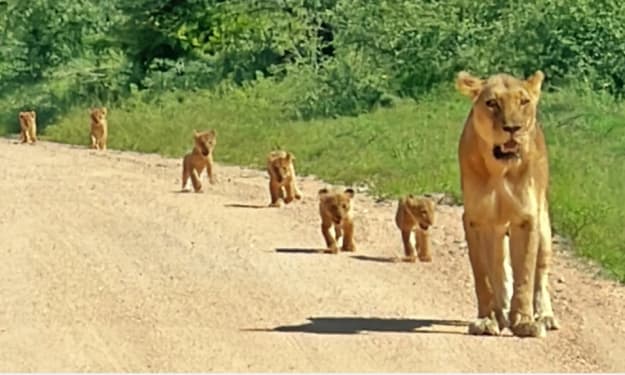
In the heart of the African savannah, life is a constant lesson for young animals. Few scenes are as endearing — or as heartwarming — as tiny lion cubs trying to keep pace with their mother. These little bundles of fur face a world full of challenges, from learning to hunt to avoiding dangers, all while depending on the guidance and protection of their experienced mom. Watching cubs wobble and tumble as they attempt to keep up with their mother reminds us that growing up, even in the wild, is a journey full of struggle, determination, and adorable missteps. The Early Days of Lion Cubs Lion cubs are born blind and helpless, usually in litters of two to six. For the first few weeks, they rely entirely on their mother for warmth, food, and safety. Even after opening their eyes and beginning to explore, the cubs are far from independent. The first months are crucial. Cubs learn social cues, hunting basics, and survival skills simply by watching their mother and the pride. But as anyone who has observed them knows, there’s often a huge gap between observation and action. Tiny cubs often struggle to match their mother’s pace, especially when she moves through long stretches of savannah or leads the family on patrols. A Mother’s Role in the Wild For a lioness, raising cubs is a full-time commitment. She hunts, defends her territory, and teaches her young, all while staying alert to predators such as hyenas, leopards, and even rival lions. The cubs, meanwhile, attempt to mimic her every move — often with clumsy yet charming results. A mother lion’s patience is remarkable; she frequently slows down, nudges them along, or stops to ensure no cub is left behind. These moments, while stressful for the tiny cubs, are vital learning opportunities. Struggling to Keep Up: Why It’s So Hard There are several reasons why tiny lion cubs have trouble keeping pace with their mother: Short Legs, Big Steps: Lion cubs’ legs are tiny and their coordination is limited, making it difficult to cover the same distance as an adult lioness. Curiosity: Cubs are naturally curious. A single butterfly or rustling bush can distract them, leaving mom to pause repeatedly. Energy Levels: Young lions tire quickly. Even with frequent naps, the cubs’ stamina is far lower than their mother’s. Learning Through Play: Play is not just fun; it teaches hunting, balance, and social skills. Running off to pounce on a sibling or chase an insect is all part of their education. Despite these challenges, the cubs’ determination to keep up demonstrates their resilience and growing understanding of the wild world. Lessons in Teamwork and Survival Every cub struggling to keep up is also learning crucial survival skills. The journey across the savannah is more than a test of speed — it’s a lesson in: Coordination: Cubs learn how to move efficiently across different terrains. Patience: They begin to understand the rhythms of adult life and the pace required for survival. Social Skills: Staying with the group teaches cubs how to interact with siblings and the pride, which is essential for their future roles. Observation: By following their mother, cubs study hunting techniques, territorial behavior, and predator awareness. Even the moments when cubs stumble or lag behind are essential for their development. These experiences prepare them for independence, which comes sooner than many might expect. The Cutest Moments in the Wild Anyone who has watched tiny lion cubs knows that their struggles are often irresistibly cute. Video clips from wildlife reserves frequently show cubs toddling along, tumbling over each other, or getting distracted mid-step. Observers often comment that these little stumbles reveal personality, determination, and playfulness, making them one of nature’s most heartwarming spectacles. While their mother is serious and focused, the cubs inject a sense of humor and lightness into life on the savannah. Why This Matters The struggles of lion cubs aren’t just adorable — they’re vital for understanding wildlife behavior. Conservationists and animal behaviorists use these moments to study growth patterns, social structures, and survival strategies in lion populations. These observations also highlight the importance of preserving natural habitats. Cubs must learn in a safe environment to survive; habitat loss, poaching, and climate change make these early struggles even more dangerous. Protecting the African savannah ensures that future generations of lions can experience the same lessons and playful tumbles. The Road to Independence Within a year, these tiny cubs will be more agile, faster, and more confident. By the time they reach two to three years old, males may begin to leave the pride, while females often stay and become caretakers themselves. Every misstep, tumble, and lagging moment is part of the journey toward strength, coordination, and independence. Watching them now gives us a glimpse of the challenges they will overcome, and the survival skills they will carry for life. A Celebration of Motherhood Ultimately, these scenes remind us of the incredible bond between mother and cubs. Her patience, vigilance, and teaching are the foundations of their future. The cubs’ struggles highlight the trials of growing up, while their determination showcases the resilience and beauty of wildlife. For those observing, it’s a powerful lesson in care, guidance, and perseverance, not just in lions but in the natural world as a whole. Final Thoughts Watching tiny lion cubs try to keep up with their mother is both entertaining and enlightening. It’s a story of growth, struggle, and resilience — a reminder that even the fiercest creatures start small, learning step by step. These little lions capture hearts while teaching life lessons: patience, determination, teamwork, and the importance of guidance. As they tumble and waddle across the savannah, they show us that growth is a process, one adorable misstep at a time. For wildlife enthusiasts, animal lovers, and anyone enchanted by nature, these tiny cubs are proof that even in the wild, love, care, and persistence are universal truths.
By Aarif Lashari3 days ago in Earth



Comments
There are no comments for this story
Be the first to respond and start the conversation.