
NASA ready for the Red Planet? US senator's 'Mission to MARS Act' aims to modernize Johnson Space Center
Senator Cornyn’s $1B MARS Act Aims to Modernize Johnson Space Center The bill proposes critical upgrades to prepare NASA for future Moon and Mars missions
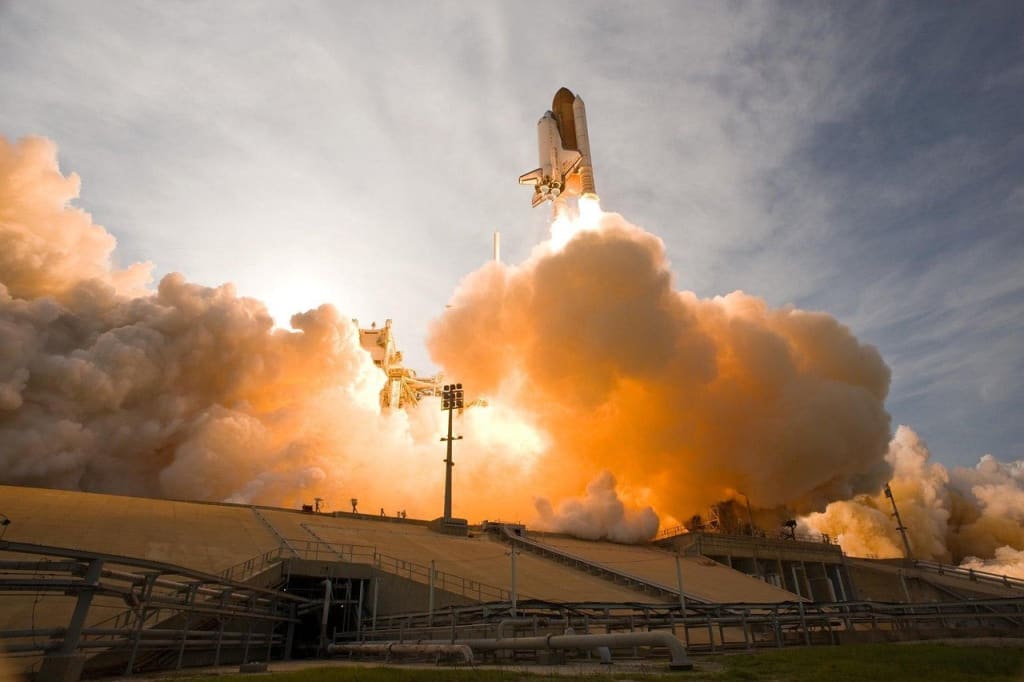
As the global race to explore Mars accelerates, the United States is staking a bold claim to remain at the forefront of deep space exploration. A key step in that ambition comes from Capitol Hill, where U.S. Senator John Cornyn (R-TX) has introduced the “Mission to Modernize Astronautic Resources for Space” (MARS) Act—a sweeping $1 billion proposal aimed at revitalizing NASA’s Johnson Space Center (JSC) in Houston. The legislation reflects growing national interest in ensuring that NASA’s infrastructure is not only mission-ready for lunar operations but fully capable of supporting future missions to Mars.
Why Modernize Now?
NASA's Artemis program, which aims to return humans to the Moon by the late 2020s, is laying the foundation for future Mars expeditions. However, to achieve those long-duration missions, NASA needs ground facilities that match the technological complexity and operational demands of interplanetary travel.
The Johnson Space Center has long served as the hub of America’s human spaceflight efforts, including astronaut training, spacecraft operations, and mission control. But much of its infrastructure dates back decades. Without significant investment, experts warn that the facility could struggle to support the next generation of exploration.
“The Johnson Space Center has always been a cornerstone of NASA’s mission,” said Sen. Cornyn. “This bill is a recognition that if we are serious about going to Mars, we must be just as serious about modernizing the critical facilities that will get us there.”
A Breakdown of the MARS Act
The MARS Act proposes a 10-year, $1 billion infrastructure overhaul at JSC. This includes major renovations and new facilities that will directly support lunar and Martian mission objectives. Among the specific upgrades:
Neutral Buoyancy Laboratory (NBL): One of NASA’s most iconic astronaut training sites, the NBL simulates microgravity and underwater environments. The bill proposes modernizing this facility to accommodate new space station modules, lunar equipment training, and enhanced safety standards.
Astromaterials Curation Facility: With upcoming missions returning samples from both the Moon and Mars, NASA’s curation center must be updated to store, analyze, and protect these scientifically invaluable materials.
Mission Control Center: The very room where Apollo 11 was guided to the Moon is overdue for a technological facelift. Enhancing real-time operations capability will be crucial for managing missions millions of miles from Earth.
Ellington Field: Home to NASA’s T-38 astronaut training jets, this airfield’s facilities would be renovated to support pilot training and suborbital flight readiness.
Space Food Systems Lab: Long-term missions to Mars will require sustainable, nutrient-rich food options. A new lab will support innovation in food preservation and delivery systems suited for deep space.
Critical Infrastructure Upgrades: From asbestos removal and HVAC upgrades to electrical and plumbing overhauls, much of the JSC's backbone systems will be renewed to modern standards.
The Mars Mission: A National Strategy
Senator Cornyn argues that the investment is about more than just Texas—it’s a strategic imperative for the U.S. space program. “We’re entering a new space race,” he said, pointing to China’s rapidly expanding space ambitions, including lunar bases and robotic Mars landers. “We can’t afford to fall behind.”
Experts agree that modernizing NASA’s ground infrastructure is critical. “No matter how advanced your rockets or spacecraft, missions will only succeed if your support systems on Earth are up to the task,” said Dr. Marcia Smith, president of the Space and Technology Policy Group.
Funding and Political Path Ahead
The legislation has been referred to the Senate Committee on Commerce, Science, and Transportation, where it’s expected to garner bipartisan interest. Fellow Texas Senator Ted Cruz, who chairs the subcommittee on space and science, has expressed support for continued investment in NASA.
Still, the MARS Act comes during a time of fiscal scrutiny. President Biden’s FY2026 budget proposed modest increases to human exploration programs, while scaling back some science missions. If passed, the MARS Act would need to secure appropriations that align with broader budgetary priorities.
A Launchpad for the Future
For Houston—and the nation—the MARS Act represents a vital commitment to maintaining leadership in space exploration. Beyond the symbolic weight of Mars, the legislation promises thousands of jobs, partnerships with private aerospace companies, and long-term scientific and economic returns.
Whether the first human to step on Mars will train at a newly revitalized Johnson Space Center remains to be seen. But if the MARS Act succeeds, it could be the launchpad that ensures America's next giant leap.
---
Let me know if you'd like this in a specific format (PDF, blog post style, etc.) or tailored to a particular audience.
About the Creator
Keep reading
More stories from Md Abdulla and writers in Earth and other communities.
Trump confronts South African leader with baseless claims of the systematic killing of white farmers
In a move that sparked international controversy and drew widespread condemnation, former U.S. President Donald Trump reignited a debunked conspiracy theory involving South Africa, accusing its government of allowing or even orchestrating the “systematic killing of white farmers.” The claims, widely criticized as misleading and racially charged, surfaced during a diplomatic interaction with South African leadership and have since raised concerns about the spread of misinformation, the misuse of international platforms for domestic political gains, and the potential to inflame racial tensions. Trump’s remarks echoed a narrative long propagated by far-right groups both in the United States and abroad. During his presidency in 2018, Trump tweeted that he had asked then-Secretary of State Mike Pompeo to “closely study the South Africa land and farm seizures and expropriations and the large scale killing of farmers,” citing a segment from Fox News host Tucker Carlson. The statement, which aligned closely with white nationalist rhetoric, was made without consulting the U.S. Embassy in South Africa or checking with intelligence officials. It was immediately met with strong rebuttals from both the South African government and independent fact-checkers. The South African government responded at the time via Twitter, stating, “South Africa totally rejects this narrow perception which only seeks to divide our nation and reminds us of our colonial past. South Africa will speed up the pace of land reform in a careful and inclusive manner that does not divide our nation.” President Cyril Ramaphosa’s office later clarified that Trump had not contacted him directly before making the statement. More recently, Trump has revived these assertions during campaign events and interviews, again referring to alleged violence against white farmers as part of what he called a “genocide.” However, independent data from South Africa’s government and civil society organizations continues to contradict these claims. The South African Police Service (SAPS) tracks farm attacks and murders, and the data consistently shows that while rural crime is a serious issue, it affects both black and white farmers. Furthermore, white South Africans, though a minority, still own the vast majority of agricultural land in the country—a legacy of apartheid-era dispossession. Experts argue that Trump’s statements are not rooted in genuine concern for South African farmers but rather serve to stoke racial fears among his political base. The narrative fits into a broader pattern of white grievance politics, in which Trump has repeatedly portrayed white people as victims of discrimination or violence, both in the United States and abroad. This rhetoric, critics warn, risks legitimizing extremist ideologies and encouraging racial paranoia. “Trump’s remarks are not just inaccurate, they are dangerous,” said Dr. Mandisa Malinga, a political scientist at the University of Pretoria. “They import a foreign narrative of racial victimhood that is not supported by evidence and ignores the complex socio-economic realities of rural South Africa. Worse, they undermine the legitimate land reform efforts of a country still grappling with the legacy of apartheid.” Trump’s claims also come amid rising global concern over disinformation in politics. By leveraging unfounded allegations on a global stage, Trump reinforces his broader political strategy of deflecting attention from domestic controversies and energizing his support base through outrage. Critics argue that such tactics erode the credibility of international diplomacy and further isolate the U.S. from African allies. South African observers note that the country’s land reform process—aimed at addressing deep-seated inequality from decades of institutionalized racial segregation—is fraught with challenges but is being handled within a legal and constitutional framework. No credible evidence has emerged to support claims of a government-sponsored campaign to murder white farmers. The persistence of this myth—bolstered by social media echo chambers, fringe news outlets, and opportunistic political figures—illustrates the enduring power of racially charged disinformation. For South Africa, it is yet another reminder of how its complex internal issues are vulnerable to distortion and exploitation by foreign actors. As Trump continues his political campaign in the U.S., observers warn that such baseless narratives may not only further inflame domestic divides but also strain international relationships, especially with nations like South Africa that are striving to overcome their troubled pasts through difficult but necessary reform. In a world already grappling with rising nationalism and political polarization, the use of debunked foreign conspiracy theories for political gain serves as a stark warning of the dangerous intersection between disinformation, race, and power.
By Md Abdulla8 months ago in Earth
From Supermarket to Splendor: AI Revives Discount Rack Plants
We’ve all seen them: the lonely foliage on the clearance rack, marked down for a few drooping leaves or a less-than-perfect appearance. Bringing home a discounted plant can feel like a rescue mission—a chance to give a living thing a second life. But that initial hope often fades into uncertainty. What’s wrong with it? Is it thirsty, drowned, or sick? Traditional guesswork can lead to more stress for both you and the plant.
By Emma Wallace2 days ago in Earth




Comments (1)
Hi