
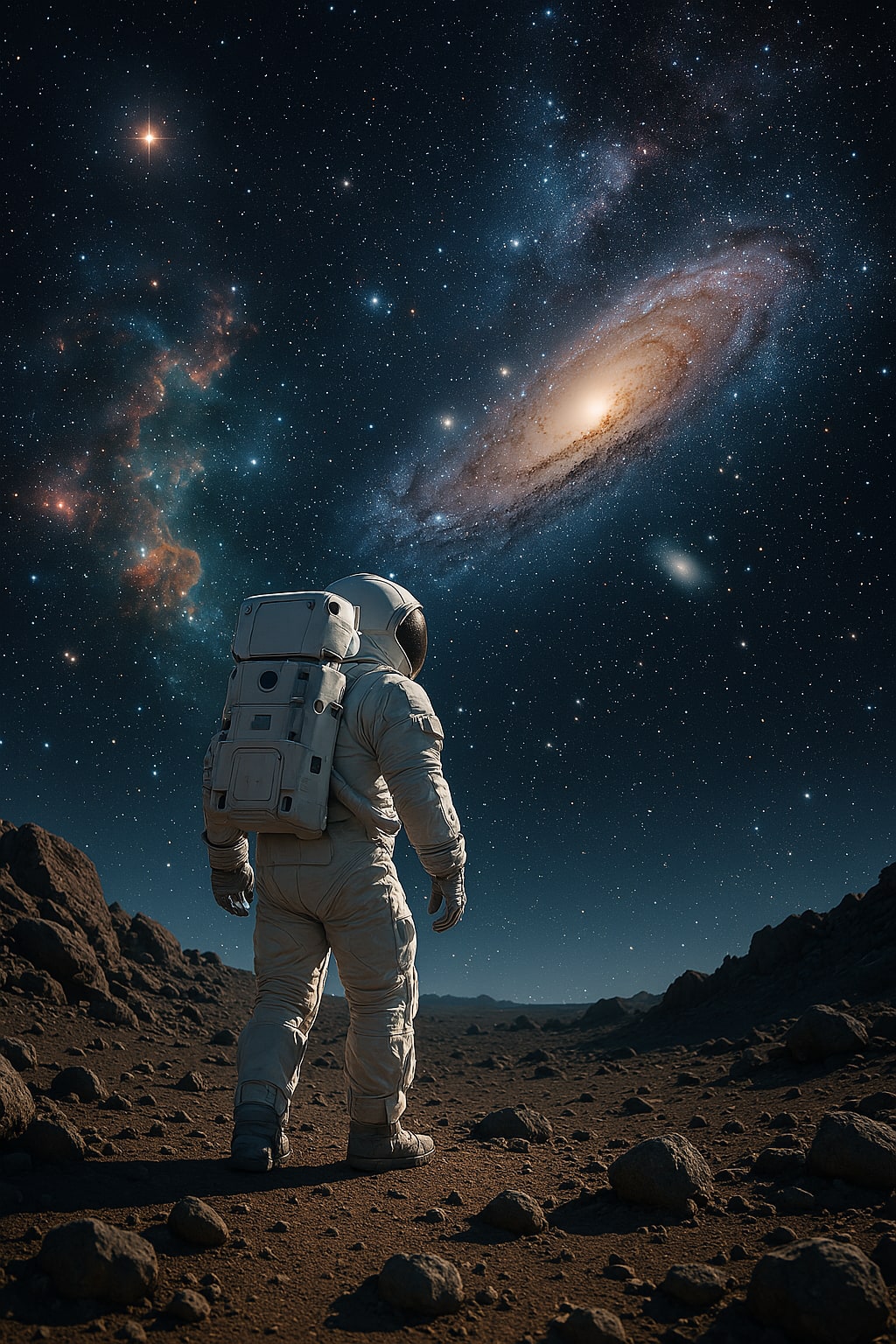
NASA 2025: A New Era of Space Exploration
In the year 2025, NASA stands at the forefront of a new age in space exploration. The cosmos, once an unreachable frontier, now beckons to humanity with unprecedented promise. With technological advancements, international collaborations, and the audacity of dreams, NASA’s mission to extend humanity’s reach beyond Earth has transformed from a distant vision into an urgent reality. Yet, amidst this newfound potential, the challenges of the unknown loom larger than ever before.
Chapter 1: The Dawn of the Next Frontier
The sun had barely risen on Earth when the call went out. Inside the expansive, high-tech halls of NASA’s Mission Control Center in Houston, the atmosphere was electric with anticipation. Engineers, scientists, and astronauts moved with a singular purpose. Today was the day they would send humanity’s first mission to the outer edges of the solar system.
“Prepare for launch,” Commander Naomi Harris’s voice echoed through the speakers, her calm demeanor belying the enormity of the task ahead. As the lead astronaut of the Artemis II mission, Naomi knew this was no ordinary mission. It was part of NASA’s ambitious plan to not only send humans to Mars but to explore the asteroid belt and beyond. The Artemis II spacecraft was equipped with advanced propulsion systems, artificial intelligence navigation, and state-of-the-art life-support technologies. It would journey beyond the Moon, past Mars, and into the far reaches of the solar system.
This mission was just the beginning. NASA had long realized that exploration would need to extend further than ever before, and to do so, they would need to push the boundaries of what humanity had previously thought possible.
As the countdown clock ticked down, Dr. Leo Zhang, a lead scientist in the Space Studies Division, watched from his terminal. Leo had dedicated his career to studying the outer planets, the icy moons of Jupiter and Saturn, and the countless asteroids that dotted the dark expanse between Mars and the distant stars. He was one of the many driving forces behind the new age of space exploration.
"All systems nominal," he muttered, tapping away at his computer screen as the final seconds of the countdown approached.
Then, with a deafening roar, Artemis II ignited its engines, and the spacecraft lifted off, piercing through the atmosphere and into the great unknown.
Chapter 2: The Age of Collaboration
NASA's renewed focus on the Moon and Mars was only possible due to an unprecedented level of international collaboration. In 2025, space exploration was no longer the domain of a single nation. Partnerships with agencies like the European Space Agency (ESA), Roscosmos, and even private corporations had formed a global coalition committed to pushing the boundaries of human exploration.
In a small conference room at NASA’s headquarters in Washington, D.C., Administrator Michael Turner stood in front of a large holographic display, addressing the world’s press. The room was filled with reporters from every major news outlet, their eyes focused on the vision of a new frontier in space exploration.
"We stand here today on the cusp of a new era," Turner began, his voice filled with pride. "NASA’s Artemis program, in partnership with our global allies, is about to set sail on a journey that will take humanity to places we've only dreamed of. Our joint efforts will lay the foundation for permanent bases on the Moon, and eventually, Mars."
The world was watching. The Artemis Program had already established a permanent lunar gateway, a space station orbiting the Moon that would serve as a staging ground for lunar missions. The first astronauts had already landed on the Moon as part of the Artemis I and II missions, each time expanding their knowledge of the lunar surface and setting up preliminary infrastructure for a long-term human presence.
But NASA had something even bigger in mind. With the collaboration of international space agencies, plans were in place for the construction of the first permanent colony on Mars. While the specifics of the colony’s location were still being discussed, scientists agreed that the Valles Marineris, a massive canyon system on Mars, held the most promise. The canyon offered a natural shelter, shielding the colony from harsh solar radiation and providing access to resources that could support life.
This vision, however, was far from easy. The technological challenges were immense. Engineers worked tirelessly on improving propulsion technology, resource extraction techniques, and even life support systems to ensure the safety of the astronauts who would one day call Mars their home.
Chapter 3: The Mars Initiative
By 2025, NASA had successfully launched its Mars Initiative, a series of robotic missions aimed at laying the groundwork for human exploration. These included the deployment of drones, rovers, and even autonomous mining bots to scout the Martian terrain and begin preparing it for human habitation.
One of the most ambitious projects was the construction of the first fully autonomous mining operation on Mars. The goal was to extract water from the Martian soil and create oxygen from the carbon dioxide in the atmosphere. If successful, these resources could be used to sustain astronauts on the surface, reducing the need for constant supply shipments from Earth.
Dr. Sofia Martinez, an expert in astrobiology and one of the key members of the Mars Initiative, watched closely as the robotic miners began their task. The science of terraforming Mars had long been considered a science fiction fantasy, but in 2025, it was inching closer to reality. The idea of creating a breathable atmosphere on Mars, of transforming the planet into a second home for humanity, was no longer just a dream—it was a goal within reach.
"These autonomous systems are not just mining; they're laying the foundations for our future," Dr. Martinez said as she observed the drones working diligently on the Martian surface. "We're creating a self-sustaining colony. For the first time in history, we're not just sending people to Mars. We're going to make it possible for them to thrive there."
Meanwhile, NASA’s Mars mission planners worked tirelessly to design the first human crewed mission to the planet. The mission, slated for 2027, would send a team of astronauts to live and work on Mars for an extended period, conducting experiments and testing the viability of the new technologies that would support life on the planet.
The journey to Mars, however, was not without its risks. The team would spend months in deep space, exposed to radiation levels that could have severe long-term health effects. NASA had been working on shielding technologies, but there was still much to be done before the mission could be considered safe.
Yet, as Commander Harris had said earlier, humanity was driven by the thrill of exploration, the desire to go where no one had gone before. Even the risks seemed worth it.
Chapter 4: The Challenges of Space Travel
The space race of the 21st century was far more complicated than any previous one. It wasn’t just about getting to the Moon or Mars—it was about creating sustainable space travel. The challenges of space were daunting, and they went far beyond propulsion systems and landing techniques.
One of the most pressing issues was the effects of long-term space travel on the human body. For astronauts embarking on missions to Mars and beyond, the risks of exposure to cosmic radiation were a major concern. On Earth, the planet’s magnetic field and atmosphere shielded humanity from most forms of radiation, but in deep space, there was no such protection. Without effective shielding, astronauts faced increased risks of cancer, radiation sickness, and other health issues.
NASA’s scientists had made progress on developing new materials and technologies to protect astronauts from radiation, including advanced radiation suits and protective walls within spacecraft. But there were still gaps in knowledge, and no one could predict with certainty how the human body would adapt to extended space travel.
As if radiation weren’t enough of a concern, the psychological toll of being isolated in space for extended periods was another major factor. Long-duration missions meant that astronauts would spend months or even years away from their families, friends, and Earth itself. The isolation and confinement could lead to mental health issues, such as depression, anxiety, and even cognitive decline.
Dr. Elena Rossi, a psychologist working with NASA, was tasked with studying the effects of isolation on astronauts. She had conducted numerous simulations in which test subjects spent months in mock spacecraft environments, cut off from contact with the outside world.
“Space is the ultimate test of human resilience,” Dr. Rossi explained. “We’re not just sending astronauts into the void; we’re sending people who will have to survive physically, mentally, and emotionally. We need to ensure they’re prepared for the stresses of space.”
Chapter 5: The Future of Space Exploration
By the end of 2025, the world had witnessed more progress in space exploration than ever before. NASA, in collaboration with its international partners, had achieved monumental milestones. From the successful launch of Artemis II to the creation of the first autonomous mining operations on Mars, humanity had taken giant leaps toward establishing a permanent presence beyond Earth.
Yet, the future of space exploration was not solely in the hands of NASA. Private companies like SpaceX, Blue Origin, and others had emerged as key players, driving competition and innovation in the space sector. These companies were now working on their own ambitious plans to establish commercial space stations, lunar mining operations, and even space tourism.
The prospect of humans living and thriving beyond Earth had moved from a distant possibility to an impending reality. In the coming decades, humanity would no longer be bound by the limits of Earth. We would explore the stars, colonize other worlds, and perhaps even make contact with alien civilizations.
But, as NASA’s leaders often reminded the public, space exploration was not just about technology or scientific discoveries—it was about the spirit of humanity. It was about pushing the limits of what we could accomplish, challenging our understanding of the universe, and making the impossible possible.
As Commander Harris stood aboard the Artemis II spacecraft, gazing out at the vast expanse of space, she knew one thing for certain: this was just the beginning.
About the Creator
The Ultimate Snake Plant Care Guide: Hard to Kill, Easy to Love
There’s a reason you see snake plants everywhere—from sleek office lobbies to cozy, sun-drenched living rooms. Their architectural spears of green and gold seem to silently defy neglect, earning them a reputation as the ultimate “hard to kill” houseplant. But what if we shifted that perspective? In my years of working with plants and data at AI Plant Finder, I’ve learned that the most rewarding relationships with our green companions aren’t built on mere survival, but on understanding. The snake plant (now botanically reclassified as Dracaena, though we all still call it Sansevieria) isn’t just surviving your care; it’s thriving on a biological logic all its own. This guide is your key to moving from simply keeping it alive to helping it flourish, deepening that easy love with a little expert insight.
By Emma Wallaceabout 12 hours ago in Earth
After Four Shark Attacks in 48 Hours, NSW Authorities Urge Beachgoers: ‘Just Go to a Pool’
Summer in New South Wales usually means sun, sand, and surf. But in the past 48 hours, NSW beaches have been anything but relaxing. Authorities have reported four separate shark attacks in just two days — a highly unusual cluster that has led officials to give a stark warning: “just go to a pool.”
By Muhammad Hassana day ago in Earth



Comments
There are no comments for this story
Be the first to respond and start the conversation.