
Multiverse
The theory of multiverse proposes that there are multiple universes beyond our own, each with its own unique physical properties and laws of nature. These universes may exist parallel to our own or in different dimensions entirely.

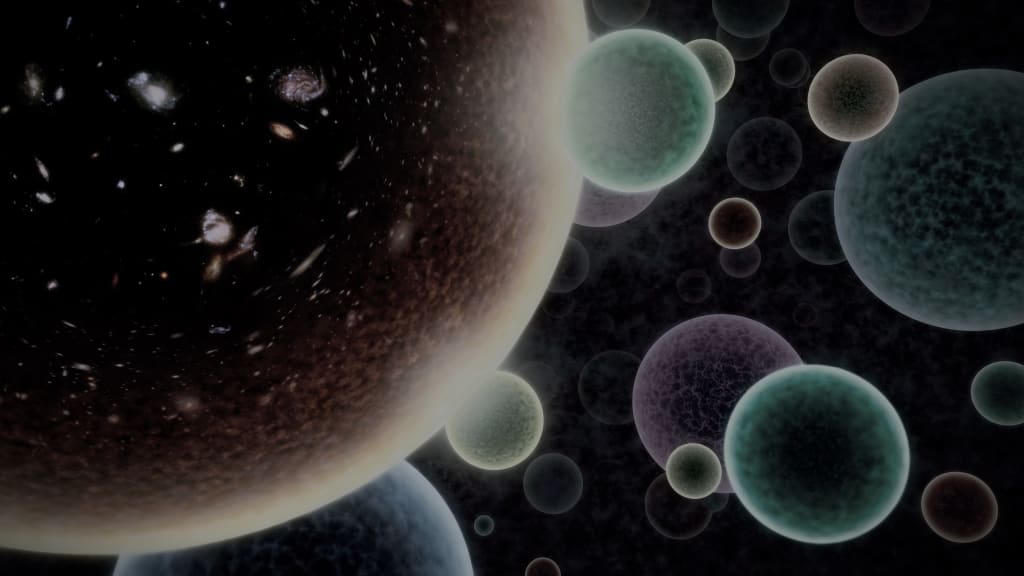
The theory of multiverse proposes that there are multiple universes beyond our own, each with its own unique physical properties and laws of nature. These universes may exist parallel to our own or in different dimensions entirely.
There are several different variations of the multiverse theory, including:
- The Many Worlds Interpretation of Quantum Mechanics: This interpretation suggests that every time a quantum event occurs, such as the decay of a radioactive particle, the universe splits into multiple parallel universes, each with a different outcome.
- The Inflationary Multiverse: This theory proposes that our universe underwent a period of rapid expansion shortly after the Big Bang, causing it to split into multiple "bubble" universes, each with its own physical properties.
- The Brane Multiverse: This theory suggests that our universe is just one of many "branes" (short for membranes) that exist in a higher-dimensional space. These branes may intersect or collide, resulting in the creation of new universes.
The concept of the multiverse is still a topic of debate among scientists, and there is currently no way to directly observe or test its existence. However, the theory has gained popularity in recent years as a possible explanation for some of the mysteries of the universe, such as the fine-tuning of physical constants and the existence of dark matter and energy.
The theory of the multiverse suggests that there are multiple parallel universes, each with its own unique set of physical laws, constants, and properties. According to this theory, our universe is just one of many possible universes, and each universe may have different initial conditions and histories.
There are several different versions of the multiverse theory. One version is based on the idea of inflation, which is the theory that the universe underwent a period of rapid expansion in the early moments after the Big Bang. According to this version of the multiverse theory, the rapid expansion may have caused the universe to split into many different "bubbles," each with its own distinct properties.
Another version of the multiverse theory is based on the idea of the Many-Worlds Interpretation of quantum mechanics. According to this interpretation, every time a quantum event occurs, the universe splits into multiple versions of itself, each corresponding to a different possible outcome of that event.
While the concept of the multiverse is intriguing, it is currently a speculative idea that has not been confirmed through empirical evidence. Some scientists are actively researching ways to test the theory, but for now, it remains a topic of debate and speculation in the scientific community.
At present, there is no direct scientific proof of the existence of a multiverse. However, there are several lines of theoretical and observational evidence that have been put forward to support the idea of a multiverse:
The cosmic microwave background radiation: The cosmic microwave background radiation is the afterglow of the Big Bang, and it provides a snapshot of the early universe. Observations of the cosmic microwave background suggest that the universe underwent a period of rapid inflation, which is a key component of some versions of the multiverse theory.
The fine-tuning problem: The physical constants of the universe seem to be finely tuned to allow for the emergence of life. Some physicists have suggested that this fine-tuning may be explained by the existence of a multiverse, in which each universe has different values for the physical constants.
String theory: String theory is a theoretical framework that attempts to unify all the fundamental forces of nature. In some versions of string theory, there are 10 or 11 dimensions, and the extra dimensions may be "compactified" into tiny loops or shapes. These compactified dimensions may give rise to multiple universes, each with its own set of physical laws.
Many-worlds interpretation of quantum mechanics: The Many-worlds interpretation of quantum mechanics suggests that every time a quantum event occurs, the universe splits into multiple versions of itself, each corresponding to a different possible outcome of that event. While this interpretation is controversial, it does provide a theoretical basis for the existence of multiple universes.
While these lines of evidence are suggestive, none of them provide direct proof of the existence of a multiverse. Further research and observations will be needed to determine whether or not the multiverse is a valid scientific concept.
About the Creator
Keep reading
More stories from writers in Earth and other communities.
Hull City Sign Collyer and Koumas on Loan
Hull City have confirmed the loan signings of defenders Collyer and Koumas, signaling a strategic push to strengthen their squad ahead of the remainder of the Championship season. The arrivals aim to provide both depth and quality as the Tigers seek to improve their league position and maintain momentum in a competitive division.
By Aarif Lashari5 days ago in Earth
The Devil's Triangle
The sails ruffled in the breeze as we cruised along. The Sea Breeze was a mid-size catamaran that sailed out of Royal Naval Dockyard in Bermuda. We had booked this trip weeks in advance and were now looking at our Captain, Spike and two boat hands. Paddy and Wilson seemed like nice guys, joking around with the passengers and telling us some stories about Bermuda that only locals would know. Their island accents sounded almost British but they were pleasant to listen to.
By Barbara Gode Wilesa day ago in Fiction




Comments
There are no comments for this story
Be the first to respond and start the conversation.