
Mother Elephant Shields Calf From Approaching Tourists
Watch as a female elephant protects her baby from humans


A mother elephant wasn’t letting anyone get near her little one in a beautiful sighting witnessed near Malelane in the Kruger National Park.
The calf was curious and kept trying to get closer to the spectators; however, this mother was clear that she didn’t want her baby to get near any strangers.
Watch The Sighting:
The poignant sighting was filmed by Marc Cronje.
Mother Elephant And Her Calf Emerge From The Thicket
Elephant moms and their calves have exceptionally strong bonds, as Marc witnessed in this poignant sighting. Researchers have said that the mother-calf relationship in elephants is one of the most emotionally complex bonds that exists in the animal kingdom.
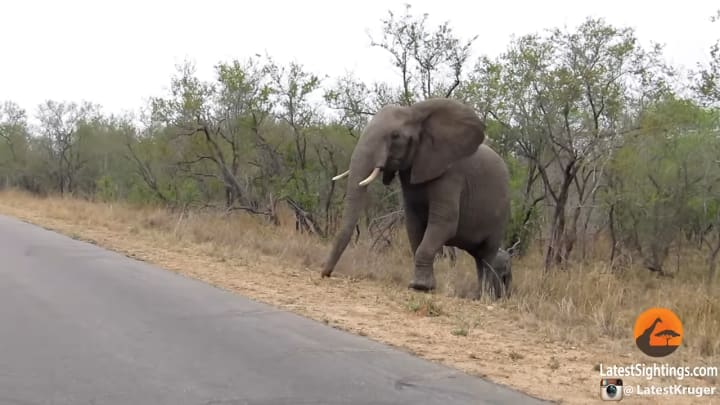
This mother and her calf walked out in full view. However, the mother wouldn’t allow the calf to be in any vulnerable position. The small animal followed behind her, and the mother kept her body between it and the road at all times.
Elephant calves generally stay very close to their mothers in their early years and are rarely more than a few metres away from her.

The deep maternal bond was evident as the pair crossed the road. Mother elephants are extremely attentive and affectionate towards their calves. They will use their trunks to help their calves walk and bathe. Their trunks are even used to comfort them when they are distressed.
Mother Uses Trunk To Guide Little One
This wary mother used her trunk to steer her little one away from the spectators.
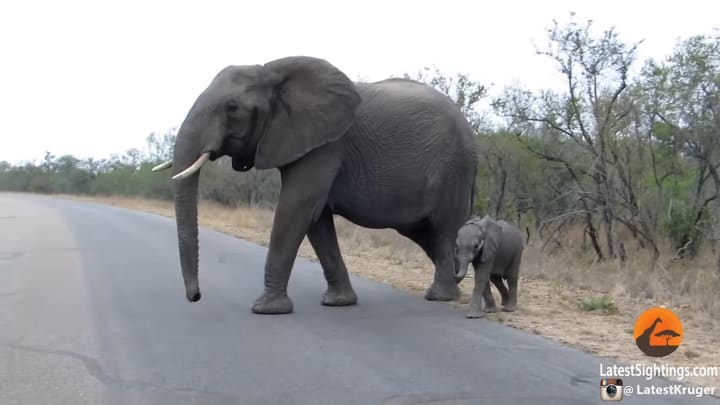
He responded well to her guidance and considered the viewers in the car with a certain amount of curiosity.

Elephant herds are matriarchal. The female elephants will also help to raise any calves. These aunts will babysit, protect, and even help teach the calf how to feed, socialise, and navigate the environment.
As such, the calves are given special attention. This mother lavished her affection upon the baby, making it clear how much it meant to her. Everyone watching the memorable moment could see what the little elephant meant to her.
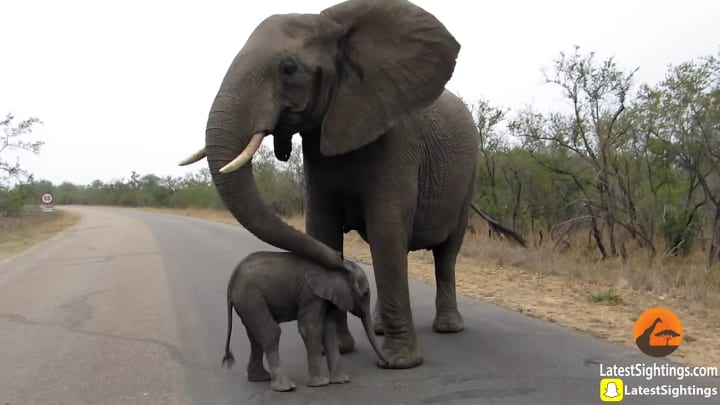
When the calf came too close to the cars, she again steered him away, guiding him back into her covering using her outstretched trunk.
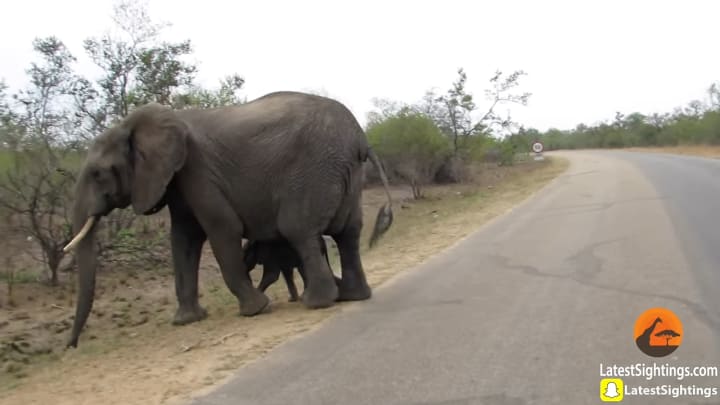
Mother And Calf Leave Together After Breathtaking Encounter
Mother and calf made it across the road after the heart-warming moment. The tiny elephant practically moved in step with her, using her body as a protective shield. As long as Mom was there, this little one felt safe.
Baby elephants will nurse for up to four years, and sometimes even longer. Around six months of age, they will start to eat more solid food. However, they will still depend on their mother’s milk for nutrition.
The bond between mother and calf will remain unshakable even once the calf has been weaned.
Marc witnessed in this unforgettable sighting just how tender and purposeful an elephant’s trunk can be. It showed the full gamut of her emotions towards her baby.
Interestingly, baby elephants don’t know how to use their trunks at birth. In the first few weeks of their lives, they might even trip over them, or suck on them like pacifiers. The attentive mother elephants will then guide their calves in using their trunks for drinking, eating, and social gestures.
Did You Know?
The African Savanna (Bush) elephant is the world's largest land animal, with adult males, or bull elephants, standing up to 3m high and weighing up to 6,000 kilograms on average. Males only reach their full size at 35 to 40 years. That’s well over half their lifespan, as wild elephants can live for up to 60 to 70 years.
Author: Heather Djunga
About the Creator
Latest Sightings
Latest Sightings, is a real-time wildlife spotting community that connects nature lovers with the most incredible animal encounters, captured and shared by rangers, tourists, and locals across Africa's national parks and reserves.
Keep reading
More stories from Latest Sightings and writers in Earth and other communities.


Comments
There are no comments for this story
Be the first to respond and start the conversation.