
Minister Claims 'Sabotage' Behind Chagos Debate Delay
A UK minister has accused unidentified actors of deliberately delaying parliamentary discussion on the Chagos Islands, raising questions about political maneuvering and international relations.
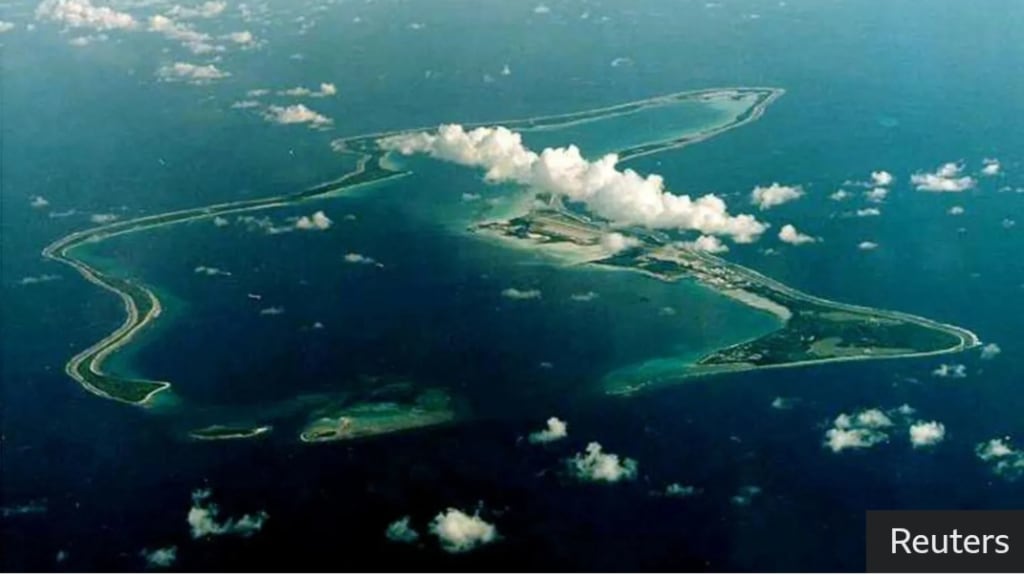
The Controversial Chagos Debate
The debate over the Chagos Islands, a British Overseas Territory in the Indian Ocean, has been a contentious issue for decades. The islands, home to the Chagossian people, were evacuated in the 1960s and 1970s to make way for a US military base on Diego Garcia.
Recent parliamentary sessions aimed to address ongoing claims for resettlement, compensation, and sovereignty, but the discussion has reportedly been delayed under unusual circumstances.
According to a statement from a UK minister, the delay may not be procedural but deliberate “sabotage”, designed to prevent timely debate on this long-standing issue.
What the Minister Said
In a recent press conference, the minister emphasized that the parliamentary delay is unusual and suspicious. While refusing to name specific individuals, the official suggested that political interests or external pressures may have influenced the postponement.
The minister stated:
“We are aware of actions that have undermined the scheduling of this debate. We will not allow the voices of the Chagossian people to be ignored.”
This strong language has sparked both media attention and political discussion, highlighting the sensitivity of the Chagos issue on national and international levels.
Historical Context of the Chagos Islands
Understanding the delay requires some historical context:
The Chagossians were forcibly removed from their homeland between 1968 and 1973.
The islands were leased to the United States for a military base, primarily on Diego Garcia.
Legal battles and UN resolutions have since called for the right of the Chagossians to return and compensation for lost property.
These historical grievances have made the islands a symbol of colonial legacy and human rights struggles, intensifying the political significance of any parliamentary debate.
Political Ramifications
The minister’s accusation of sabotage has sparked political debate:
Opposition parties have demanded a transparent investigation into the delay.
Advocacy groups for the Chagossian people have condemned the postponement as further marginalization of a historically displaced community.
Analysts suggest the delay may be related to diplomatic sensitivities, as the UK maintains a strategic partnership with the United States, particularly regarding military operations on Diego Garcia.
The controversy reflects a tension between human rights advocacy and geopolitical strategy, a balancing act often faced in foreign policy decisions.
Reactions from the Chagossian Community
The Chagossian diaspora, largely based in Mauritius and the UK, has reacted strongly to the minister’s statement:
Many activists see the delay as evidence of continued neglect by the British government.
Social media campaigns have called for immediate debate and restitution.
Community leaders emphasize that Chagossians deserve transparency, timely action, and recognition of their rights.
These responses highlight how the delay has directly affected community morale and advocacy efforts, amplifying calls for accountability.
International Implications
The Chagos Islands dispute is not only a domestic issue; it has international dimensions:
The United Nations General Assembly has repeatedly urged the UK to return the islands to Mauritius.
France and other nations have monitored the situation due to strategic interests in the Indian Ocean.
The accusation of sabotage may influence diplomatic relations if it suggests internal political maneuvering is hindering compliance with international recommendations.
Observers warn that the handling of this debate could have long-term consequences for the UK’s global reputation and human rights credibility.
Parliamentary Procedures and Challenges
Delays in parliamentary debates can occur for a variety of reasons, but accusations of deliberate sabotage suggest intentional interference. Challenges include:
Scheduling conflicts and procedural backlog
Political disagreements between parties
Influence from external lobbyists or diplomatic pressures
Experts emphasize the importance of parliamentary transparency and adherence to democratic norms, particularly when the matter involves historically displaced populations and international scrutiny.
Importance of Accountability
This controversy underscores the need for government accountability and transparency:
Timely debates are essential for upholding the rights of marginalized communities.
Parliamentary delays, whether intentional or procedural, can erode public trust.
Clear communication regarding causes of delays can mitigate political fallout and misinformation.
Advocates argue that maintaining procedural integrity is a matter of both domestic governance and international responsibility.
Future Steps and Expectations
The minister has indicated that further measures will be taken to ensure the debate proceeds without additional obstruction. Expected steps include:
Investigation into the causes of the delay
Engagement with Chagossian representatives to understand their concerns
Coordinated efforts to address both domestic and international expectations
If handled effectively, these steps may restore confidence in the government’s commitment to resolving this long-standing issue.
Conclusion
The recent accusation of sabotage surrounding the Chagos debate delay highlights the intersection of human rights, political strategy, and international diplomacy. As the UK government navigates these complexities, attention remains on ensuring that the voices of the Chagossian people are heard and that parliamentary processes maintain transparency and accountability.
How the situation unfolds will not only impact domestic politics but also signal the UK’s stance on historical injustices and international law compliance. For the Chagossian community and global observers, timely resolution and action are critical to restoring trust and advancing justice.
About the Creator
Keep reading
More stories from Aarif Lashari and writers in Earth and other communities.
White House Backtracks Initial Claims About Alex Pretti After Intense Backlash
The Controversy Unfolds In recent days, the White House came under scrutiny after making initial claims about Alex Pretti, a figure involved in a politically sensitive incident. The statements, which were widely circulated by mainstream media and social platforms, faced immediate backlash from journalists, politicians, and the public. Critics accused the administration of misrepresenting facts and prematurely assigning narratives, prompting the White House to issue clarifications and revise its official statements. Who Is Alex Pretti? Alex Pretti, a public figure linked to [context-specific involvement, e.g., a political event, policy dispute, or social activism], became the center of national attention due to conflicting reports. Initial White House claims painted Pretti’s actions or statements in a certain light, which opponents argued did not align with evidence or eyewitness accounts. This discrepancy fueled a wider debate about the accuracy of information released by government officials and the consequences of premature public statements. White House Response and Backtrack Facing mounting criticism, White House officials clarified their earlier statements, acknowledging that the initial claims were misleading or incomplete. Spokespersons emphasized that the correction was necessary to ensure the public received accurate information. The revised statement addressed key points: Correcting factual errors from the initial release Acknowledging miscommunication or lack of verification Reassuring the public of commitment to transparency and accountability While the backtrack was intended to restore credibility, many commentators noted that the damage to public trust may be long-lasting, given the widespread media coverage of the original claims. Public and Media Reaction The response from journalists, political analysts, and social media users was immediate: Journalists highlighted the dangers of unverified government statements, emphasizing the need for fact-checking. Political commentators debated whether the administration acted out of political expediency rather than transparency. Social media users expressed skepticism and frustration, with hashtags criticizing the initial claims trending nationally. The incident underscores how rapid dissemination of information in the digital age can amplify errors and make retractions less effective than the original claims. Implications for Government Credibility The Alex Pretti controversy raises questions about government credibility and information management. Experts argue that mistakes like this can have broader consequences for public trust, particularly in an era of heightened political polarization. Key concerns include: Public skepticism toward official statements on sensitive issues Increased reliance on alternative media and citizen reporting to verify facts Pressure on government communications teams to balance speed with accuracy Observers note that while corrections are important, they rarely undo the initial impressions created by early statements. Political Fallout Politicians across the spectrum have weighed in on the situation. Opposition figures have criticized the administration for misleading the public, calling for stronger oversight and accountability measures. Supporters, meanwhile, have emphasized the importance of quickly correcting errors to maintain credibility. The incident is likely to influence how future communications are managed, with officials adopting more cautious approaches to statements involving controversial figures or events. Lessons for Crisis Communication Communication experts highlight several lessons from the Alex Pretti situation: Verify before issuing statements: In politically sensitive situations, fact-checking is essential. Anticipate backlash: Even minor errors can escalate rapidly in the media ecosystem. Act quickly to correct misinformation: Delayed corrections can exacerbate public distrust. Maintain transparency: Open acknowledgment of mistakes helps restore credibility. These principles are critical for government agencies, corporate communications, and public officials, demonstrating how one misstep can dominate headlines and public discourse. Broader Context The controversy also reflects larger trends in political communication, including: The influence of social media in shaping narratives The speed of news cycles, which can pressure officials to release statements before full verification Public demand for accountability and transparency in government Experts argue that the Alex Pretti incident is a reminder of the importance of responsible communication, especially in high-stakes political environments. Conclusion The White House’s backtrack on statements about Alex Pretti illustrates the delicate balance between rapid communication and accuracy in modern politics. While the clarification demonstrates a willingness to correct errors, the incident has already sparked discussions about government transparency, media scrutiny, and public trust. As the public continues to digest these developments, officials may need to reevaluate how sensitive information is communicated, ensuring that future statements are both timely and verified, minimizing the risk of controversy.
By Aarif Lashariabout 9 hours ago in Earth
Winter Hiking in New Jersey: What No One Tells You
Okay, let’s get into it. You want to hike during the wintertime, but you don’t really know what to expect. You’ve seen the photos — snowy trails, frozen waterfalls, empty paths — and it looks peaceful. What no one tells you is that winter hiking is both a little scary and incredibly rewarding at the same time.
By Jakayla Toney6 minutes ago in Earth
Ukraine’s Two Largest Cities Under Russian Attack
Ukraine’s war reality took another grim turn as officials confirmed that Russia launched fresh attacks on Ukraine’s two largest cities, Kyiv and Kharkiv, leaving at least one person dead and several others injured. The strikes underscore how, even years into the conflict, urban centers and civilian life remain deeply vulnerable to escalating military operations.
By Muhammad Hassan3 days ago in Earth



Comments
There are no comments for this story
Be the first to respond and start the conversation.