
Melting Antarctic Ice Did the Opposite of What Scientists Expected
New research reveals that parts of the Antarctic ice sheet may respond in unexpected ways to warming, challenging assumptions about sea-level rise and climate models.

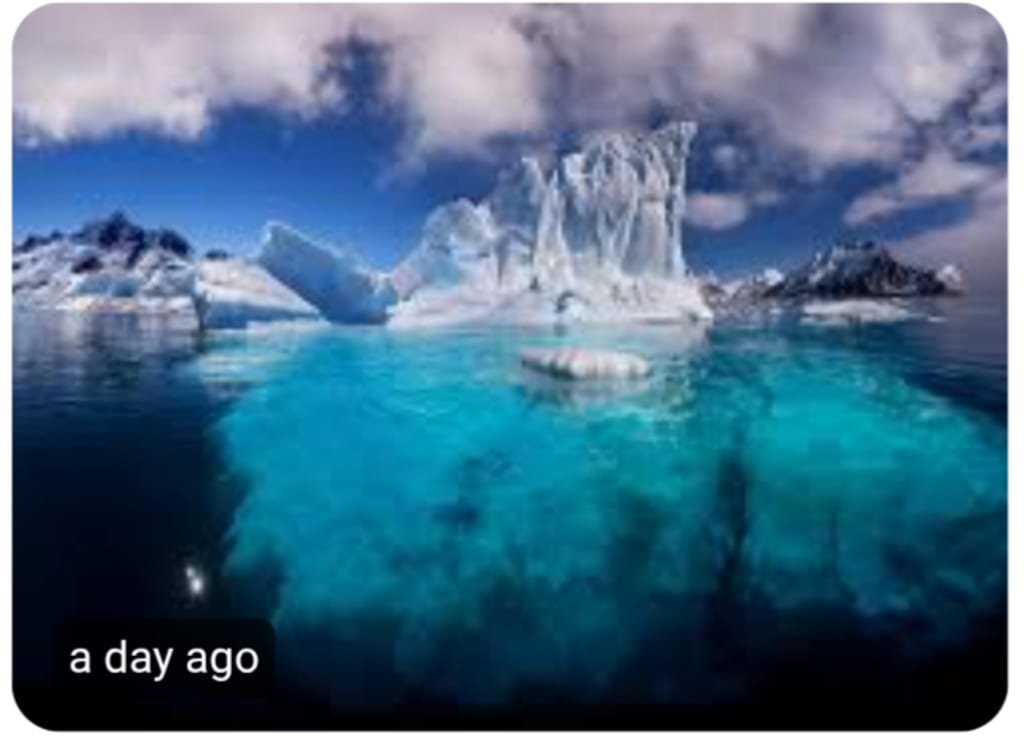
The Antarctic ice sheet, one of the largest reservoirs of frozen water on Earth, has long been under close observation by climate scientists. Conventional wisdom suggested that as global temperatures rise, the ice sheet would steadily thin and retreat, contributing to accelerating sea-level rise. But recent research is showing that parts of Antarctica are behaving in ways scientists did not anticipate, potentially rewriting our understanding of how the southernmost continent reacts to climate change.
Surprising Findings From Antarctica
A team of glaciologists and climate researchers recently published a study showing that certain regions of the Antarctic ice sheet have temporarily thickened even as overall warming continues. Using satellite observations, radar measurements, and computer modeling, scientists discovered:
Some areas along the East Antarctic Ice Sheet, long considered stable, showed ice accumulation rather than loss.
Ice flow in parts of West Antarctica is slowing in response to complex interactions between ocean currents and subglacial topography.
Melting at coastal regions is driving ice redistribution inland, paradoxically increasing thickness in some locations.
Dr. Maria Chen, lead author of the study, explained, “We expected a uniform thinning across Antarctica, but instead, we are seeing a patchwork of ice loss and gain. This complicates predictions for sea-level rise and highlights how much we still have to learn about polar dynamics.”
Why This Is Unexpected
Previous climate models generally predicted a steady decline of Antarctic ice with warming temperatures, primarily driven by:
Rising ocean temperatures that melt ice shelves from below
Warmer air temperatures causing surface melting
Accelerated glacier flow toward the ocean
However, the new observations suggest that regional processes can counteract these trends, at least temporarily. For instance, when coastal ice melts, it can create a feedback loop where ice from inland areas flows to replace it, temporarily thickening certain zones.
Additionally, ocean circulation patterns near the Antarctic coast are more dynamic than previously understood. Cold water can pool beneath some ice shelves, slowing basal melting and allowing inland ice to accumulate.
Implications for Sea-Level Rise
At first glance, ice thickening might seem like good news for the planet. Slower overall ice loss could reduce the rate of sea-level rise. However, experts caution against reading too much optimism into the findings:
The thickening is temporary and localized; other regions, especially West Antarctica and the Antarctic Peninsula, continue to lose ice rapidly.
If warming continues, ice redistribution could eventually accelerate the collapse of vulnerable glaciers.
The feedback mechanisms that temporarily thicken ice are complex and not fully understood, making long-term projections challenging.
“While it’s fascinating to see parts of the ice sheet gaining mass, it doesn’t mean Antarctica is ‘safe,’” says Dr. Chen. “Overall, the continent is still losing ice, and global sea levels are rising as a result.”
What This Means for Climate Models
The unexpected ice thickening has major implications for climate science:
Revising models: Current sea-level rise projections may need adjustment to account for these localized feedback mechanisms.
Better predictions: Understanding where and why ice accumulates could help scientists predict which glaciers are most vulnerable to collapse.
Incorporating complexity: The findings highlight the need for higher-resolution models that can capture regional variations in ice dynamics and ocean-ice interactions.
Researchers emphasize that Antarctic ice is a highly dynamic system, influenced by atmospheric conditions, ocean currents, subglacial topography, and even volcanic activity under the ice. Simplistic assumptions about uniform melting no longer hold.
Broader Climate Context
The Antarctic ice sheet contains enough frozen water to raise global sea levels by more than 58 meters if it were to melt entirely. Even partial loss of ice contributes to:
Coastal flooding and erosion
Threats to low-lying cities worldwide
Changes in ocean circulation patterns that can influence weather globally
The discovery of unexpected ice thickening does not eliminate these risks. Instead, it adds nuance to our understanding of how climate change impacts polar regions and underscores the importance of continuous observation and data collection.
Next Steps for Researchers
Scientists plan to:
Continue satellite monitoring to track changes in ice thickness in near real-time
Conduct field studies to measure ice flow, temperature, and ocean currents beneath ice shelves
Refine climate models to incorporate regional variations and feedback loops
By integrating these observations, researchers hope to produce more accurate forecasts of sea-level rise and identify which Antarctic regions are most at risk of rapid ice loss.
Conclusion
The Antarctic ice sheet’s unexpected response to warming is a reminder that Earth’s climate system is more complex than models can fully capture. While parts of the continent are thickening, other areas continue to thin, contributing to rising sea levels and global climate impacts.
For policymakers, urban planners, and scientists, the findings reinforce the urgency of mitigating greenhouse gas emissions, preparing for sea-level rise, and investing in climate research. For the public, it underscores a broader lesson: in a changing climate, surprises are likely, and understanding the nuances of our planet’s systems is essential to making informed decisions.
As research continues, the Antarctic ice sheet will remain a critical bellwether for global climate health—and this latest discovery is a clear signal that our assumptions about polar behavior must be continually reassessed.
About the Creator
Sajida Sikandar
Hi, I’m Sajida Sikandar, a passionate blogger with 3 years of experience in crafting engaging and insightful content. Join me as I share my thoughts, stories, and ideas on a variety of topics that matter to you.
Keep reading
More stories from Sajida Sikandar and writers in Earth and other communities.
Meteorologists Warn of an Unusually Early Arctic Breakdown Forming in February
Meteorologists are raising alarms as an unusually early Arctic breakdown appears to be forming in February, a time when the polar regions are typically stable and cold. This rare phenomenon, which involves a sudden weakening of the polar vortex and an intrusion of warm air into the Arctic, could have far-reaching consequences for weather patterns across North America, Europe, and Asia.
By Sajida Sikandarabout 18 hours ago in Earth
Protesters Bid to Save the ‘Heart’ of Margate
Residents and activists in Margate have launched a passionate campaign to save what they describe as the town’s “heart” — a historic public space facing redevelopment. The dispute has ignited local debate over preserving heritage, supporting small businesses, and maintaining the cultural identity of one of England’s most iconic seaside towns.
By Aarif Lashari2 days ago in Earth
The Devil's Triangle
The sails ruffled in the breeze as we cruised along. The Sea Breeze was a mid-size catamaran that sailed out of Royal Naval Dockyard in Bermuda. We had booked this trip weeks in advance and were now looking at our Captain, Spike and two boat hands. Paddy and Wilson seemed like nice guys, joking around with the passengers and telling us some stories about Bermuda that only locals would know. Their island accents sounded almost British but they were pleasant to listen to.
By Barbara Gode Wilesabout 15 hours ago in Fiction




Comments
There are no comments for this story
Be the first to respond and start the conversation.