
Melting Antarctic Ice Did the Opposite of What Scientists Expected
Why the Southern Ocean Might Not Help Us Fight Climate Change After All
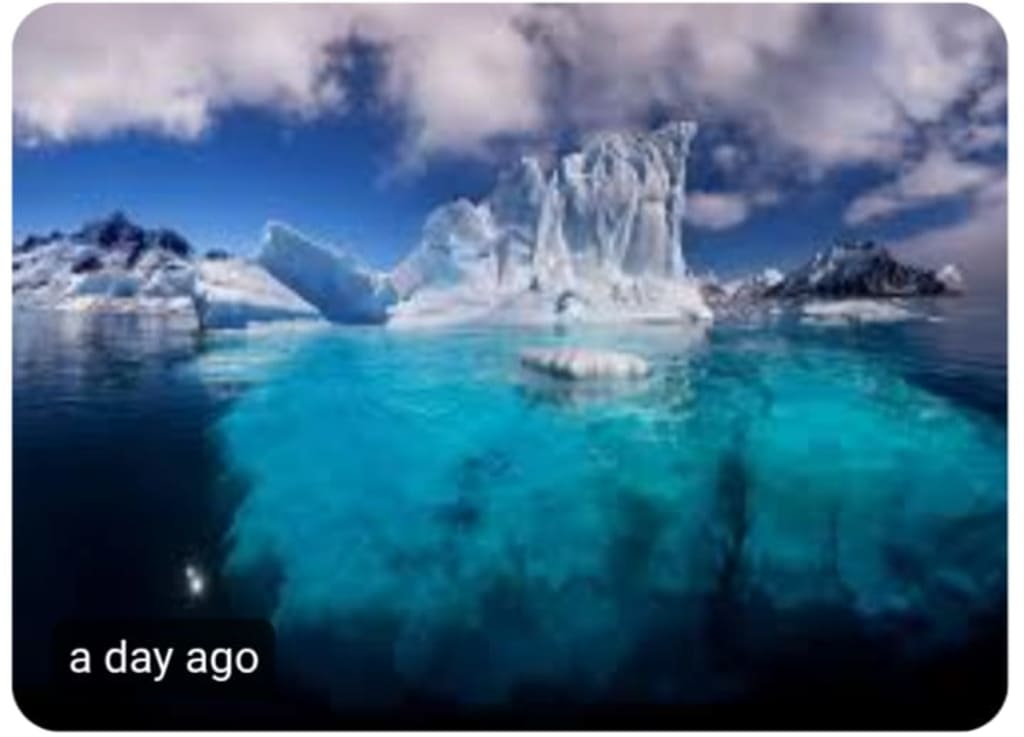
Antarctica’s ice sheets are melting faster than ever. For decades, scientists believed this could actually help slow climate change by feeding the ocean with iron, a nutrient that powers algae growth — and in turn, draws carbon dioxide from the atmosphere.
But recent research has turned this idea on its head. The reality, it turns out, is far more complicated — and worrying.
What Scientists Thought Would Happen
In the Southern Ocean, iron is scarce. Phytoplankton, the tiny ocean plants that form the base of the marine food web, can’t grow without it. The theory was simple:
More melting ice → more iron → more algae → more carbon absorbed from the atmosphere.
It made sense — and it seemed like a natural climate “safety valve.” Scientists even thought that icebergs, scraping up the bedrock beneath Antarctica, could be delivering this iron to the ocean.
The Surprising Findings
A team of researchers analyzed ocean sediments that date back hundreds of thousands of years. These sediments record past periods when West Antarctica’s ice sheets melted massively.
The expectation? Massive algae blooms. The reality? Almost nothing.
The reason: the iron in melting icebergs wasn’t in a form algae could use. It was chemically “locked up” and barely soluble in seawater. More iron didn’t mean more food for phytoplankton.
“Normally, an increased supply of iron in the Southern Ocean would stimulate algae growth,” said lead author Torben Struve. “But in this case, it simply didn’t happen.”
Why the Iron Didn’t Work
The chemistry behind it is fascinating. Icebergs grind up some of the oldest, most weathered rocks on Earth. The iron in these rocks is chemically different from dust-borne iron that usually fertilizes oceans.
Dust iron — blown from continents — dissolves easily and is perfect for algae. Iceberg iron? Not so much. Most of it remains locked in the sediment, useless to the tiny plants that normally pull carbon out of the atmosphere.
Implications for Climate Change
This discovery has serious implications for our climate future. If melting Antarctic ice doesn’t feed algae as expected, the Southern Ocean may not be able to absorb as much carbon dioxide. That means more greenhouse gases remain in the atmosphere — and global warming could accelerate.
Scientists call this a positive feedback loop: instead of slowing climate change, the process might actually speed it up.
“What matters is not just how much iron enters the ocean, but the chemical form it takes,” explains co-author Gisela Winckler. “This fundamentally alters how we think about carbon uptake in the Southern Ocean.”
Lessons from the Past
Sediment records also show what happened during previous warm periods: the ice sheets melted, icebergs flooded the ocean, and yet the boost in algae never came.
Fast forward to today — glaciers in West Antarctica are thinning rapidly. The so-called “Doomsday Glacier” is retreating, icebergs are breaking off more frequently, and the same pattern could be repeating — only this time under human-driven climate change.
The Bigger Picture
The key takeaway? Earth’s climate system is full of surprises. Even seemingly straightforward effects — like melting ice delivering nutrients to the ocean — can backfire. The Southern Ocean, one of our planet’s natural “carbon sinks,” may be less reliable than scientists once thought.
This research reminds us that climate change is complex, and nature doesn’t always follow our expectations. Solutions may be trickier than they appear, and adaptation strategies need to account for these unexpected feedbacks.
Bottom Line
Melting Antarctic ice releases iron into the ocean, but most of it is unusable by algae.
Expected carbon dioxide absorption by the Southern Ocean might not happen.
This counterintuitive effect could make global warming worse than current models predict.
Understanding the chemical form of iron is critical for predicting future climate feedbacks.
Antarctica is teaching scientists a hard lesson: in nature, things are rarely as simple as they seem. Sometimes, the ice doesn’t just melt — itsurprises us.
About the Creator
Keep reading
More stories from Ayesha Lashari and writers in Earth and other communities.
Unusually Early Arctic Breakdown Forming in February: Meteorologists Sound the Alarm
Meteorologists worldwide are issuing an unprecedented warning: an Arctic breakdown—a major disturbance in the polar atmosphere—is forming earlier than expected this February. This early event could reshape weather across the Northern Hemisphere, leading to unusual cold snaps, heat waves, and storm activity.
By Ayesha Lashariabout 9 hours ago in Earth
White House Backtracks Initial Claims About Alex Pretti After Intense Backlash
The Controversy Unfolds In recent days, the White House came under scrutiny after making initial claims about Alex Pretti, a figure involved in a politically sensitive incident. The statements, which were widely circulated by mainstream media and social platforms, faced immediate backlash from journalists, politicians, and the public. Critics accused the administration of misrepresenting facts and prematurely assigning narratives, prompting the White House to issue clarifications and revise its official statements. Who Is Alex Pretti? Alex Pretti, a public figure linked to [context-specific involvement, e.g., a political event, policy dispute, or social activism], became the center of national attention due to conflicting reports. Initial White House claims painted Pretti’s actions or statements in a certain light, which opponents argued did not align with evidence or eyewitness accounts. This discrepancy fueled a wider debate about the accuracy of information released by government officials and the consequences of premature public statements. White House Response and Backtrack Facing mounting criticism, White House officials clarified their earlier statements, acknowledging that the initial claims were misleading or incomplete. Spokespersons emphasized that the correction was necessary to ensure the public received accurate information. The revised statement addressed key points: Correcting factual errors from the initial release Acknowledging miscommunication or lack of verification Reassuring the public of commitment to transparency and accountability While the backtrack was intended to restore credibility, many commentators noted that the damage to public trust may be long-lasting, given the widespread media coverage of the original claims. Public and Media Reaction The response from journalists, political analysts, and social media users was immediate: Journalists highlighted the dangers of unverified government statements, emphasizing the need for fact-checking. Political commentators debated whether the administration acted out of political expediency rather than transparency. Social media users expressed skepticism and frustration, with hashtags criticizing the initial claims trending nationally. The incident underscores how rapid dissemination of information in the digital age can amplify errors and make retractions less effective than the original claims. Implications for Government Credibility The Alex Pretti controversy raises questions about government credibility and information management. Experts argue that mistakes like this can have broader consequences for public trust, particularly in an era of heightened political polarization. Key concerns include: Public skepticism toward official statements on sensitive issues Increased reliance on alternative media and citizen reporting to verify facts Pressure on government communications teams to balance speed with accuracy Observers note that while corrections are important, they rarely undo the initial impressions created by early statements. Political Fallout Politicians across the spectrum have weighed in on the situation. Opposition figures have criticized the administration for misleading the public, calling for stronger oversight and accountability measures. Supporters, meanwhile, have emphasized the importance of quickly correcting errors to maintain credibility. The incident is likely to influence how future communications are managed, with officials adopting more cautious approaches to statements involving controversial figures or events. Lessons for Crisis Communication Communication experts highlight several lessons from the Alex Pretti situation: Verify before issuing statements: In politically sensitive situations, fact-checking is essential. Anticipate backlash: Even minor errors can escalate rapidly in the media ecosystem. Act quickly to correct misinformation: Delayed corrections can exacerbate public distrust. Maintain transparency: Open acknowledgment of mistakes helps restore credibility. These principles are critical for government agencies, corporate communications, and public officials, demonstrating how one misstep can dominate headlines and public discourse. Broader Context The controversy also reflects larger trends in political communication, including: The influence of social media in shaping narratives The speed of news cycles, which can pressure officials to release statements before full verification Public demand for accountability and transparency in government Experts argue that the Alex Pretti incident is a reminder of the importance of responsible communication, especially in high-stakes political environments. Conclusion The White House’s backtrack on statements about Alex Pretti illustrates the delicate balance between rapid communication and accuracy in modern politics. While the clarification demonstrates a willingness to correct errors, the incident has already sparked discussions about government transparency, media scrutiny, and public trust. As the public continues to digest these developments, officials may need to reevaluate how sensitive information is communicated, ensuring that future statements are both timely and verified, minimizing the risk of controversy.
By Aarif Lashari8 days ago in Earth
Bradley Cooper’s Latest Movie Is This Thing On? Draws Inspiration from John Bishop’s Journey into Comedy
Hollywood actor and director Bradley Cooper is no stranger to versatile roles, but his latest project, Is This Thing On?, is turning heads for its unique inspiration: the career and journey of Liverpool-born comedian John Bishop. The film, a blend of humor, heart, and ambition, showcases how a global star like Cooper finds creative fuel in the life story of a working-class comedian from the UK.
By Aarif Lashari3 days ago in Earth
One Unchecked Box
"Republished" because it was the only way to add the embed for the newly recorded audio version of this story due to the Top Story badge. Plus it serves as a nice, informal announcement of the podcast's revival for another season (go subscribe!):
By Stephen A. Roddewig7 days ago in Fiction


Comments
There are no comments for this story
Be the first to respond and start the conversation.