

Mass Extinction: Oceans
Our planet today is arguably facing the biggest mass extinction event of history which would destroy billions of years of fossils, artifacts, and species development/diversity that has grown over the millions of years between extinction events. This type of genetic diversity and evolution would take millions of years to form again, especially for human organisms to form as they once had.
The ocean has been a part of the Earth ever since precipitation fell down into basins 3.8 billion years ago. Water vapor had escaped from molten rocks on Earth’s surface, condensing in the atmosphere above. It remained a gas in the air until the Earth cooled below 212 degrees fahrenheit. The water vapor then condensed into rain which rained down upon the Earth for centuries, filling the empty basins with what we now know as our world oceans. These basins had formed by stretching and splitting of continental crust, moved by the rise of mantle material into the crack to form oceanic lithosphere. The basins were perfect for holding in the oceans that rained down from Earth’s interior degassing and created the first ever microbe and living organism environment..
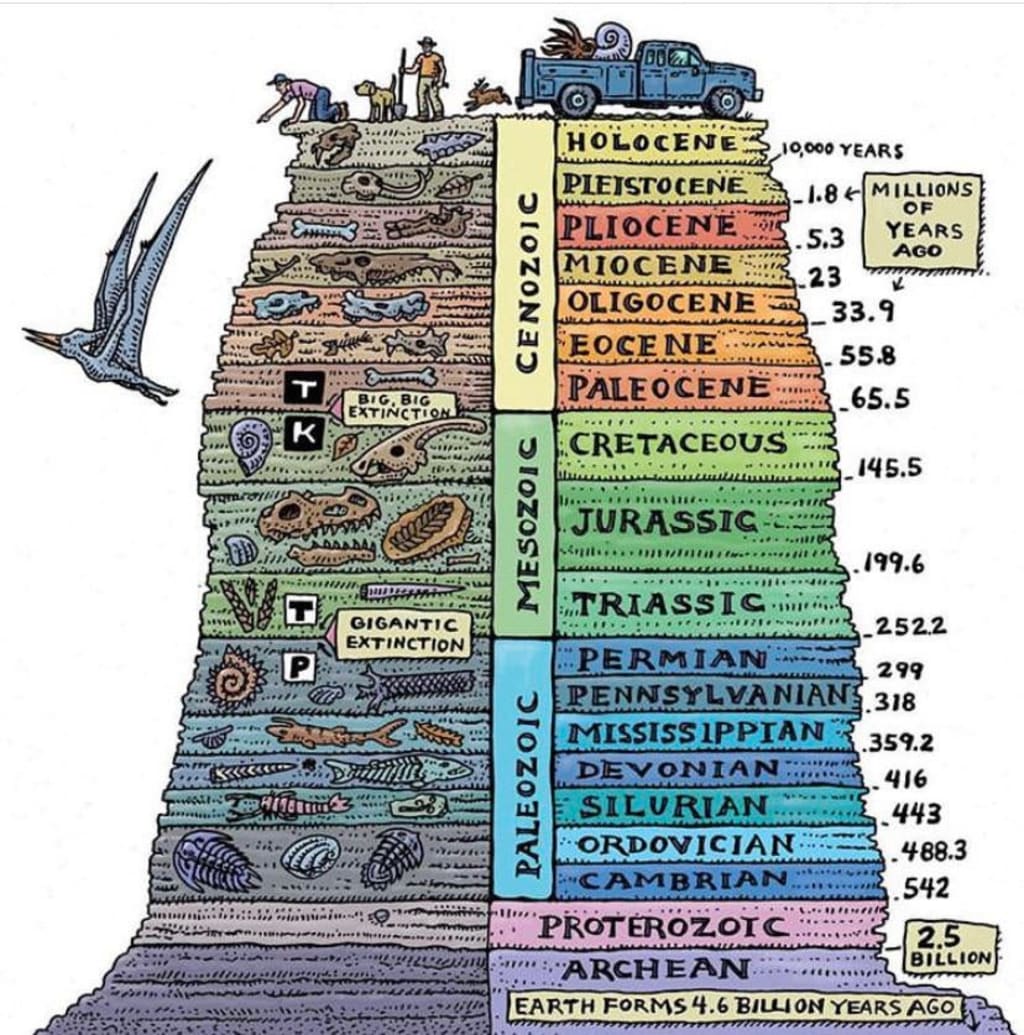
The oceans had formed before any of the extinction events had taken place. Three of the five major extinctions involved with the ocean included the Ordovician-Silurian Extinction, the Devonian Extinction, and the Permian-Triassic Extinction. During the Ordovician-Silurian extinction 440 million years ago, small marine organisms were killed off. Global temperatures were cooling and it caused a drop in sea level as glaciers started to form. This on top of other extinction events caused a massive loss of marine animal genetic diversity, those organisms suffering the most from this extinction event(s). The Devonian extinction, which took place 365 million years ago, brought with it 8-10 extinction phenomenons all compiled into one massive extinction event. This resulted in a 75% loss of the world’s species, all of which went extinct. There was also an incredible loss of genetic diversity. The major factors of the extinction had to do with a meteor collision and exposure of shale in the atmosphere following the meteor. Finally, the Permian-Triassic Extinction eliminated 96% of all species on Earth, also known as “The Great Dying”. This extinction rewrote Earth’s evolutionary history after the loss of species diversity. It is thought to have been caused by the intensive heating of the atmosphere, a type of global warming effect that initiated horrible storms and extreme droughts in some regions. In addition to global warming, an asteroid the size of mount everest hit which disrupted the Earth.
All of the extinction events took place in separate eras. The four major eras are known as the Precambrian era, Paleozoic era, Mesozoic era, and the Cenozoic era. During the Precambrian Era, the ocean was formed by the vaporized water in the atmosphere condensing and precipitation occurring. The ocean covered the entire planet, no land masses existing at this point. The first lifeforms also formed, thought to have evolved near hydrothermal vents that carried minerals from within the Earth up to the surface. Since oxygen was not abundant enough in the atmosphere, these organisms produced energy with sulfur instead. The first organisms to use oxygen to produce energy were cyanobacterium. Towards the end of this era, complex life forms started to form. The Paleozoic brought along a burst of life as extensive shallow water marine habitats formed. Structurally speaking, a continent called Rodinia had formed and was flooded by over flooding from the rising sea level. Other continent forms started to collide and initiated the dry up of the Panthalassic ocean. The complex life introduced in this era included large predators with sharp teeth, the formation of calcium carbonate shells, and the infamous Trilobites. However, this era ended in an ice age after a continent called Gondwana shifted towards the south pole and the oceans overall temperature dropped. This caused sea level to drop and major glaciers to appear in the ocean. The Mesozoic era started off with Pangea breaking apart, causing separate basins to appear in the ocean and moving the Panthalassa ocean to separate. The water was starting to warm in this era, causing the glaciers to melt and increase the sea level. Reefs were starting to emerge back from the Permian extinction which had devastated them. These reefs were made up of Rudist clams. This era ended with an asteroid hitting the Earth, causing sulfur to create a type of acid rain that killed the newly formed reefs.
The Cenozoic era is the era we currently live in today. At the start of this era, the ocean basins closely resemble what the bottom of our ocean looks like today. The shifting of tectonic plates caused the hot ocean temperatures to drop and an increase in atmospheric carbon dioxide. The movement of the plates caused a constant change in food webs and currents which were repeatedly disturbed by the formation of continents on these boundaries. The current movements also lead to nutrient depletion in some areas, leading to the formation of the coral reefs and algae we have today. The Cenozoic era has yet to end, but scientists believe how it may happen. The Permian-Triassic extinction was caused by global warming, which is what the Cenozoic era is predicted to end as. Human impact on the environment and the Earth itself has caused irreplaceable damage to important parts of the world. The increasing amount of carbon dioxide in the atmosphere causes the ocean pH to rise and kill off corals and other marine life in the sea. Humans have driven 680 vertebrate species to extinction since the 16th century, which is something that will eventually lead to the mass extinction event that ends the Cenozoic era. In 300 million years from now, the amount of species humans have driven to extinction will continue increasing until we kill even ourselves.
About the Creator
Maddie
Hi, I'm an aspiring writer just trying to share my work with others! Thanks!
Antibiotic resistance is released into rivers and other essential water supplies by melting glaciers.
Sea level rise and the disappearance of landscapes are not the only effects of glaciers melting quickly. Melt water may also contain buried genetic material that aids in bacterial resistance to drugs, scientists are now cautioning.
By Francis Dami5 days ago in Earth
Miss Persephone's Manual to a Seemingly Ordinary Life
Miss Persephone was found at the dining table, her blue eyes swollen, her tears arriving and retreating like the tides of the ocean. Earlier that day, her family had visited her in the retirement home where she had lived for eight years. It was her eightieth birthday.
By Imola Tóth3 days ago in Fiction



Comments
There are no comments for this story
Be the first to respond and start the conversation.