
Mars Kept a Secret for 3.5 Billion Years NASA’s Curiosity Rover Finally Dug It Up
New evidence of ancient lakes and a once-thick atmosphere on Mars hints at a long lost habitable world changing everything we thought we knew about the Red Planet
Mars Kept a Secret for 3.5 Billion Years NASA’s Curiosity Rover Finally Dug It Up
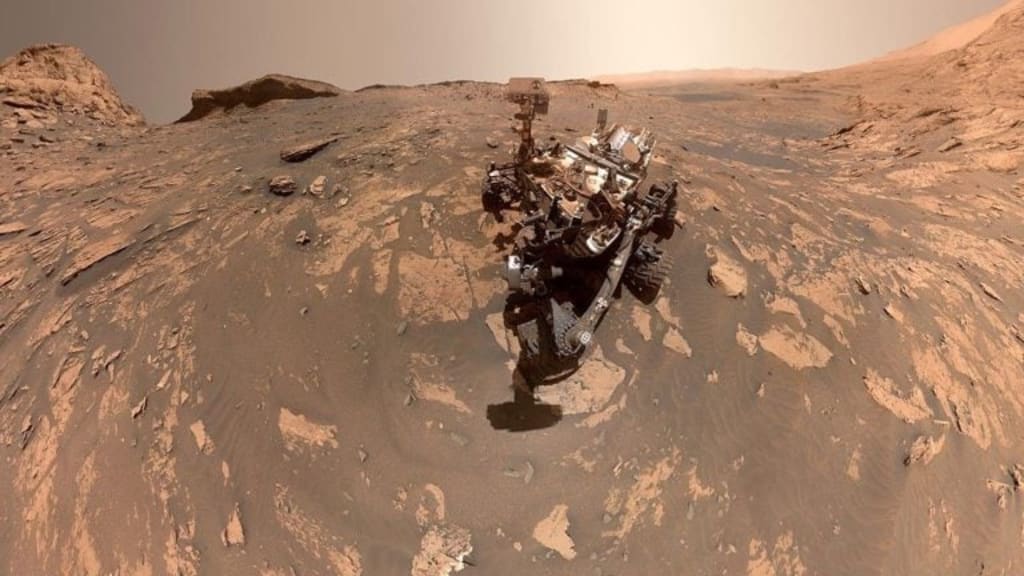
For centuries, humans have gazed up at Mars wondering whether life ever existed on the Red Planet. Now thanks to a groundbreaking discovery by NASA’s Curiosity rover we have new evidence that Mars once had conditions remarkably similar to Earth’s and it has been hiding this secret for 3.5 billion years. Curiosity which has been exploring Gale Crater since 2012 recently uncovered signs of ancient lakes and water activity in a region known as the sulfate bearing unit. Scientists originally believed this area was dry and barren formed during a time when Mars was losing its atmosphere and water. But what Curiosity found turned that assumption upside down. The rover photographed and analyzed rocks with unique ripple patterns the kind of features that form when water waves move across sediment. These ripples are almost identical to those found in shallow lakes on Earth. In other words Mars wasn’t just wet in its distant past it may have supported calm lakes that lasted long enough to allow life a real chance to develop. Ashwin Vasavada Curiosity’s project scientist at NASA’s Jet Propulsion Laboratory called it “the best evidence of water and waves that we’ve seen in the entire mission. According to the research team this shows that Mars had a stable, wet environment for much longer than previously believed.
A Rich Geological Record
Curiosity has been slowly climbing Mount Sharp a towering 3 mile high mountain made of layered rock each layer representing a different chapter of Martian history. As the rover ascends, it’s essentially reading Mars’ geological diary. The recent findings are significant because they show that even after Mars began losing much of its atmosphere a key factor in making the planet colder and drier pockets of water still remained. These ancient lakes could have lasted for thousands maybe millions of years offering stable environments where microbial life could have thrived. The layered rocks also reveal patterns of climate cycles. Some layers suggest wetter periods, while others show more arid times, hinting that Mars may have had repeating seasons or climate changes much like Earth.
Hidden Clues in Carbonates
Even more exciting is Curiosity’s detection of certain carbonate minerals like siderite in the rock samples. On Earth carbonates typically form when carbon dioxide in the atmosphere reacts with water. The discovery of these minerals on Mars suggests that 3.5 billion years ago the planet had a much thicker warmer atmosphere rich in carbon dioxide. Ben Tutolo a geoscientist from the University of Calgary explained that these carbonates could reveal how Mars lost its atmosphere. As carbon dioxide was pulled out of the air and locked into the planet's rocks Mars cooled down and surface water began to disappear. Understanding this process could even help scientists predict Earth's own future climate patterns. Every discovery Curiosity makes adds a piece to the puzzle of whether life could have existed on Mars. Water is essential for life as we know it and these findings strengthen the possibility that Mars was once a habitable planet. Moreover the relatively calm lake environments suggested by the new evidence would have been perfect places for microbes to develop. On Earth life began in similar watery environments around 3.5 billion years ago about the same time Mars had these lakes. NASA and other space agencies are now focusing their efforts on finding direct evidence of ancient Martian life. The new clues from Curiosity will help guide future missions like the Mars Sample Return project which plans to bring rock samples back to Earth for detailed study.
The Journey Continues
After more than 10 years on Mars Curiosity is still going strong. The rover will continue its slow trek up Mount Sharp exploring even older rock layers and possibly finding even more signs of Mars' watery past. Each discovery helps scientists better understand not just Mars but the history of all rocky planets including Earth. The secret that Mars kept hidden for billions of years is now slowly being uncovered. Thanks to Curiosity’s determination and the brilliant scientists behind it we are closer than ever to answering one of humanity’s oldest questions: Are we alone?
About the Creator
The Power of Perseverance A Story of Redemption and Unexpected Triumph
The Power of Perseverance A Story of Redemption and Unexpected Triumph In the world of high school dynamics few moments are as pivotal and memorable as the invitation to a school dance. The glitz and glamour, the excitement and anxiety, all converge on this one event. However for one student what was meant to be a humiliating experience turned into an unexpected victory. This story is a testament to the power of perseverance kindness and the unexpected rewards of staying true to yourself even when the odds are stacked against you.
By Gul Sher9 months ago in Motivation
Disappeared Bodies, Mass Burials and ‘30,000 Dead’
For years, reports emerging from Iran have painted a grim and often confusing picture of death tolls tied to political unrest, state violence, pandemics, and human rights abuses. Allegations of disappeared bodies, mass burials, and claims of “30,000 dead” have circulated widely among activists, exiled communities, and international media. Yet, inside Iran, official figures often tell a very different story.
By Aarif Lasharia day ago in Earth


Comments
There are no comments for this story
Be the first to respond and start the conversation.