
Mapping Earth: The Quest for a Truth
Navigating the World of Map Projections and Their Trade-Offs
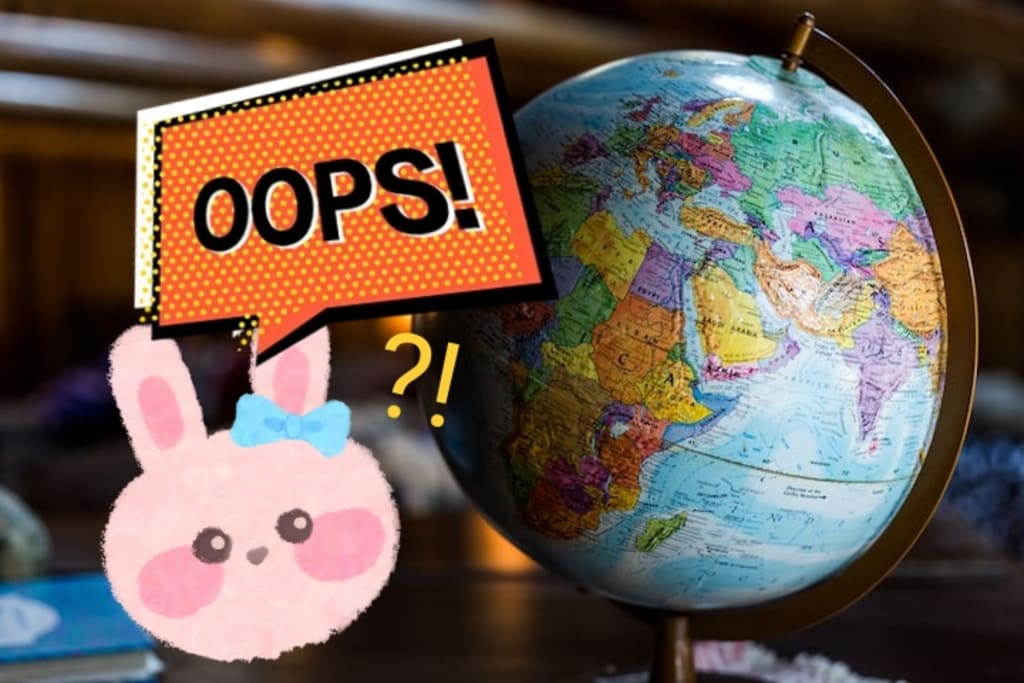
Maps, those trusty guides in our exploration of the world, come with an age-old challenge - the enigma of map projections. Picture this: You have a globe, and you're determined to morph it into a flat map. To achieve this feat, you'll need to perform some cartographic acrobatics. The outcome? Certain distortions.
This conundrum has been the stuff of cartographic legend for centuries. It's the result of a simple truth - the surface of a sphere can't be unraveled onto a two-dimensional plane without a little creative stretching and pulling.
Imagine being a mathematician in the 16th century. You're tasked with translating the Earth onto a flat surface. That's when the 'Eureka!' moment strikes, and you dive into the world of map projections. You might choose a cylindrical projection, for example. Here's how it works: Wrap a theoretical cylinder around the globe and project each point onto its surface. Unroll the cylinder, and voila! You have a rectangular map. ow, the fun part. Each projection comes with its own quirks. Take the Mercator projection, for instance. It's like the celebrity of map projections. It preserves shape and direction like a champ, making it a favorite for navigation. But there's a catch - it plays fast and loose with size. Greenland might look like it's competing with Africa, but it's merely a case of projection puffery.
Size distortion is a major headache for cartographers, sparking debates about global fairness and geographic bragging rights. The Gall-Peters projection steps in as the equalizer, keeping sizes true but reshaping countries like they've hit the gym a little too hard.
Now, here's a joke to lighten the mood: Why did the cartographer break up with the globe? Because it had too many issues with commitment! Cartographers indeed have commitment issues – they can't commit to one projection for all purposes.
With modern technology, maps have transitioned from tools of navigation to works of art. But the Mercator projection still has a gig at Google Maps - it turns out that preserving shape and angles makes left turns on streets and maps equally predictable.
Today's cartographers opt for more balanced projections, like the Winkel tripel. It's a harmonious blend of size and shape accuracy and a favorite of the National Geographic Society. Still, the quest for the perfect projection is akin to searching for a unicorn – delightful but elusive. Let's dive deeper into the world of map projections. Did you know that certain projections aim to minimize distortions in specific areas of the map? One such projection is the Lambert Conformal Conic, which is ideal for mapping large regions with east-west orientation, such as the United States. It maintains both shape and size accuracy within that region while distorting areas farther from the chosen standard parallels.
When it comes to global maps, the Eckert IV projection offers an intriguing alternative. It presents an elliptical appearance of the Earth, minimizing distortions at the cost of some angular deviations. This gives the map a distinctive oval shape that sets it apart from traditional rectangular projections.
For sea voyages, the authentic go-to projection is the Eckert-Greifendorff projection, known for its preservation of compass bearings along the rhumb lines, making navigation a breeze.
While cartographers continue to explore new projections, it's essential to remember that the quest for the perfect map is like searching for the Holy Grail. Every projection comes with its own set of trade-offs, be it in terms of shape, size, distance, or direction accuracy.
In summary, globes offer the unadulterated truth about our world, while flat maps inject a dash of cartographic creativity. Remember, there's no one-size-fits-all solution. So, whether you're exploring the world, trying to fold your road map, or simply appreciating the beauty of cartographic diversity, embrace the quirks of map projections with a grin!
About the Creator
Keep reading
More stories from writers in Earth and other communities.
Violent Winds Could Strike Without Warning — Officials Urge Extreme Caution*
**Violent Winds Could Strike Without Warning — Officials Urge Extreme Caution** Meteorologists have issued an urgent warning as violent winds are expected to develop rapidly, posing a serious threat to public safety. Weather experts say conditions are becoming increasingly unstable, with sudden gusts capable of causing damage within minutes. Unlike typical windy days, this event is marked by unpredictability, making it especially dangerous for residents, travelers, and outdoor workers.
By America today a day ago in Earth


Comments
There are no comments for this story
Be the first to respond and start the conversation.