
Mangalyaan: India's Journey to Mars
Impossible that made possible

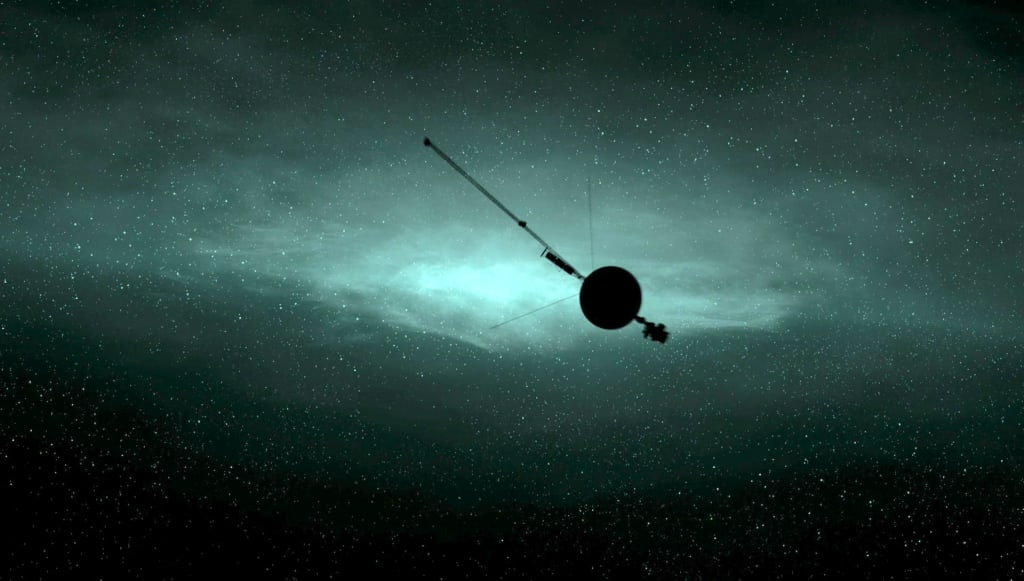
Mangalyaan, also known as the Mars Orbiter Mission (MOM), was India's first interplanetary mission. Launched on November 5, 2013, the mission was designed to study Mars' atmosphere, surface, and mineralogy. The spacecraft traveled a distance of approximately 680 million kilometers over a period of 300 days to reach Mars. On September 24, 2014, Mangalyaan successfully entered Mars' orbit.
The scientific objectives of the mission included studying the Martian atmosphere, searching for methane gas, studying the surface features of Mars, and studying the mineralogy of Mars. The mission was also designed to study the Martian moons, Phobos and Deimos.
Mangalyaan made several scientific discoveries during its mission. One of the most significant discoveries was the detection of methane gas in the Martian atmosphere. This discovery was significant because methane is a potential indicator of life on Mars. The spacecraft also discovered that Mars' atmosphere is much thinner than previously thought. This discovery was important because it provided new insights into the evolution of Mars' atmosphere. Another significant discovery made by Mangalyaan was the detection of iron and magnesium in the Martian soil. This discovery was important because it provided new insights into the mineralogy of Mars.
Mangalyaan's mission was originally designed to last for six months, but the spacecraft continued to function well beyond its expected lifespan. The mission was extended several times, and the spacecraft continued to make scientific discoveries. On September 24, 2019, exactly five years after its successful insertion into Mars' orbit, Mangalyaan's mission officially came to an end. The spacecraft had completed over 4,000 orbits of Mars and had made significant contributions to our understanding of the red planet.
Mangalyaan's success was a significant achievement for India in the field of space exploration. The mission demonstrated India's capabilities in space technology and provided new insights into the Martian atmosphere, surface, and mineralogy. Mangalyaan's success has inspired a new generation of scientists and engineers in India and has paved the way for future space missions.
The success of Mangalyaan was not without its challenges. The mission was completed on a tight budget of $74 million, which is significantly less than the cost of similar missions by other countries. The spacecraft was also designed and built in just 15 months, which is a remarkable achievement given the complexity of the mission.
Mangalyaan's success has also had a significant impact on India's space program. The mission has inspired a new generation of scientists and engineers in India and has helped to establish India as a major player in the field of space exploration. India's space program has continued to grow since the success of Mangalyaan, with plans for future missions to the moon and beyond.
Mangalyaan was not only India's first interplanetary mission, but it was also the first successful Mars mission by an Asian country. The mission was a significant achievement for India, which had previously focused on domestic satellite launches and had not yet ventured into interplanetary missions.
The success of Mangalyaan was celebrated across India, with many people taking pride in the country's achievements in space exploration. The mission was seen as a symbol of India's technological prowess and its ability to compete with other countries in the field of space exploration.
Mangalyaan's success has also had a significant impact on India's economy. The mission has helped to create new jobs in the space industry and has spurred the growth of related industries, such as satellite manufacturing and remote sensing. The success of Mangalyaan has also helped to attract foreign investment in India's space program.
The mission has also had a significant impact on India's scientific community. The success of Mangalyaan has inspired a new generation of scientists and engineers in India, many of whom are now working on future space missions. The mission has also helped to establish India as a leader in space technology and has encouraged collaboration between Indian and international scientists.
Mangalyaan's success has also had a broader impact on the field of space exploration. The mission has demonstrated that interplanetary missions can be completed on a tight budget and in a short timeframe. This has inspired other countries to pursue similar missions and has helped to advance our understanding of the universe.
In conclusion, Mangalyaan was a significant achievement for India in the field of space exploration. The mission demonstrated India's capabilities in space technology and provided new insights into the Martian atmosphere, surface, and mineralogy. Mangalyaan's success has inspired a new generation of scientists and engineers in India and has paved the way for future space missions. The success of Mangalyaan was not without its challenges, but it has had a significant impact on India's space program and has helped to establish India as a major player in the field of space exploration.
About the Creator
Mohamed Aasis
I love exploring space and I write about them.
Keep reading
More stories from Mohamed Aasis and writers in Earth and other communities.
The history of space exploration: From the first satellite launch to the moon landing
Space exploration has been a topic of fascination for people around the world for several decades. The history of space exploration is a testament to human ingenuity and perseverance. From the first satellite launch to the moon landing, humans have pushed the boundaries of what is possible and have made incredible discoveries about our universe. In this article, we will take a closer look at the key moments in the history of space exploration.
By Mohamed Aasis3 years ago in Earth
Malted Wheat Flour Market Size and Forecast 2025
Malted Wheat Flour Market Overview Malted wheat flour is produced by germinating wheat grains, drying them, and grinding them into flour. This natural malting process activates enzymes—particularly amylase—that convert starch into fermentable sugars during baking. The result is improved dough fermentation, enhanced texture, increased loaf volume, and a richer, more consistent flavor profile in baked goods.
By Aaina Oberoiabout 8 hours ago in Earth
Neutraceutical Packaging Market Size and Forecast 2025–2033
Neutraceutical Packaging Market at a Glance The Neutraceutical Packaging Market is projected to expand from US$ 4.92 billion in 2024 to US$ 7.63 billion by 2033, growing at a CAGR of 4.99% from 2025 to 2033. This steady growth reflects the accelerating global demand for dietary supplements, functional foods, herbal products, and wellness beverages. Rising health awareness, aging populations, sustainability expectations, the rapid growth of e-commerce, and evolving regulatory frameworks are reshaping how nutraceutical products are packaged, protected, and presented.
By jaiklin Fanandishabout 19 hours ago in Earth


Comments
There are no comments for this story
Be the first to respond and start the conversation.