
The history of space exploration: From the first satellite launch to the moon landing
journey to the space


Space exploration has been a topic of fascination for people around the world for several decades. The history of space exploration is a testament to human ingenuity and perseverance. From the first satellite launch to the moon landing, humans have pushed the boundaries of what is possible and have made incredible discoveries about our universe. In this article, we will take a closer look at the key moments in the history of space exploration.
The First Satellite Launch
On October 4, 1957, the Soviet Union launched the world's first artificial satellite, Sputnik 1. This event marked the beginning of the space race between the Soviet Union and the United States. Sputnik 1 was a small, spherical satellite that orbited the Earth every 96 minutes. It was equipped with a radio transmitter that sent signals back to Earth, allowing scientists to track its orbit.
The First Human in Space
On April 12, 1961, Soviet cosmonaut Yuri Gagarin became the first human to travel into space. He orbited the Earth once aboard the Vostok 1 spacecraft. Gagarin's flight lasted just 108 minutes, but it was a major milestone in the history of space exploration. It proved that humans could survive in space and opened the door for future manned missions.
The First American in Space
On May 5, 1961, American astronaut Alan Shepard became the first American to travel into space. He made a suborbital flight aboard the Freedom 7 spacecraft. Shepard's flight lasted just 15 minutes, but it was a significant achievement for the United States in the space race.
The First Manned Orbital Flight
On February 20, 1962, American astronaut John Glenn became the first American to orbit the Earth. He made three orbits aboard the Friendship 7 spacecraft. Glenn's flight lasted just under five hours and was a major achievement for the United States in the space race.
The First Moon Landing
On July 20, 1969, American astronauts Neil Armstrong and Edwin "Buzz" Aldrin became the first humans to walk on the moon. They landed on the moon aboard the Apollo 11 spacecraft. Armstrong famously declared, "That's one small step for man, one giant leap for mankind." The moon landing was a major achievement for the United States in the space race and marked a significant milestone in human history.
The First Space Station
On April 19, 1971, the Soviet Union launched the world's first space station, Salyut 1. It was designed to be occupied by crews of up to three people and was in orbit for 175 days. The space station was equipped with scientific instruments and was used to conduct experiments in space.
The First Space Shuttle Launch
On April 12, 1981, the United States launched the first space shuttle, Columbia. The space shuttle was designed to be a reusable spacecraft that could carry both crew and cargo into space. The space shuttle program was a major achievement for the United States in the space race and helped to advance space exploration.
The First Woman in Space
On June 16, 1963, Soviet cosmonaut Valentina Tereshkova became the first woman to travel into space. She orbited the Earth 48 times aboard the Vostok 6 spacecraft. Tereshkova's flight was a major achievement for women in space exploration and paved the way for future female astronauts.
Conclusion
The history of space exploration is a testament to human ingenuity and perseverance. From the first satellite launch to the moon landing, humans have pushed the boundaries of what is possible and have made incredible discoveries about our universe. As we look towards the future, we can expect to see many more exciting developments in space exploration. The history of space exploration is a reminder of what we can achieve when we work together and push the limits of what is possible
About the Creator
Mohamed Aasis
I love exploring space and I write about them.
Keep reading
More stories from Mohamed Aasis and writers in Earth and other communities.
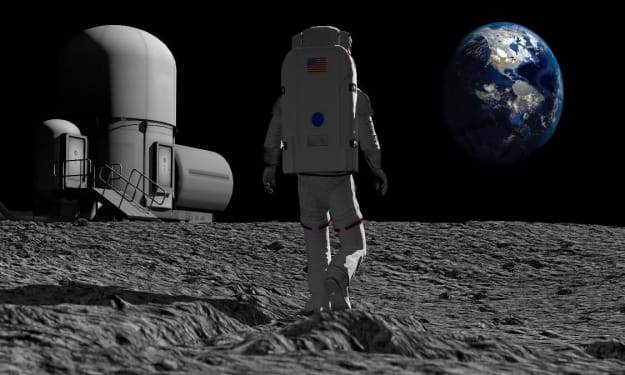
The Challenges of Living in Space: Physical and Psychological Considerations
Title: Living in Space: Addressing Physical and Psychological Challenges Space exploration has always been a topic of fascination for people around the world. With the recent advancements in technology, we are now closer than ever to sending humans on long-duration missions to Mars and beyond. However, living in space presents a unique set of challenges that need to be addressed before we can make these missions a reality. In this article, we will explore the physical and psychological challenges of living in space and how scientists are addressing these challenges.
By Mohamed Aasis3 years ago in Earth
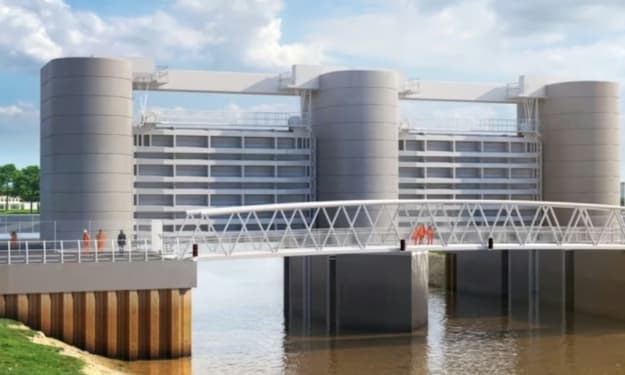
Tidal Barrier to Be 10m Shorter to Save Money
Rethinking Flood Protection in Somerset If you live near the coast, the threat of flooding isn’t just news — it’s a reality you can feel. That’s the situation in Bridgwater, Somerset, a historic market town near the Bristol Channel. For years, plans have been underway to build a tidal barrier to protect homes, businesses, and livelihoods from storm surges. Now, new updates reveal the barrier will be about 10 metres shorter than originally planned, a decision aimed at reducing costs while still keeping the town safe. This announcement has sparked conversations about engineering, budgets, and how communities adapt to climate challenges. Why the Barrier Is Being Shortened The Bridgwater Tidal Barrier was initially designed to be a high-profile flood defence, protecting thousands of properties from tidal surges that travel up the River Parrett. But after a recent design efficiency review, engineers concluded the barrier could be slightly shorter without compromising safety. Reducing the barrier by 10 metres lowers construction complexity, saves money, and reduces long-term maintenance costs. The Environment Agency and local authorities say this approach allows the project to move forward on time and on budget, ensuring the community gets protection sooner rather than later. The Cost Factor Public infrastructure projects like this don’t happen in a vacuum. Rising inflation, global supply chain disruptions, and labor shortages have increased costs for large-scale projects. Officials argue that the revised design is a responsible compromise: it balances cost savings with safety. Somerset Council leaders have welcomed the decision, noting that managing costs wisely helps the project reach completion without compromising protection for residents. Community Voices and Concerns Local engagement has been a key part of the project. Residents have attended consultations and drop-in sessions to see the updated plans and ask questions. Some community members appreciate the cost savings and faster timeline. Others worry whether a shorter barrier will be as effective against future extreme weather events. Questions include: Will the barrier remain strong against increasingly unpredictable storms? Does reducing the height limit future adaptability as climate impacts grow? What effect might it have on local ecosystems and fish habitats? These are valid concerns, reflecting how communities are increasingly involved in climate adaptation decisions. Engineering Flood Defence Today Tidal barriers are not new — Britain has relied on them for decades. London’s Thames Barrier, for instance, has protected the capital since the 1980s. But today, rising sea levels and more frequent storms mean engineers must balance safety, cost, and environmental impact carefully. In Bridgwater, officials say the revised barrier will still protect against 1-in-200-year tidal events. It’s designed to provide robust safety now while remaining adaptable for the future. The Human Side of Flood Protection It’s easy to get lost in numbers and metres, but behind the design decisions are real people. Residents depend on reliable flood protection to feel secure in their homes and communities. For families, businesses, and local services, knowing a barrier is being built — even a slightly shorter one — provides peace of mind. It’s not just a structure; it’s a symbol of resilience and preparedness. Next Steps for the Barrier The Bridgwater project is still under construction, with the revised design undergoing final refinements. Once completed, the tidal barrier will provide long-term protection for thousands of properties and critical infrastructure in Somerset. Officials emphasize that the shortened design does not compromise safety. If anything, staying on budget ensures the project is completed faster, meaning protection arrives sooner for the community. A Lesson in Climate Adaptation The story of the Bridgwater Tidal Barrier is more than engineering or economics. It’s about how communities respond to climate risks and how governments make tough choices balancing safety, cost, and sustainability. The barrier being 10 metres shorter may seem small on paper, but it reflects a larger truth: infrastructure planning today is as much about community engagement, adaptability, and long-term resilience as it is about concrete and steel. By keeping people involved and making informed, cost-effective decisions, Somerset shows how towns can adapt to climate change without sacrificing safety. Conclusion The Bridgwater Tidal Barrier demonstrates that infrastructure projects in the 21st century must adapt to multiple pressures: climate change, financial constraints, and community expectations. While the barrier is slightly shorter than originally planned, it remains a critical line of defence against flooding. More importantly, it highlights the importance of public involvement, transparency, and strategic planning in building a resilient community. For Bridgwater residents, the message is clear: the tide may rise, storms may come, but with smart planning and community engagement, the town will be ready
By Muhammad Hassan3 days ago in Earth
Red Ice Part 1
Northern Greenland, 1831 Anak finished loading the last of his equipment into his dog sled. All of his dogs were barking loudly with excitement. They knew what time it was, they knew what was about to happen. It's the middle of March and ice covers the entire region. Around this time of year, Anak and the other hunters head out for their seasonal walrus hunt. He checked his sled one final time to ensure he had everything they needed. Then he went to check on the other hunters to see of they were ready.
By Stonecreekabout 22 hours ago in Earth


Comments
There are no comments for this story
Be the first to respond and start the conversation.