
Looking for Eco Plates That Really Work? Try Bagasse
Why Bagasse Plates Are the Smartest and Most Sustainable Alternative to Plastic and Paper Tableware
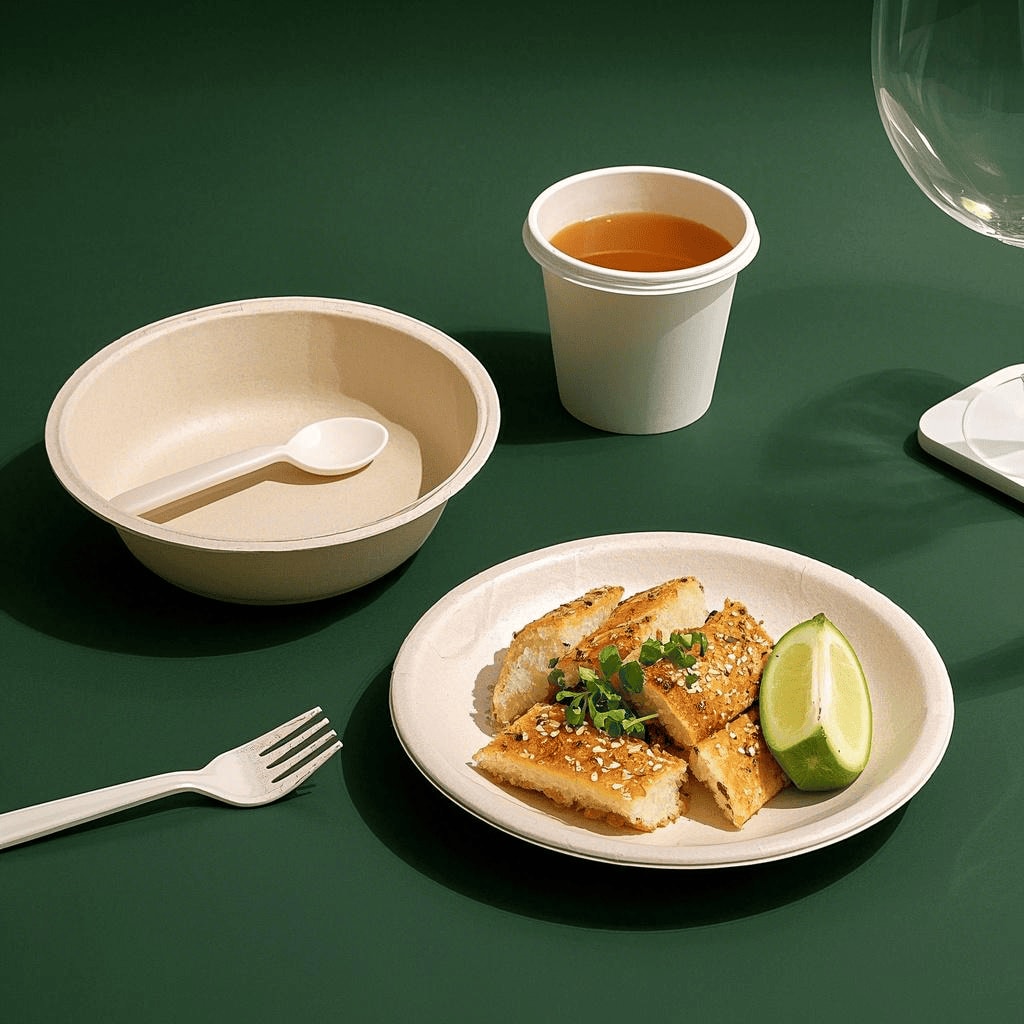
Introduction: The Global Shift Toward Sustainable Tableware
Plastic pollution is one of the most visible and pressing environmental issues today. With over 8 million tons of plastic waste entering oceans each year and billions of disposable plates ending up in landfills, both consumers and businesses are demanding better alternatives. But among the various "eco-friendly" tableware options, not all perform equally.
Bagasse plates, made from the leftover fiber of sugarcane after juice extraction, are emerging as a powerful solution. Compostable, renewable, and strong enough for real-world use, bagasse plates are proving they don’t just sound eco-friendly—they truly work.
This article explores what makes bagasse plates a standout in sustainable packaging, with data, real-world examples, and clear comparisons to plastic and paper alternatives.
What Are Bagasse Plates?
Bagasse is a byproduct of sugarcane processing. Instead of being discarded or burned, the fibrous pulp is now repurposed into plates, bowls, trays, and other foodservice items.
Key characteristics of bagasse plates:
- Made from renewable plant fiber
- 100% compostable under industrial composting
- Microwave- and freezer-safe
- Naturally grease- and cut-resistant
- Fully degrade within 60–90 days in composting systems
Bagasse turns agricultural waste into functional, sustainable products, reducing the need for wood, plastic, and foam-based disposables.

Bagasse vs. Plastic and Paper Plates: A Scientific Comparison
Feature Plastic Plates Paper Plates Bagasse Plates
Material Source Fossil fuels Trees Sugarcane waste (renewable)
Compostable ❌ No ⚠️ Often not (PE lined) ✅ Yes
Decomposition Time 500+ years 5+ years (if lined) 60–90 days
Heat Resistance Varies (can melt) Often warps Up to 200°C
Oil/Grease Resistance Low (unless coated) Low High (natural)
Environmental Footprint Very high High (deforestation) Low (uses waste biomass)
A life cycle assessment (LCA) comparing bagasse and plastic plates reveals that bagasse production results in 70% fewer greenhouse gas emissions, and uses 50% less energy. Additionally, since bagasse reuses agricultural byproducts, it reduces the need for virgin material extraction altogether.
Compostability: From Waste to Soil in 90 Days
Composting is the gold standard for eco-disposables, and bagasse plates deliver.
Certified under standards like EN13432 and ASTM D6400
Break down fully in commercial composting facilities
Decompose into nutrient-rich soil with no toxins or microplastics
Even when municipal composting infrastructure is limited, bagasse decomposes faster and cleaner than paper or plastic, reducing landfill stress and methane emissions.
Real-World Performance: Strength, Usability, and Durability
A common misconception about biodegradable plates is that they are flimsy or impractical. Bagasse proves otherwise.
Withstands hot, wet, and oily foods
Retains rigidity during extended use
Outperforms paper in heat and leak resistance
Doesn’t deform in microwave or refrigeration conditions
These qualities make bagasse plates a favorite at:
- Corporate catering events
- Outdoor festivals and weddings
- Takeout and delivery services
- Universities and institutional cafeterias
Why Businesses Are Switching to Bagasse Plates
The shift to sustainable foodservice products isn’t just ethical—it’s increasingly strategic.
🌍 Meet Sustainability Goals
Using compostable bagasse plates helps organizations meet:
- Plastic reduction targets
- Scope 3 emissions reductions
- ESG and CSR commitments
💼 Improve Brand Perception
Customers are more aware and more demanding:
- 74% of global consumers say they would pay more for sustainable packaging
- Companies using bagasse products report higher customer satisfaction and brand trust
💰 Reduce Waste Management Costs
Compostable waste is often cheaper to process than landfill-bound plastics, especially in cities with organics recycling incentives.
Case Study: Bagasse at Work in the Food Industry
A chain of quick-service salad bars in California switched to bagasse plates and bowls for all dine-in and takeout orders. Within 9 months:
- Landfill waste per store dropped by 42%
- The company qualified for local composting rebates
- Customer reviews mentioning “eco-friendly” increased by 31%
- Staff reported fewer leaks and product failures
The switch not only aligned with environmental goals—it became a marketing and operational advantage.
Addressing Common Concerns About Bagasse Plates
❓ Are they expensive?
Bagasse plates are competitively priced, especially at bulk volumes. When you factor in disposal savings and brand value, they are cost-effective.
❓ Can I compost them at home?
While best in industrial facilities, many thinner bagasse items will break down in backyard compost within 180 days.
❓ Are they safe for food contact?
Yes. Bagasse is food-safe, non-toxic, and free from plastic coatings or harmful dyes.
A Future-Ready Solution for Global Packaging Challenges
With over 70 countries implementing plastic bans, the need for plant-based alternatives has never been more urgent. Bagasse plates offer:
- Renewable material sourcing
- Low environmental impact
- Compostability at scale
- Performance that meets commercial needs
As sustainable packaging evolves, bagasse remains one of the most viable, scalable, and responsible options.
Conclusion: Choose a Plate That Works—for You and the Planet
In the search for truly eco-friendly tableware, bagasse plates rise above greenwashed options. They’re not only good for the planet—they’re good for business, good for consumers, and good for the future.
With proven performance, credible certifications, and a powerful story of upcycling waste into value, bagasse is no longer an alternative—it’s the new standard in sustainable packaging.
About the Creator
Greenland News
Greenland News Greenland has increasingly drawn global attention in recent years due to its political developments, environmental changes, and growing strategic importance. As the world looks more closely at the Arctic region, news from Greenland reflects a unique mix of local priorities and international interest. From climate-related challenges to economic opportunities and governance issues, Greenland continues to shape its own path while remaining closely connected to global affairs.
By America today about 21 hours ago in Earth
Davos 2026: The Last-Chance Saloon to Save the Old World Order?
Every January, the Swiss town of Davos becomes a temporary capital for the world’s elite. Politicians, CEOs, bankers, and thought leaders converge on the snowy Alps for the World Economic Forum (WEF), a gathering that blends diplomacy, business strategy, and high-profile networking. But in 2026, Davos carries an unusually heavy weight: many are asking whether this year’s forum is the last-chance saloon to preserve the old world order. The “old world order” refers to the system of global governance, trade, and alliances dominated by Western powers since the end of World War II. It’s a framework built on liberal democracy, free markets, and institutions like the United Nations, NATO, and the International Monetary Fund. But cracks have been appearing for years—rising nationalism, economic inequality, technological disruption, and the ascent of new global powers are challenging the old guard. Davos 2026 may be where these challenges are addressed—or exposed. A Gathering of Uneasy Allies Davos has always been more than a conference; it’s a stage. World leaders like the U.S. president, Chinese premier, and European Union officials attend alongside CEOs of tech giants, investment banks, and energy conglomerates. In past years, it has been a place for deal-making, policy announcements, and networking in an environment removed from daily political pressures. This year, however, the tone is tense. With geopolitical rivalries intensifying—from U.S.-China competition to ongoing conflicts in Eastern Europe—the forum is less about optimism and more about survival. Many attendees see it as a final opportunity to steer global institutions in a way that sustains stability, economic growth, and cooperation in a rapidly shifting world. As one European diplomat reportedly told journalists: “We’re past casual discussion. This is about whether the rules of the game we’ve known for decades can continue to function.” Economic Uncertainty and the Quest for Stability The global economy is at a crossroads. Inflation, supply chain disruptions, and debt crises have put pressure on governments and corporations alike. Davos provides a platform to coordinate strategies, whether that’s stabilizing financial markets, agreeing on new trade frameworks, or tackling climate and energy crises. But the challenge is bigger than economics alone. The rise of digital currencies, artificial intelligence, and global tech conglomerates has shifted the balance of power. Traditional Western institutions are struggling to keep pace with these innovations, while emerging economies leverage technology and alternative governance models to increase their influence. In this context, Davos 2026 is not just about discussion—it’s about defining who sets the rules for the next era. The Climate Crisis as a Litmus Test One area where the old world order faces a major test is climate policy. Despite decades of conferences and commitments, global emissions continue to rise. The forum’s agenda includes discussions on renewable energy investment, carbon taxation, and sustainable finance—yet the real question is whether collective action can overcome national self-interest. For some attendees, climate is more than an environmental issue; it’s a proxy for global governance. Nations that fail to cooperate on climate risk destabilizing trade, migration, and economic security. Davos 2026 may reveal whether the old mechanisms for multilateral cooperation can still work—or whether the world is moving toward fragmented blocs of competing interests. The Rise of New Powers Another key dynamic is the shifting balance of global power. Emerging economies in Asia, Africa, and Latin America are asserting themselves politically, economically, and technologically. Countries like China, India, and Brazil are shaping new trade and financial networks, sometimes outside traditional Western-dominated institutions. This diversification of influence poses a challenge for Davos. While the forum has historically been Western-centric, ignoring emerging voices could make its conclusions irrelevant. In 2026, the question is whether the WEF can integrate new powers into a cooperative framework—or whether the old world order will crumble under the weight of its exclusivity. Technology, AI, and the Future of Governance Technology is another frontier where the old world order is on trial. Artificial intelligence, cyber warfare, and digital surveillance are reshaping economies and politics alike. CEOs and policymakers in Davos 2026 are expected to discuss regulatory frameworks, ethical AI use, and cybersecurity collaboration. The stakes are high: how nations and corporations govern technology today could determine whether global systems remain stable or fracture. If the old world order fails to set rules for emerging tech, alternative models led by new powers could take hold, redefining global norms. Why Davos 2026 Feels Like a “Last-Chance Saloon” The term “last-chance saloon” evokes urgency. For decades, the old world order relied on cooperation, multilateralism, and shared values to maintain relative peace and prosperity. Today, cracks are visible: rising populism, regional conflicts, economic nationalism, and technological disruption all threaten the status quo. Davos 2026 is unique because it isn’t just a forum for ideas—it’s a test of relevance for the institutions themselves. Leaders will attempt to negotiate solutions, but the outcomes may reveal whether the old structures are adaptable—or obsolete. What to Watch Some of the key signals to watch at Davos 2026 include: Trade agreements and economic cooperation: Will major powers commit to joint frameworks or pursue protectionist policies? Climate action pledges: Are countries willing to act collectively, or do national priorities dominate? Technological governance: Will there be consensus on AI, cybersecurity, and digital currency regulations? Representation of emerging powers: Are new voices integrated into the conversation, or marginalized? The answers could indicate whether the forum reinforces the old order—or marks its final chapter. Final Thoughts Davos 2026 is more than a gathering of the global elite; it’s a litmus test for the old world order. The forum’s success—or failure—may determine whether multilateralism, cooperation, and shared governance survive in an era of rising nationalism, technological disruption, and shifting power dynamics. For observers, policymakers, and citizens alike, the stakes couldn’t be higher. The snowy streets of Davos may once again host ambitious speeches, networking dinners, and visionary panels—but the real question remains: can the old world order be saved, or is it time to prepare for a new world entirely?
By Muhammad Hassanabout 17 hours ago in Earth
So You Decided To Become a Nurse Practitioner:
So you decided to become an "Advanced Practice" nurse. Congratulations!... is what I would say if this was a good idea. Grad school? In this economy? What were you thinking? Likely it was something along the lines of either 1) “I've seen these other chucklefucks do it— Why can't I?” or even 2) “I've got a nice career, I should shake it up. I miss feeling like I have no clue what I'm doing.”
By Sandor Szabo2 days ago in Fiction



Comments
There are no comments for this story
Be the first to respond and start the conversation.