
Have you ever felt like the air around you or you yourself are holding a negative energy that you can't seem to shake away? Sage is an herb used during a Native American ritual called smudging, to purify the air of negative energy and allow one to get rid of the negative energy held within one's self. A window is opened to allow the negative energy to leave. The sage is then lit with a wooden match and left to burn. As it burns, one washes the smoke over the body, using one's hands, so as to walk in a positive light. Once the sage has burned to ash, the ashes of the sage are then put outdoors to get rid of the negative energy (CBC News, 2019; Harmon, 2016).
When I moved into my studio last year, one of the items included in my welcome bag was sage. Until now , I had been lighting the tips of the sage waving it around the room for less than 5 minutes and then running water over it to put it out. I had no idea of the Native American ritualistic method of burning the sage--a much more calming and meaningful experience when one sets aside time in their day. Check out this video demonstrating smudging above (CBC News, 2019).
In Traditional East Asian Medicine (TEAM), sage can be said to clear heat and disperse wind, eliminate dampness and stop sweating, dry dampness and clear heat. With an acrid, slightly bitter flavor and cool qi, sage helps with sore throat and pain, sweating, itching in the genital area with foul smelling secretions and digestive issues (i.e. bloating, gas, diarrhea, loss of appetite), causes drying of breast milk for mothers wanting to stop lactation) (Garran, 2008, pp. 1162-1219).
Western medicine says sage may be beneficial for Alzheimers disease, improvement of attention and alertness, diabetes, high cholesterol and memory improvement but there is not enough high quality evidence to support the use of sage for these said conditions. Additionally, insufficient evidence exists to evaluate the effectiveness of sage for the following: hot flashes in men due to prostate cancer treatment, cold sores, lung cancer prevention, menopausal symptoms especially hot flashes, sore throat, sunburn, swelling of tonsils, loss of appetite, stomach pain, dry mouth, painful periods, asthma, diarrhea, gas, bloating, indigestion, and excessive sweating (Natural Medicines, 2019).
When taken in amounts used in foods, it is likely safe. It is possibly safe when taken by mouth or used on skin short term. However, high doses for a long period of time are possibly unsafe. For instance, common sage (Salvia officinalis) contains a chemical called thujone. If taken in high amounts it can be poisonous causing seizures, damage to the liver, and the nervous system (Natural Medicines, 2019). When used as an herbal tea under professional supervision one may see 3-6 g taken throughout the day in a light herbal tea decoction or infusion (Garran, 2008, pp. 1162-1219).
Avoid sage during pregnancy as it may cause miscarriage due to the chemical thujone. Thujone may also reduce a mother's supply of breast milk; therefore, nursing mothers should avoid use. Sage may lower blood sugar; therefore, be sure to monitor blood sugar levels closely if you have diabetes and consult with your health care provider as you may need a dose reduction in your diabetes medications. Avoid Spanish sage in hormone sensitive conditions such as breast cancer as it may have similar effects as estrogen. Spanish sage may increase blood pressure in those with already high blood pressure where as common sage may lower blood pressure in those already with low blood pressure--be sure to talk to your provider for possible dose adjustments and monitor your blood pressure. Common sage can trigger seizures; therefore, avoid doses higher than amounts found in food if you have seizure disorders. Because sage can interfere with blood sugar control during surgery, be sure to stop at least 2 weeks before surgery (TRC Healthcare, 2019).
When it comes to other agents, sage can increase and decrease the efficacy of several other agents as well as increase their side effects. Sage should be used with caution when on the agents below. This is not an all inclusive list so be sure to talk with your health care provider before using (Natural Medicines, 2019):
Drying medications (e.g. atropine, scopolamine, allergy medications, antidepressants); estrogens pills; medications changed by the liver such as blood thinners, medications for gastric reflux, pain and fever medications, heart medications, anti fungal medications; blood pressure medications; medications used to prevent seizures; medications that cause sleepiness or drowsiness such antipsychotics, anxiolytics, antidepressants, medications for sleep; glaucoma medications; alzheimers medications ; herbs and supplements that might cause drowsiness and sleepiness such as California poppy, catnip, hops, kava, St. John's wort, skullcap, valerian, yerba mansa; herbs and supplements that might lower blood pressure such as cat's claw, coenzyme Q 10, fish oil, stinging nettle, theanine; herbs and supplements that might lower blood sugar such as fenugreek, garlic, Panax ginseng, psyllium, and Siberian ginseng.
If you are feeling negative energy during these difficult times and find discomfort and imbalance, maybe taking some time with sage could do the trick. I hope you can find peace and balance during these unstable times.
References
CBC News. (2019). How to Smudge: Burning Sage. You Tube. CBC News. https://www.youtube.com/watch?v=6fIMumk2cnA.
Garran, T. A. (2008). Sage. In Western herbs according to traditional Chinese medicine: a practitioner's guide (pp. 1162–1219). essay, Healing Arts Press.
Harmon, A. (2016). Sage. Salem Press Encyclopedia of Science.
TRC Healthcare. (2019, August 14). Sage [Monograph]. In Natural Medicines. Retrieved June 4, 2020, from https://naturalmedicines.therapeuticresearch.com/databases/food,-herbs-supplements/professional.aspx?productid=504
About the Creator
Keep reading
More stories from writers in Earth and other communities.
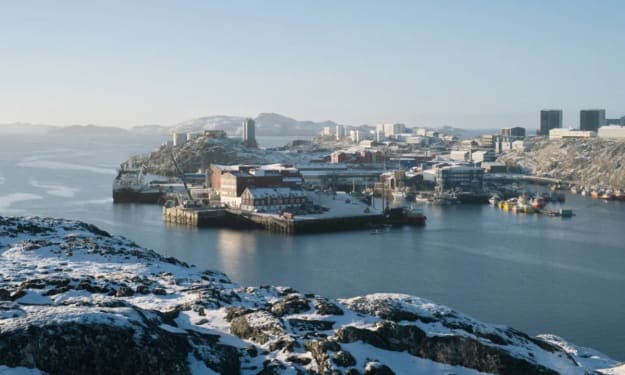
Britain in Talks With NATO to Boost Arctic Security
The Arctic Is No Longer a Frozen Backwater For decades, the Arctic sat quietly on the margins of global politics—remote, frozen, and largely ignored. That era is over. Britain is now in talks with NATO to strengthen Arctic security, acknowledging growing risks posed by Russia and China. In a notable shift, London’s assessment aligns closely with warnings long emphasized by Donald Trump, particularly as he continues to express strategic interest in Greenland. What once sounded like an eccentric fixation has evolved into a serious geopolitical conversation. The Arctic is rapidly becoming one of the world’s most contested regions, and Britain is positioning itself to play a larger role. Why Britain Is Paying Attention Now Although the UK is not an Arctic nation, it is an Arctic-adjacent power with significant strategic interests. British officials increasingly view the High North as critical to national and allied security. Melting ice is opening new shipping routes, exposing untapped natural resources, and making military movement easier than ever before. Britain’s talks with NATO focus on intelligence sharing, joint exercises, surveillance capabilities, and protecting undersea infrastructure such as communication cables and energy pipelines. These are not abstract concerns. Any disruption in the Arctic could have immediate consequences for European security and global trade. In short, what happens in the Arctic does not stay in the Arctic. Russia’s Expanding Arctic Footprint Russia is the dominant military power in the Arctic, and it is not slowing down. Moscow has reopened Soviet-era bases, deployed advanced missile systems, expanded its icebreaker fleet, and increased patrols across the region. The Arctic coastline represents a core part of Russia’s nuclear deterrent, making it strategically vital to the Kremlin. From NATO’s perspective, this military buildup creates both risk and uncertainty. Britain, which has long been vocal about Russian aggression—from Ukraine to cyber warfare—sees the Arctic as another front where deterrence must be strengthened before tensions spiral. The concern is not necessarily an immediate conflict, but miscalculation. In a region with harsh conditions and limited communication infrastructure, even minor incidents could escalate rapidly. China’s Quiet but Steady Arctic Ambitions While Russia’s presence is overt, China’s Arctic strategy is more subtle—and equally concerning to Western planners. Beijing calls itself a “near-Arctic state,” a label that has raised eyebrows in Europe and North America. Through investments, research stations, and partnerships, China is laying the groundwork for long-term influence. Britain shares NATO’s concern that China could use civilian projects for dual-use purposes, blending scientific research with intelligence gathering and infrastructure control. As Arctic shipping routes become commercially viable, China’s interest in controlling parts of the supply chain only grows. London’s alignment with these concerns reflects a broader shift in UK foreign policy: China is no longer viewed solely as an economic partner, but as a strategic competitor. Trump, Greenland, and Strategic Reality Donald Trump’s repeated interest in Greenland—most famously his suggestion that the United States should buy it—was widely mocked at the time. Yet behind the headlines was a strategic logic that many Western governments now openly acknowledge. Greenland sits at the heart of the Arctic, hosting vital air and naval routes between North America and Europe. It is also rich in rare earth minerals critical for modern technology and defense systems. As ice recedes, Greenland’s strategic value only increases. Britain’s current position, which aligns with Trump’s warnings about Arctic vulnerabilities, shows how quickly political perceptions can change. What once seemed unconventional now appears prescient. NATO’s Arctic Awakening NATO has traditionally focused on Eastern Europe and the North Atlantic. The Arctic, despite its importance, received less coordinated attention. That is changing. Britain’s talks with NATO reflect a broader alliance effort to integrate Arctic defense into its core strategy. This includes: Increased joint military exercises in cold-weather environments Enhanced monitoring of Russian and Chinese activity Strengthening cooperation with Arctic nations like Norway, Canada, and Denmark Protecting critical undersea and satellite infrastructure For Britain, this is also about credibility. As a leading NATO member and a key military power, the UK wants to demonstrate that it can contribute meaningfully beyond its immediate geography. Climate Change as a Security Multiplier One of the most striking aspects of Arctic security is how closely it is tied to climate change. Melting ice is not just an environmental issue—it is a strategic one. New sea lanes shorten travel between Asia and Europe, while access to oil, gas, and minerals becomes easier. This transformation increases competition and reduces natural barriers that once limited military movement. Britain’s involvement reflects recognition that climate-driven changes are reshaping the security landscape faster than traditional institutions were designed to handle. In this sense, Arctic security is a preview of future global challenges where environmental change and geopolitics collide. Domestic and Diplomatic Balancing Acts Britain’s Arctic engagement is not without challenges. Increased military involvement raises questions about defense spending, priorities, and escalation risks. Diplomatically, London must balance deterrence with dialogue, avoiding actions that could unnecessarily provoke Russia while still protecting allied interests. There is also the question of public awareness. Arctic security lacks the visibility of conflicts like Ukraine, making it harder to sustain political attention. Yet policymakers increasingly argue that prevention is cheaper—and safer—than crisis response. What This Means Going Forward Britain’s talks with NATO mark an important shift in how the Arctic is viewed: not as a distant frontier, but as a central arena in 21st-century security. Agreement with Trump-era assessments on Russia, China, and Greenland underscores how geopolitical realities can outlast political controversies. As competition intensifies, the Arctic will likely become a testing ground for cooperation, deterrence, and strategic foresight. Britain’s involvement signals that mid-sized powers are no longer content to watch from the sidelines. Final Thoughts The Arctic is warming faster than any other region on Earth—and so are the geopolitical tensions surrounding it. Britain’s move to boost Arctic security with NATO reflects a growing consensus that ignoring the High North is no longer an option. Whether driven by Russia’s militarization, China’s quiet expansion, or lessons drawn from Trump’s blunt warnings, one truth stands out: the future of global security may well be shaped at the top of the world, where ice, ambition, and power now intersect.
By Muhammad Hassan4 days ago in Earth
Australia Urea Market Size and Forecast 2025–2033
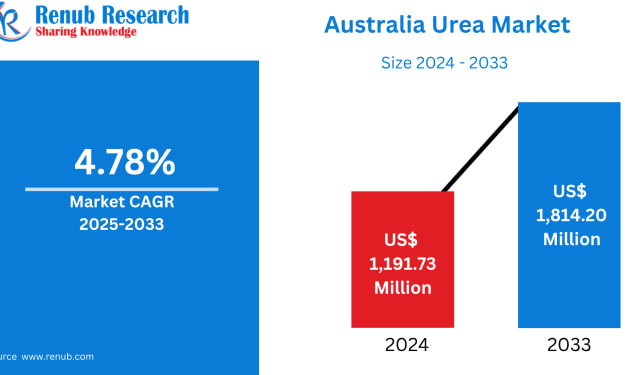
Australia Urea Market Overview The Australian Urea Market is anticipated to reach US$ 1,814.20 million in 2033, up from US$ 1,191.73 million in 2024, growing at a CAGR of 4.78% during 2025–2033, according to Renub Research. This growth is being driven by increasing demand from the agricultural sector for high-nitrogen fertilizers, expanding grain and crop cultivation, and rising government incentives for sustainable farming practices. Import substitution policies and growing interest in domestic production capabilities are also shaping market dynamics.
By Marthan Sirabout 8 hours ago in Earth


Comments
There are no comments for this story
Be the first to respond and start the conversation.