
Let Afghan Girls Learn
How I fell down a rabbit hole on female literacy.

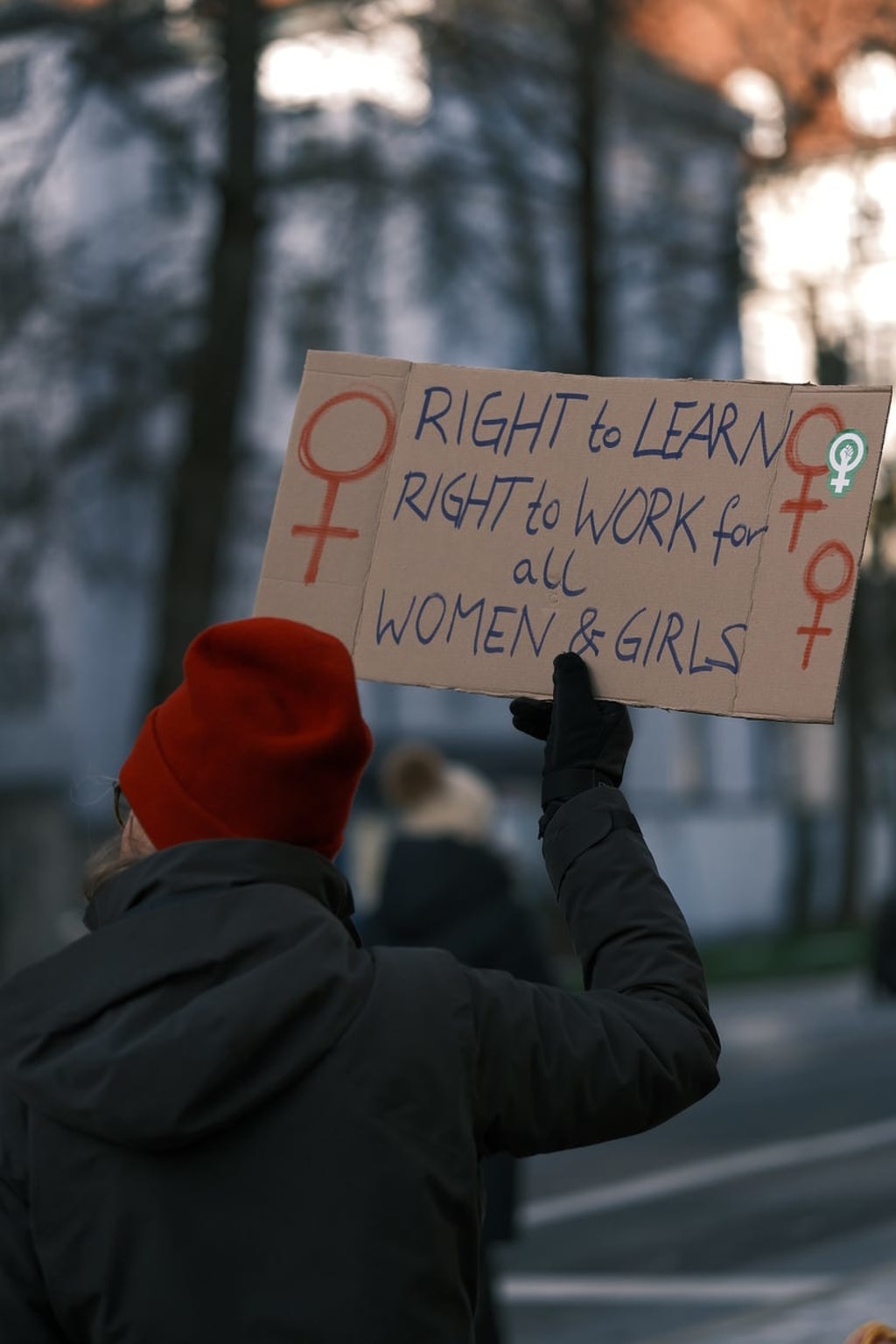
I have a confession to make; I often fall down rabbit holes online. Usually, after a brief adventure of 12 websites and various social media accounts, I find my way out again with another thought. The last rabbit hole, however, was decidedly different. It all started when I saw an article on Afghanistan and women's education. I began researching female literacy around the world and, weeks later, I am still burrowing. Deeper and deeper I go. I am not sure I know the way out, but it's okay - I am learning so much along the way.
Globally, female literacy levels are at an all-time high. I thought this was great news until I looked at literacy rates per country. The news is not so great, after all.
While some countries, like Taiwan or Estonia, have almost 100% female literacy rates, other countries, such as Niger, Afghanistan, and Mali, trail far behind. Far, far behind. Now, I don’t want to go into specific percentages because statistics vary depending on the resources used. I much prefer to focus on the message itself — that, in many countries, girls and women do not have the same access to education as boys and men. As a consequence, they don’t learn to read and write, which affects their ability to engage politically and support themselves and their families financially, among other things. There is a ripple effect that arrives at all corners of society.
As a result of my rabbit hole exploration, I decided to give myself a challenge. I will read myself around the world from A-Z, choosing a female author from each country (for fun, the author’s name will start with the same letter as their country) and learning and sharing about female literacy and women’s education along the way.

I started with Afghanistan. After a brief search, I found a young female poet named Nadia Anjuman. Her work is hard to find in English, which is a shame. However, after digging around, I discovered enough of her poems to get a feel of her voice. In her words, I got to know a woman who loved learning and writing so much that she risked her life to attend an underground school. At The Golden Needle Sewing School, she and many other women learnt about literature despite the Taliban’s desire to keep them ignorant. Later, she returned to school and married. At the age of 25, her husband brutally murdered her. He said that her poetry brought shame to his family.
I could write more about Nadia; she deserves an article of her very own. I wholeheartedly push you to read about her life and discover her words. In them, you will feel her suffering, her helplessness at having a voice that she could not use.
Her words echo the suffering of millions of young women in Afghanistan, both in the past and today, in 2023. These young women can no longer step outside their homes or attend school or university. They can no longer dream of a future career, for it is dangerous to dream of something forbidden. These young women are caged.
Nadia’s words may convey a collective oppression, but they also suggest a glimmer of determination and hope. “I am not a weak poplar tree / to be shaken by any wind. / I am an Afghan woman, / it only makes sense to wail.”
I say we should all wail with them, for every woman and girl should have the right to learn and work, every single one.
About the Creator
Helen Marie McKinney
Fantasy fiction author and poet. Global female literacy advocate - currently reading myself around the world (female authors only) and learning about women's education.
https://linktr.ee/Elliepages
Keep reading
More stories from Helen Marie McKinney and writers in Earth and other communities.
Bike Ride
"What do you want to do today?" I shouted from the bathroom. The steam leaked out as I opened the shower door and wrapped a towel around me. I stood still for a moment with my eyes closed, listening to the gentle hum of the morning and enjoying the tingle of the cool air against my still-wet skin. I still had to dry my hair and get dressed, but I was eager to start our day and hurried to get ready. Work worries and arguments had been the theme of the last few months since the virus, and it had all put a strain on our relationship. Ever since life had returned to normal and we had begun working from the office again, we hardly saw each other. And I missed you. I couldn't remember the last time we had spent the whole day together and the excitement filled my heart with joy.
By Helen Marie McKinney4 years ago in Fiction
New York Prepares for Possibly Its Heaviest Snowfall in Years
New York City and surrounding areas are preparing for what could be one of the heaviest snowfalls in years, according to meteorologists. The forecast predicts intense snow, gusty winds, and potentially hazardous conditions, prompting city officials, emergency services, and residents to take precautionary measures.
By Muhammad Hassan5 days ago in Earth


Comments
There are no comments for this story
Be the first to respond and start the conversation.