Latest Stories
Most recently published stories in Earth.
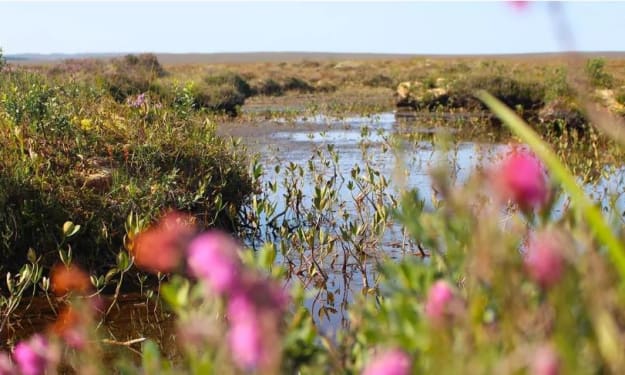
The promise and danger of Scotland's bog
As I watch the predator, its flaming orange-red tendril outstretched, it makes a catch. Its prey writhes, working itself deeper into a smothering grip. The flagrant sunset-coloured carnivore has made little effort to conceal itself, but its prey was unable to resist the allure of its sticky trap.
By Turnell Feliu3 years ago in Earth
How limitless green energy would change the world
What would we do with an abundant, cheap, inexhaustible supply of renewables? Perhaps the desalination of seawater, suddenly cost-efficient, would relieve Earth's water shortages. Rubbish might be recycled on a massive scale, allowing for the extraction of precious trace elements such as rare earth metals, while carbon dioxide (CO2) could be vacuumed out of the atmosphere to slow climate change. People could live comfortably in Earth's polar regions or travel far and wide in battery-powered vehicles. Goods and services that require electricity might become cheaper, even free. Our emissions footprint could soon be undetectable.
By Gu Wei Di Qi3 years ago in Earth
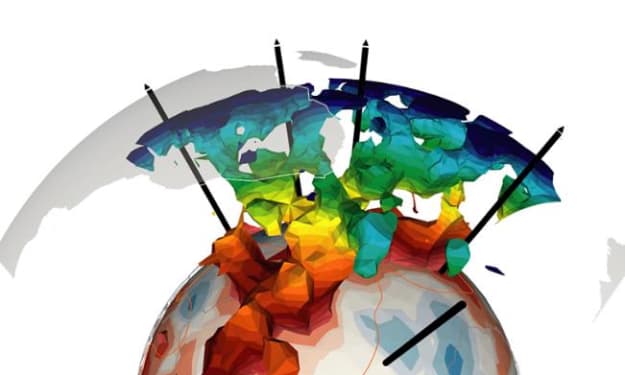
How to store data for 1,000 years
"You know you're a nerd when you store DNA in your fridge." At her home in Paris, Dina Zielinski, a senior scientist in human genomics at the French National Institute of Health and Medical Research, holds up a tiny vial to her laptop camera for me to see on our video call. It's hard to make out, but she tells me that I should be able to see a mostly clear, light film on the bottom of the vial – this is the DNA.
By Gu Wei Di Qi3 years ago in Earth
Is there a good alternative to peated compost?
In a greenhouse in Nottinghamshire, Barbara Wright is growing peat. Well, not peat exactly. Wright's company, BeadaMoss, is growing sphagnum moss – the main component of natural peat extracted from northern peatlands for use in gardens across the US and Europe.
By Mcgrotha Brinker3 years ago in Earth
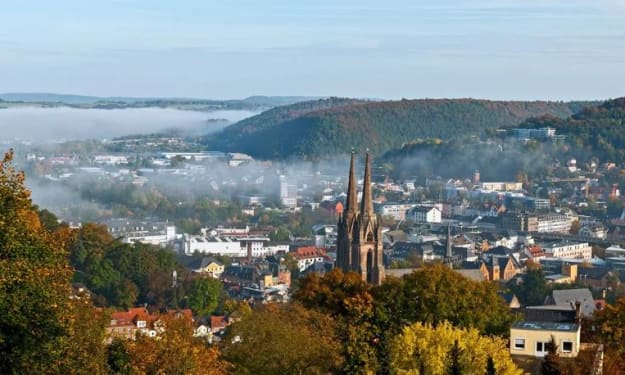
The school that created a city for the blind
At the age of eight, Leon Portz was gradually losing his eyesight due to a congenital condition when he was given his first computer. By the age of nine, he had figured out how to speed up the machine-generated voice that read out websites and other electronic texts, allowing him to grasp the information faster. He now listens to texts at five times the standard speed, which is unintelligible to an untrained ear.
By Turnell Feliu3 years ago in Earth
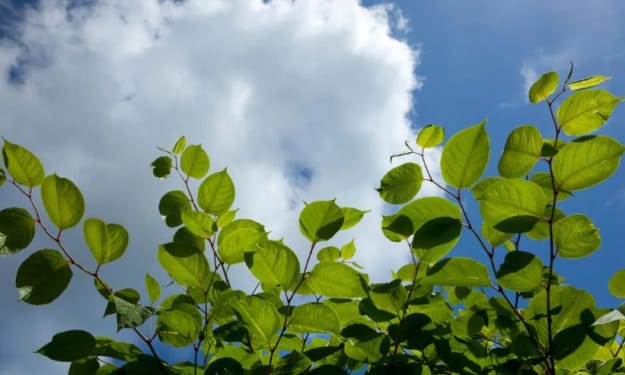
The alien shrub that can't be stopped
"After sending a friend several hampers of plants season after season, all without satisfactory results… I sent him some of this," explained the botanist John Wood in 1884. He was writing a gardening manual, and heaped gushing praise on a sensational, newish shrub that that even the most hapless horticulturalist would be able to handle. It was an import from the Far East, and would make a "capital" addition to the small town garden – with pleasing red shoots, handsome heart-shaped foliage, and gracefully arching stems.
By Vranes Samaha3 years ago in Earth
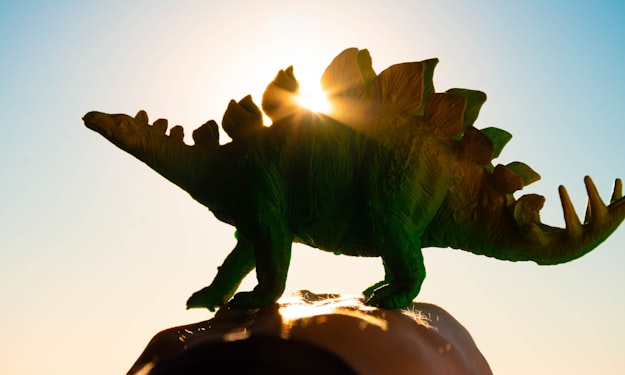
There is still a lot that paleontologists don't know about dinosaurs
1. Bolt ran faster than the Tyrannosaurus rex Computer simulations of the Tyrannosaurus Rex running show that it has a top speed of about 29 kilometers per hour. While this is not enough to catch a car, it is more than enough to catch most humans.
By Turnell Feliu3 years ago in Earth
What Is The Gemini Horoscope For August 2005?
The Gemini horoscope for August 2005 If you are a Gemini, then August is going to be a month of change and new beginnings. You may start a new job, move to a new home, or begin a new relationship. Whatever the case may be, you will need to adapt to your new situation.
By zain amjad3 years ago in Earth