
Jupiter: Exploring the Mysteries of Our Solar System's Giant
Unveiling Jupiter's Secrets

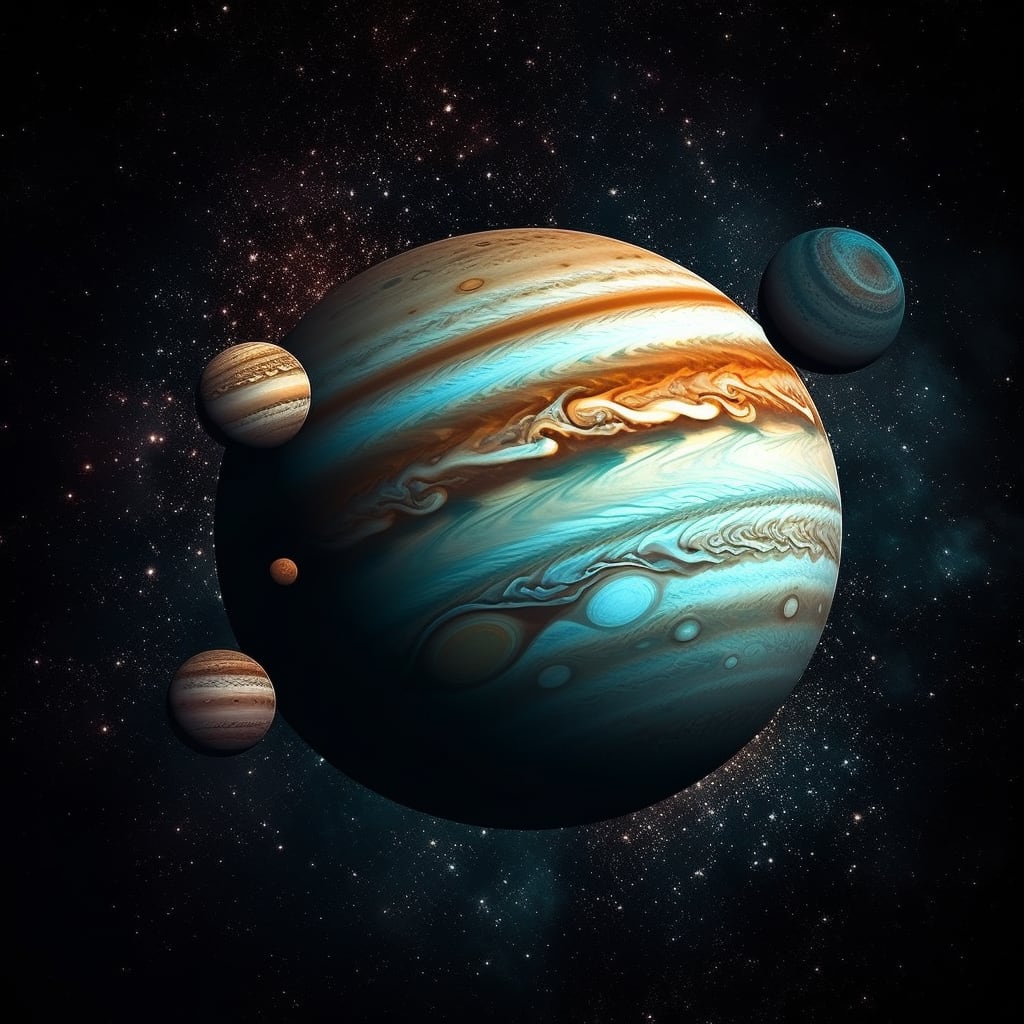
Attention, space enthusiasts! How well acquainted are you with our remarkable solar system? Allow me to introduce you to a planet of immense proportions, surpassing the combined mass of all the others in our system. Its surface is adorned with captivating swirls and stripes, which, in truth, are atmospheric phenomena comprised of frigid ammonia and water clouds, mingling with hydrogen and helium. Still unsure? Behold the illustrious Great Red Spot, a colossal storm surpassing the size of our entire home planet and persisting for centuries.
Yes, indeed, this ethereal realm is none other than Jupiter. Now, the question arises: is this celestial giant a friend or foe? Presently, NASA's Juno Orbiter is actively exploring this gas giant, providing us with a wealth of valuable data. To fathom the scale of Jupiter, imagine 11 Earths aligning along its equator, while our humble planet assumes the size of a mere grape in comparison. Situated as the fifth planet from the sun, it orbits at a distance of approximately 484 million miles.
While we Earthlings may perceive our blue-green world as the center of importance, let us not forget that we reside within Jupiter's solar system. In fact, Jupiter accounts for a staggering 75 percent of the total mass of all planets in our stellar neighborhood, dwarfing Earth by a factor of 318. This gas giant, driven by its formidable gravitational pull, possesses the ability to hurl objects across the solar system with ease. It intercepts material from the asteroid belt, preventing the formation of larger celestial bodies beyond the dwarf planet Ceres, which resides in the inner reaches of our solar system.
Jupiter's insatiable appetite extends to comets, asteroids, and other cosmic remnants that happen to cross its path. One can only imagine the magnitude of destruction this gas giant has caused throughout its existence spanning 4.5 billion years. Yet, here lies a peculiar twist: some scientists theorize that Jupiter's protective gravity may be responsible for our very existence and the survival of our planet. This notion may appear perplexing, but by consuming hazardous space objects, Jupiter acts as a cosmic vacuum, keeping the solar system clear of potential threats.
However, not all astronomers are in agreement with this theory. Some contend that Jupiter is a mischievous troublemaker, disrupting peaceful and harmless comets, sending them on unexpected trajectories. Long-period comets, originating from the vast Oort cloud situated far beyond Pluto, pose a significant threat to our solar system. These enormous conglomerations of ice and rock venture into the inner reaches, swiftly passing the sun. It is plausible that the most catastrophic extinction event in Earth's history was triggered by such a long-period comet. As these comets traverse the solar system, they inevitably interact with Jupiter's gravitational influence.
Does Jupiter divert these comets from their treacherous trajectories, preventing cataclysmic collisions with Earth? Or, does this gas giant, in fact, alter the course of comets, unintentionally guiding them towards our planet? Alas, the answer remains elusive. Some astronomers liken Jupiter to a failed star, given its substantial quantities of helium and hydrogen—the very materials that predominantly constitute stars. However, Jupiter's mass is insufficient to ignite a fusion reaction within its core, the process through which stars generate energy by fusing hydrogen atoms under immense pressure and heat, ultimately producing helium, light, and heat.
For Jupiter to initiate a nuclear reaction and transform into a star, it would require an astonishing 75 times its current mass. Paradoxically, if Jupiter were to accumulate additional mass, it would undergo contraction, becoming denser and collapsing under its own gravitational force. Astronomers are confident that even if Jupiter were four times more massive, its size would remain relatively unchanged.
Amidst the grandeur of Jupiter's domain, we must not overlook its entourage of moons, numbering between 80 and 95. One of the most captivating satellites in recent times is Europa. Picture a frozen world, ancient at 4.5 billion years, barely warmed by the Sun's feeble rays, concealed beneath a thick layer of ice. This moon, smaller than our own and slightly larger than Pluto, presents us with Europa—a celestial wonder that may harbor life.
Astronomers consider Europa among the most promising candidates for the search for extraterrestrial life within our solar system. The moon boasts a vast subsurface saltwater ocean, estimated to be 40 to 100 miles deep. Although veiled beneath a layer of ice measuring 10 to 20 miles thick, it remains a potentially habitable realm. Scientists propose that water plumes surge through cracks in the icy shell, releasing the contents of Europa's ocean into space.
For years, astronomers have pondered the origin of Jupiter's mesmerizing x-ray auroras. Finally, after four decades of mystery, the enigma seems resolved. Jupiter's awe-inspiring x-ray auroral emissions owe their existence to electrically charged particles called ions. These particles collide with Jupiter's atmosphere, resulting in the captivating display we observe. The manner in which these ions reach the atmosphere had long perplexed scientists. Recent discoveries have unveiled the ions' journey, as they surf Jupiter's magnetic field, traversing all the way to the planet's atmosphere. This breakthrough was made possible through the collaborative efforts of NASA's Juno spacecraft and ESA's XMM-Newton telescope, orbiting our home planet.
On our Earth, auroras grace the skies solely within a belt encircling the magnetic poles, between latitudes of 65 and 80 degrees. Beyond 80 degrees, auroras fade into obscurity. Jupiter's x-ray auroras, however, exhibit a far more capricious nature, pulsating rhythmically, migrating across the primary belt, and occasionally manifesting disparities between the planet's north and south poles. Scientists have attributed this pulsation to fluctuations in Jupiter's magnetic field. As the planet rotates, it drags its magnetic field along, compressing it when exposed to the particles of the solar wind. Consequently, the trapped particles within Jupiter's magnetic field experience elevated temperatures and begin moving along the magnetic field lines, engendering magnificent auroras.
Another distinguishing feature of Jupiter is its renowned Great Red Spot—a colossal storm reigning over the planet's southern hemisphere. This tempestuous entity extends its upper reaches more than five miles above the surrounding cloud tops. With a diameter more than twice that of Earth, the storm's winds escalate to a staggering 270 to 420 miles per hour—swifter than the tornadoes found on our home planet. Jupiter's turbulent atmosphere, akin to Earth's, witnesses the perpetual movement of hot gases, ascending, descending, and swirling. When cooler and hotter gases intermingle and merge, they form these colossal whirling storms.
Astronomers postulate that the Great Red Spot originated from the convergence of several monumental storms. Persisting through the ages, it sustains itself by continually drawing in cooler gases from below and warmer gases from above. Moreover, this storm absorbs smaller vortices, augmenting its power. Various theories endeavor to elucidate the distinct coloration of the storm, ranging from whitish and pale salmon to orange and brick red. Some scientists speculate that a colorless layer of ammonium hydrosulfide beneath the Great Red Spot, in proximity to the planet's surface, reacts with cosmic rays or UV radiation from the Sun, imparting the storm with its captivating crimson hue. However, this remains a theory, awaiting further evidence.
The Great Red Spot has captivated astronomers since the 1830s, though its initial sighting dates back to 1665 when it was described as a permanent feature. In other words, the storm has endured for nearly 400 years. Strangely, since the early 21st century, it has been diminishing in size. In 2019, flaking commenced at the storm's edges, with small fragments breaking away and dissolving into nothingness. If this process persists, by 2040, the Great Red Spot may adopt a circular form or, perhaps, vanish entirely.
About the Creator
Calming & Relaxing Sleep
I am an entrepreneur, I have boundless imagination, constantly conjuring new ideas to express my creativity. I enjoy creating all different types of media and time spent with family.
Keep reading
More stories from Calming & Relaxing Sleep and writers in Earth and other communities.
Dangerous and Fascinating Creatures of the Ocean: Sea Cucumbers, Cone Snails, Stonefish, Lionfish, and Sea Urchins
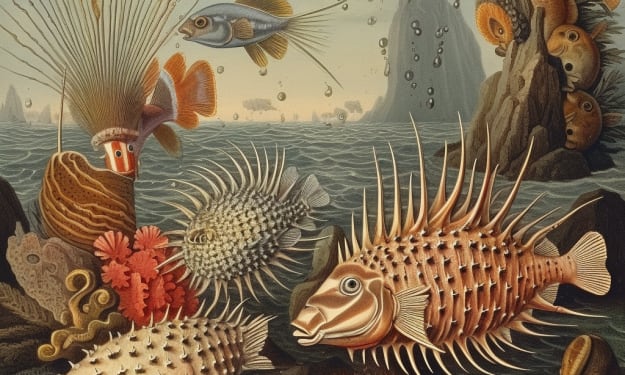
Have you ever come across a sea cucumber resting on a sandy bed and thought it resembled a gelatinous blob? These seemingly soft and vulnerable creatures actually possess intriguing strategies to protect themselves. Biologists have discovered chemical compounds that sea cucumbers use for self-defense, not only against predators but also their own toxins. Interestingly, these compounds have potential applications for human health.
By Calming & Relaxing Sleep3 years ago in Earth
Pentagon Contractor Indicted Over Alleged Leak Tied to Raided Washington Post Reporter
A Pentagon contractor has been indicted in connection with an alleged leak tied to a Washington Post reporter, marking a significant escalation in the U.S. government’s scrutiny of leaks involving national security information. The case has raised questions about press freedom, government overreach, and the balance between security and transparency, stirring debates in political, legal, and journalistic circles. Background of the Case According to court documents, the Pentagon contractor is accused of disclosing classified or sensitive information to a Washington Post journalist, whose office was previously raided by federal authorities as part of a leak investigation. The allegations include: Transmitting sensitive information without authorization. Coordinating with journalists who may have used the material in published reports. Potentially compromising national security operations or personnel. Federal prosecutors allege that the contractor knowingly violated U.S. law by disclosing information protected under federal statutes governing classified material. The Washington Post Connection This case is closely linked to a prior federal raid on a Washington Post reporter, an unprecedented action that drew widespread criticism from journalists and press freedom advocates. The raid reportedly aimed to identify the source of leaks regarding sensitive military or defense operations. The indictment of the Pentagon contractor underscores the government’s ongoing efforts to identify and prosecute sources of classified leaks, even when they involve interactions with journalists. Critics argue that such investigations risk chilling investigative reporting and undermining the First Amendment. Legal Details of the Indictment While some details remain sealed due to the sensitive nature of the information, the indictment reportedly charges the contractor with: Unauthorized disclosure of national defense information. Conspiracy to leak classified material. Violation of federal secrecy and security laws. The contractor now faces potential penalties including prison time, fines, and the permanent loss of security clearance. The case will be closely watched by legal experts, media organizations, and policy analysts, as it could set important precedents for how leaks are investigated and prosecuted. Implications for Press Freedom Journalists and press freedom organizations have raised concerns over the broader implications of this case. Key issues include: Chilling effect on investigative journalism: If government employees fear prosecution for speaking to reporters, crucial stories may go unpublished. Source protection: Confidential sources are vital for reporting on matters of public interest, particularly regarding government and military operations. Transparency vs. security: Balancing the public’s right to know with national security interests remains a complex challenge. The Washington Post and other news outlets have emphasized that government actions should respect constitutional protections for press freedom, even when investigating leaks. Government’s Perspective From the government’s standpoint, the case highlights the risks posed by unauthorized disclosures of sensitive information. Officials argue that leaks can: Compromise ongoing military operations. Endanger personnel and intelligence assets. Undermine national security and international relations. Prosecutors assert that the Pentagon contractor acted knowingly and illegally, justifying the indictment as necessary to protect national interests. Previous Leak Cases and Context This indictment comes amid a series of high-profile leak investigations involving U.S. government employees, contractors, and journalists: Previous cases have involved classified defense documents, intelligence reports, and diplomatic cables. Some investigations resulted in prosecutions, while others sparked controversy over press freedom and government overreach. These cases often raise complex legal questions about the definition of classified information and the rights of journalists to report on public interest issues. Legal experts say this Pentagon contractor case may be one of the most significant yet, given its direct tie to a mainstream news outlet. Public and Media Reaction The indictment has elicited strong reactions from multiple sectors: Journalists: Press freedom advocates express concern that prosecuting sources of leaks could intimidate whistleblowers and reporters. Legal analysts: Experts are closely watching how the courts interpret laws governing classified material and the limits of government authority. Policy makers: Some lawmakers have emphasized the need for clearer guidelines on leaks and protections for investigative reporting. Civil liberties organizations have warned that aggressive leak investigations may inhibit government accountability, especially on issues involving national defense and public interest. Potential Outcomes and Next Steps The Pentagon contractor now faces trial proceedings, which may include: Pre-trial motions challenging the scope of evidence and the legality of the indictment. Examination of whether journalists’ communications can be implicated in legal proceedings. Decisions on sentencing if convicted, including potential prison time and fines. Observers predict that the case may also influence future government policies on leak investigations and employee handling of sensitive information. Why This Matters This case illustrates the delicate balance between national security and press freedom. Key takeaways include: Government employees and contractors must exercise caution when handling classified material. Journalists rely on confidential sources to report on matters of public interest. Legal and ethical frameworks must address both the risks of leaks and the protection of free speech. The outcome of this case could set legal precedents affecting not just defense contractors, but journalists, whistleblowers, and government transparency efforts. Final Thoughts The indictment of a Pentagon contractor over an alleged leak linked to a raided Washington Post reporter underscores the complex intersection of national security, law, and press freedom. While the government seeks to protect sensitive information, the case also raises questions about constitutional rights, transparency, and accountability. As proceedings unfold, this case will likely continue to be a touchstone in discussions about how the U.S. balances security concerns with the democratic imperative of a free press, and how future leak investigations are conducted
By Muhammad Hassan5 days ago in Earth
Franklin County Snow Emergency
Winter weather in Ohio can change quickly, and when heavy snow or ice hits, local governments rely on snow emergency levels to keep residents safe. One of the most searched winter questions each year is: what level is Franklin County snow emergency right now? Understanding how these emergency levels work—and how they compare with nearby counties like Delaware County—can help drivers, workers, and families make safer decisions during severe weather. This article breaks down everything you need to know about the Franklin County snow emergency, including how levels are determined, where to find updates, and what each level means for daily life. What Is a Snow Emergency in Franklin County? A snow emergency is declared when weather conditions make travel dangerous due to snow, ice, or freezing rain. In Franklin County, Ohio, officials monitor road conditions, weather forecasts, and accident reports before announcing a snow emergency level. The Franklin County snow level system is designed to limit unnecessary travel and reduce accidents. Each level comes with specific guidelines for residents and employers. Local media outlets, especially 10TV Weather, play a major role in communicating these updates to the public in real time. Snow Emergency Levels Explained To understand what level snow emergency is Franklin County Ohio, it helps to know what each level represents. Level 1 Snow Emergency A Level 1 advisory means roads are slippery, especially bridges and secondary roads. Drivers should use caution, reduce speed, and allow extra stopping distance. Travel is permitted No legal restrictions Increased risk on untreated roads At this stage, daily activities usually continue as normal, though delays are common. Level 2 Snow Emergency When conditions worsen, officials may declare a Level 2 snow emergency. This signals that roads are hazardous and travel should be limited to essential trips only. Driving is discouraged Only necessary travel is advised Accidents become more frequent During a Level 2, many schools, businesses, and government offices may close or operate on delays. This is often the level that sparks widespread concern across Franklin County. Level 3 Snow Emergency Level 3 is the most serious designation. Roads are extremely dangerous or impassable, and travel is legally restricted. Only emergency personnel should be on the roads Driving can result in citations or arrest Conditions pose serious safety risks A Level 3 snow emergency is rare but critical. When declared, residents are urged to stay indoors until conditions improve. How Franklin County Determines Snow Emergency Levels Officials rely on multiple factors before announcing a snow emergency: Snowfall totals and accumulation rates Ice formation and road treatment effectiveness Traffic accidents and emergency response delays Weather forecasts from meteorologists Agencies coordinate closely with weather services and local law enforcement. Reports from 10TV Weather often provide early insight into whether conditions may escalate. Comparing Franklin County and Delaware County Snow Emergencies Many Ohio residents commute between counties, which makes comparing alerts important. A Delaware County snow emergency may not always match Franklin County’s status. For example: Franklin County could be under a Level 2 while Delaware County remains at Level 1 Snow bands may impact northern counties more severely Timing of road treatment can differ Drivers should always check both counties before traveling. Conditions can change rapidly, especially during overnight storms. Where to Find Reliable Updates Staying informed is essential during winter storms. The most reliable sources for Franklin County snow emergency updates include: Franklin County Sheriff’s Office announcements Official county websites and social media pages Local news stations, especially 10TV Weather Emergency alert systems and local radio Searching phrases like what level is Franklin County or what level snow emergency is Franklin County Ohio during storms is common, but always rely on official sources for confirmation. How Snow Emergencies Affect Schools and Workplaces Snow emergency levels often influence closures and delays: Schools typically close at Level 2 or Level 3 Government offices may shut down during Level 2 Many employers follow county advisories However, private businesses may set their own policies, so employees should check with supervisors directly. Preparing for a Franklin County Snow Emergency Preparation can make a major difference during winter weather. Residents are encouraged to: Keep vehicles fueled and stocked with emergency supplies Monitor forecasts before storms arrive Avoid unnecessary travel during Level 2 or Level 3 emergencies Check on elderly neighbors when conditions worsen Simple planning can reduce stress and improve safety during severe winter events. Why Snow Emergency Levels Matter Snow emergencies are not just warnings—they are safety tools. Each Franklin County snow level helps emergency crews prioritize resources, reduce accidents, and protect lives. Ignoring advisories can put drivers and first responders at risk. Understanding the system allows residents to make informed, responsible decisions. Final Thoughts Winter in Ohio is unpredictable, but information makes it manageable. Knowing how the Franklin County snow emergency system works—and staying updated through trusted sources like 10TV Weather—can help you stay safe when conditions deteriorate. Whether you’re checking what level is Franklin County, comparing alerts with a Delaware County snow emergency, or planning your commute, awareness is your best defense against winter hazards.
By Saboor Brohi 4 days ago in Earth


Comments
There are no comments for this story
Be the first to respond and start the conversation.