
"Journey to the Earth's Heart: A Tale of Humanity's Deepest Dig"
"From Burial Depths to Abyssal Chasms, Unveiling Earth's Secrets, One Shovel at a Time"

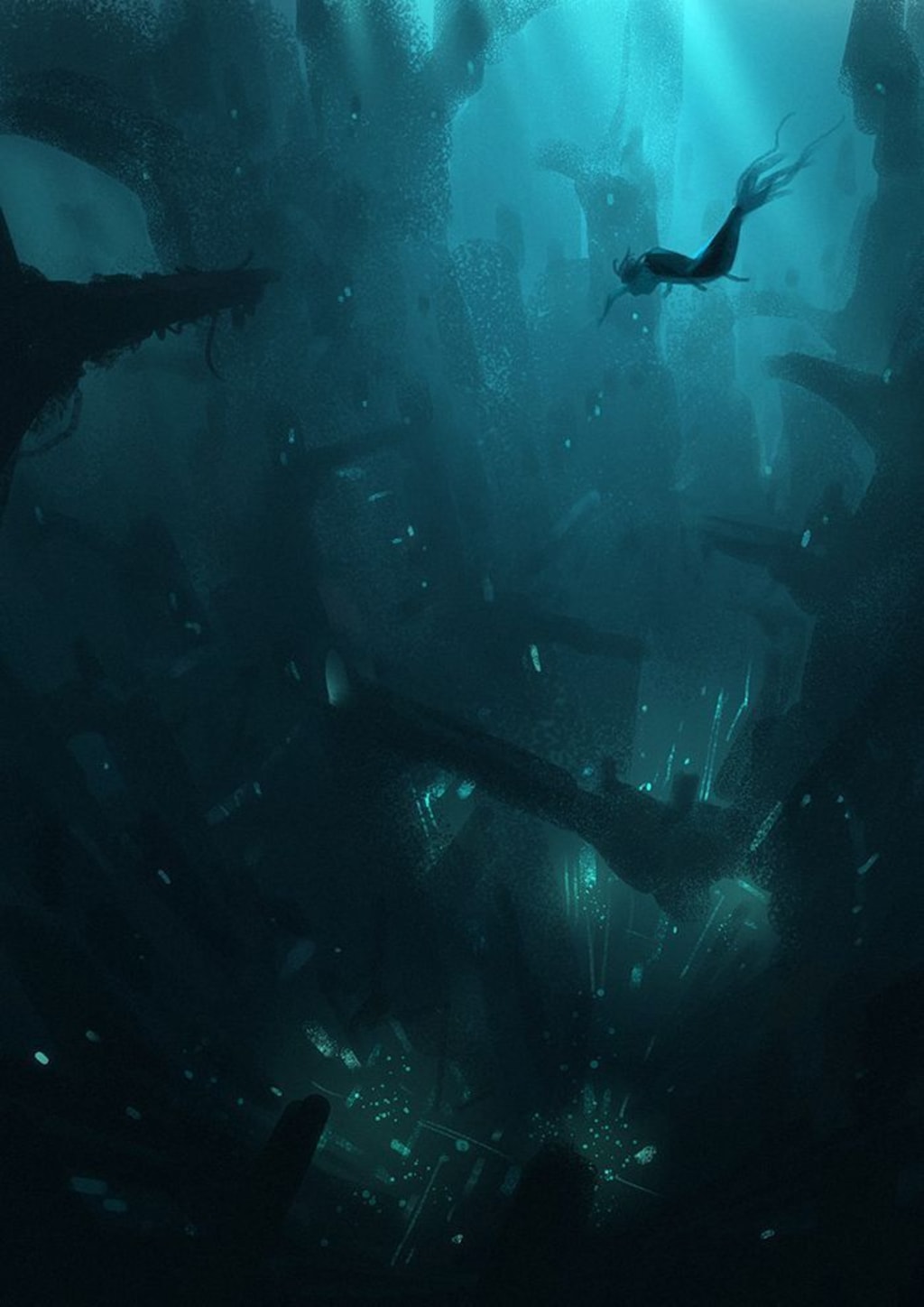
Once upon a time, there was an insatiable curiosity that resided in nearly every human heart. It was the longing to embark on a journey that defied imagination – a journey that would take them to the very core of the Earth. The idea of digging a hole straight through the planet's center fascinated the human race for generations. Yet, in all those years, not a single soul had ever achieved such a monumental feat.
This brings us to the heart of the tale – the question that has intrigued minds for ages. If humanity's foremost ambition were to embark on the most extraordinary excavation in history, how deep could they venture with the technology of today?
Picture starting this epic endeavor on the Earth's surface, taking that first dig just 1.8 meters beneath. This humble depth, equivalent to the customary burial depth in Western cultures, might seem a small start. But for those with a fear of zombies, it's the very depth they'd need to claw their way up from.
Going a bit further, four meters down would bring you to the depth where Pharaoh Tutankhamun's tomb was discovered, an archaeological marvel waiting to be unearthed.
As the dig continues, at six meters below the surface, you'd reach the maximum depth at which metal detectors can detect signals, offering a sense of just how far our technology can reach.
At 12 meters down, you'd encounter the deepest burrows created by animals, the domain of the Nile crocodile. These astonishing achievements of nature represent a true testament to life's ingenuity.
Descend further to 20 meters, and you'd find yourself within the Paris Catacombs, an eerie labyrinth beneath the streets of the city, housing the remains of over 6 million souls. The world beneath our feet is rich with history and wonder.
Double that depth to 40 meters, and you'd arrive at the deepest swimming pool on Earth. If you were to drain this pool and take a daring plunge from the top, it would take nearly 3 seconds before you hit the bottom.
Moving on, 100 meters down is the customary depth at which governments bury their nuclear waste, a testament to the gravity of the materials concealed beneath the Earth's surface.
Just below that, at 105.5 meters, you'd arrive at the deepest metro station in the world, nestled in Kiev. Here, a bustling underground world awaits, connecting people across the city.
Digging deeper, at 122 meters, you'd reach the deepest point known to which a plant's roots have ever ventured, exemplified by a remarkable fig tree in South Africa. It's a testament to nature's tenacity.
At 220 meters, you'd find yourself at the edge of the world's deepest river, the mighty Congo River in Africa. Its depths remain an enigma waiting to be explored.
Push on to 240 meters, and you could travel through the deepest railway tunnel on Earth, connecting the Japanese islands of Honshu and Hokkaido. An engineering marvel beneath the sea, it opens up new frontiers of transportation.
Journey to 287 meters, and you'd be driving through the deepest road tunnel globally, nestled in Norway. The heart-pounding experience of traveling through this abyss awaits the daring traveler.
Remarkably, at 392 meters, you'd arrive at the deepest well ever dug by human hands – the Woodingdean Water Well in the UK, an astounding achievement from as far back as 1862.
Delve down to 603 meters, and you'd encounter something truly spine-chilling – the deepest vertical drop within a cave. This harrowing plunge, taking over 11 seconds to reach the bottom, is a terrifying ordeal waiting for the unsuspecting.
Venturing further to 700 meters, you'd arrive at the depth at which the Chilean miners were trapped for 69 days in 2010. It was a tale of human resilience and determination.
At 970 meters, you'd arrive at the deepest hole that still affords a view of the open sky, the Bingham Canyon open pit mine in Utah. A superlative among mines, it's a world within the Earth's crust.
Descending to 1,410 meters, you'd enter the record books – the deepest concert ever held, staged by the band 'Agonizer' in Finland. It was music from the depths of the Earth.
At 1,642 meters, you'd find the deepest lake on Earth – Lake Baikal in Russia, a place of stunning natural beauty.
Go deeper to 1,857 meters, and you'd reach the lowest point in the Grand Canyon, a geological marvel etched by the passage of time.
But the story takes a more extraordinary turn. The deepest known cave on Earth is located 2,197 meters beneath the surface in Georgia. However, there's a deeper hole awaiting exploration.
At an astounding 3,132 meters, you'd find the bottom of the Moab Khotsong mineshaft in South Africa. It's a place where descending takes 25 seconds, long enough to contemplate your journey before reaching the Earth's depths.
Going further to 3,600 meters, you'd encounter the deepest point at which a multicellular organism has been found – a peculiar-looking worm, a testimony to life's adaptability.
Humans have ventured even deeper. At 4,000 meters, you'd find the lowest point in the world's deepest mine, also in South Africa. The descent to this depth takes over an hour, a journey of endurance and skill.
At 6,000 meters, you'd reach the average depth of the oceanic crust beneath the ocean floor, a realm that remains mysterious and largely unexplored.
Dive deeper to 8,848 meters, and you'd arrive at the height of Mount Everest if it were placed underground, another remarkable perspective on the Earth's depth.
But the story reaches its zenith at 10,994 meters, the depth of the Marianas Trench, the Earth's deepest point beneath the ocean's surface. A realm of incomprehensible darkness, it presents challenges beyond the imagination.
However, humans have dared to venture even deeper. For context, 11,887 meters is the typical cruising altitude for commercial airliners. Yet, at 12,262 meters, you'd arrive at the depth of the Kola Superdeep Borehole. This Soviet project aimed to penetrate the Earth's crust but only reached one-third of the way. The temperature at this depth soared to 180 degrees Celsius, too hot for the drill to continue. It's a testament to humanity's unyielding pursuit of knowledge.
Recently, the depth record has been shattered by the Z44-Chavyo oil and gas well, which has reached an astonishing 12,376 meters. It's equivalent to stacking 15 Burj Khalifas, the tallest building in the world, on top of each other, representing the deepest hole humanity has ever dug.
However, the Earth's crust extends to 70,000 meters below the surface, and the planet's core resides at 6,731 kilometers down. In the grand tapestry of the Earth's depth, humanity's deepest forays have merely scratched the surface.
And as our story comes to a close, remember to stay tuned for future adventures. Your support and curiosity drive the quest for new discoveries, unveiling the secrets hidden beneath our feet. We look forward to embarking on the next chapter of this incredible journey into the Earth's depths."
About the Creator
Keep reading
More stories from Alisa İnnokate and writers in Earth and other communities.
"The Puzzle of Time"
The earliest attempts to grasp time revolved around keen observations of natural rhythms, such as the transition from day to night and the ebb and flow of seasons. These simple yet profound patterns served as the building blocks for primitive calendars. Over time, humanity sought more precise methods to encapsulate time's essence, giving rise to sundials and mechanical clocks that neatly compartmentalized this intangible dimension. But what exactly is time? Does it possess a tangible existence, or is it merely a construct of human cognition?
By Alisa İnnokate2 years ago in Earth
A building's lifetime climate impact is mostly determined by its daily energy use.
The majority of a building's climate impact is not caused by its construction. As the heating, lighting, and ventilation systems continue to function year after year, it gradually accumulates.
By Francis Dami3 days ago in Earth
Workers Recover 15,000 Crabs After Lorry Crashes Into Field
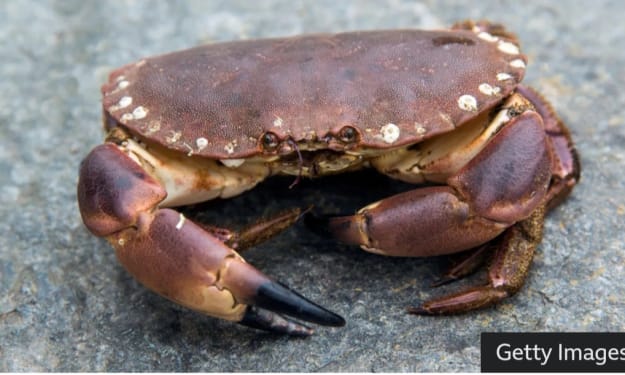
An extraordinary scene unfolded when a lorry carrying an estimated 15,000 live crabs crashed into a field, spilling its cargo across farmland and prompting a large-scale recovery effort. The unusual accident quickly drew attention from local residents, emergency services, and animal welfare groups, as workers scrambled to rescue as many crabs as possible before they succumbed to exposure.
By Aarif Lashari4 days ago in Earth
Ludacris and Nelly draw backlash over bookings at MAGA-coded music festival
Ludacris and Nelly headlining a mostly right-wing event is good for them. It’s also great for the genre of hip hop. The two rap veterans have showcased their talents on other stages. Why can’t they perform for mostly MAGA folks and grab that bag?
By Skyler Saunders3 days ago in Beat


Comments
There are no comments for this story
Be the first to respond and start the conversation.