
Japan’s Agricultural Evolution: Blending Tradition with Innovation for a Sustainable Future
Overcoming Challenges, Embracing Technology, and Cultivating Resilience in Japan’s Food System

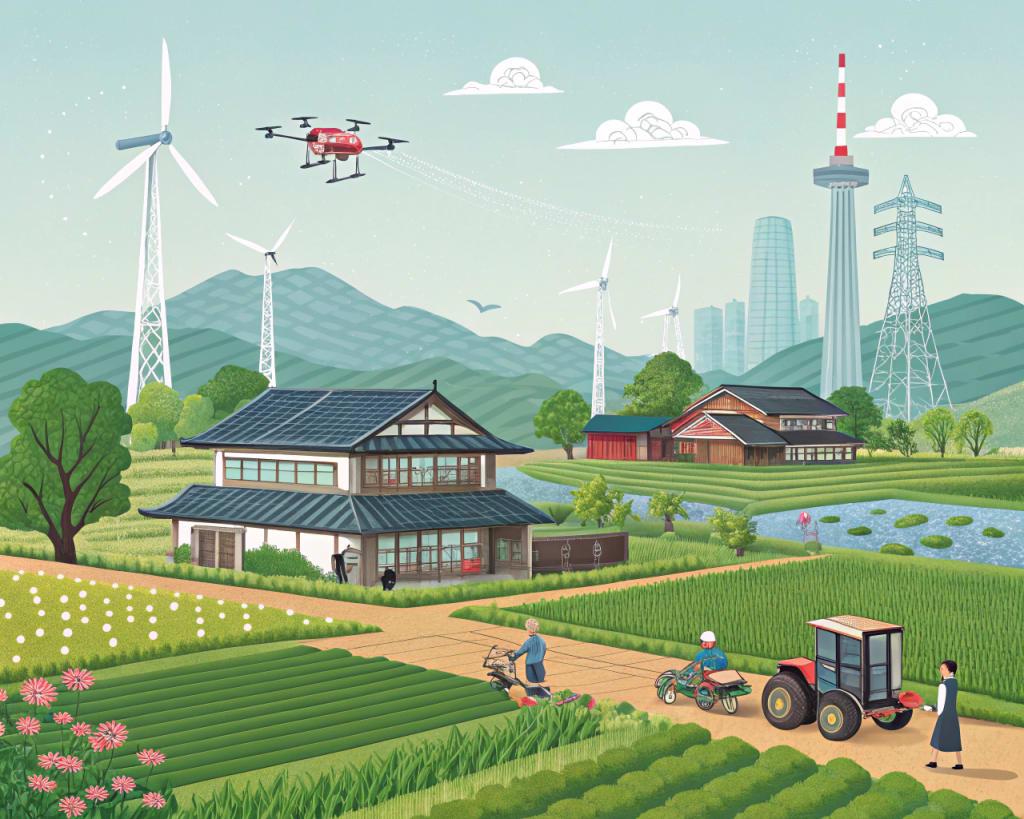
Japan’s agriculture, a harmonious blend of ancient traditions and cutting-edge innovation, sustains a nation of 125 million on just 4.4 million hectares of arable land. Contributing 1.2% to GDP and employing 3.4 million people, it faces unique challenges like an aging workforce and climate pressures. Yet, Japan is pioneering a high-tech, sustainable agricultural model that balances heritage with progress. Let’s explore the challenges, impacts, and transformative solutions shaping Japan’s agricultural renaissance.
Challenges Facing Japanese Agriculture
Japan’s agricultural sector grapples with significant hurdles. Only 12% of land is arable, among the lowest globally, and 60% of food is imported, costing $70 billion annually. Climate change threatens yields, with rising temperatures reducing rice production by 10% in some regions, per a 2023 MAFF report. Extreme weather, like typhoons, damages 5% of crops yearly. Soil degradation, affecting 20% of farmland, stems from intensive farming and chemical overuse, with fertilizer application at 250 kg per hectare—double global averages.
The aging farmer population, with 70% over 65, and a shrinking rural workforce, down 10% since 2010, limit productivity. Small farms, averaging 2 hectares, struggle with mechanization, and only 25% of farmers use advanced equipment. Post-harvest losses, at 8% of output, cost $5 billion due to inadequate storage. Water management is critical, with rice paddies consuming 60% of freshwater, yet 30% of irrigation systems are outdated, reducing efficiency.
Impacts on Society and Economy
The consequences are profound. Food security is a concern, with Japan’s food self-sufficiency rate at 38%, among the lowest for developed nations. High production costs make local produce 30% pricier than imports, straining household budgets. Economically, agriculture’s declining share limits rural incomes, with farmers earning $20,000 annually—half the national average—fuelling urban migration. Environmental impacts are significant, with pesticide runoff polluting 15% of waterways, harming biodiversity in regions like the Seto Inland Sea.
Despite challenges, Japan’s agricultural output, valued at $50 billion, excels in quality. Rice yields, at 4.8 tons per hectare, surpass many global benchmarks. However, reliance on imports and an aging workforce threaten long-term sustainability, while greenhouse gas emissions from farming, at 3% of Japan’s total, demand greener practices.
Innovative Solutions and Progress
Japan is revolutionizing agriculture through technology and policy. Smart farming, adopted on 1 million hectares, uses IoT sensors, drones, and AI to boost yields by 20% and cut water use by 30%, per a 2024 JAERI study. Autonomous tractors and robotic harvesters, deployed in 10% of farms, address labor shortages. Vertical farming, like Spread Co.’s automated lettuce factories, produces 30,000 heads daily with 98% less water than traditional methods.
The MAFF’s 2030 Strategy promotes sustainability, with organic farming expanding to 2% of farmland, supported by $1 billion in subsidies. Digital platforms like AgriNavi connect 500,000 farmers to markets, increasing incomes by 15%. Regenerative practices, such as no-till farming, restore soil health on 200,000 hectares. Cold chain upgrades, with 5,000 new facilities, reduce losses by 5%. Japan’s gene-edited crops, like high-yield tomatoes, are scaling, with 50% higher output in trials.
A Call to Action
Japan’s agricultural future demands bold action. Doubling R&D investment to 2% of agricultural GDP can accelerate innovations like climate-resilient seeds. Training 1 million young farmers in smart farming techniques is critical. Expanding cooperatives, now 700 strong, can empower smallholders. Consumers must support local, organic produce to reduce import reliance and emissions.
International partnerships, like Japan’s collaboration with ASEAN on precision agriculture, can share expertise. By blending tradition with technology—honoring rice culture while embracing robotics—Japan can ensure food security and environmental health. The time is now to cultivate a sustainable, resilient agricultural system that nourishes the nation and sets a global standard. Let’s act to secure Japan’s agricultural legacy.
About the Creator
Arjun. S. Gaikwad
Truth Writing unveils reality beyond illusion, power, and propaganda words that awaken conscience and challenge comfort. Fearless, honest, and thought-provoking, it explores politics, humanity, and spirit to inspire awareness and change.
Keep reading
More stories from Arjun. S. Gaikwad and writers in Earth and other communities.
China’s Agricultural Revolution: Feeding a Nation, Sustaining the Future
China, the world’s largest agricultural producer, feeds 20% of the global population on just 7% of its arable land. Contributing 7% to GDP and employing 170 million people, agriculture is a cornerstone of the nation’s economy. Yet, climate change, resource constraints, and rural-urban disparities pose significant challenges. Through cutting-edge technology, robust policies, and sustainable practices, China is transforming its agricultural landscape. Let’s explore the challenges, impacts, and visionary solutions driving this powerhouse forward.
By Arjun. S. Gaikwad6 months ago in Earth


Comments
There are no comments for this story
Be the first to respond and start the conversation.