
It's true that even if you drink water, you can get drunk without getting drunk.
Believe in science

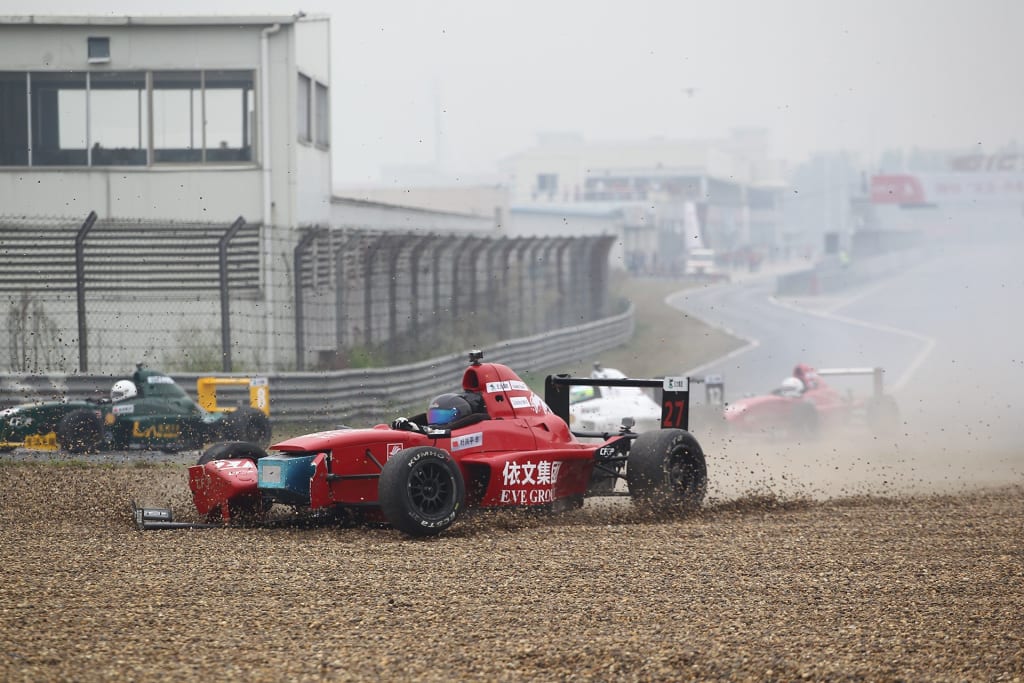
It can be said that there are a thousand kinds of outrageous drunkenness for a thousand times.
This is just the outrageous initial version (Picture / Douban)
In terms of chemical nature, ethanol mainly has a sedative effect on the central nervous system. Those excited and even manic behaviors after drinking alcohol have the opposite effect as ethanol itself. How do you explain that?
Scientists have conducted a series of experiments to explore people's drunken behavior, and have come to a somewhat counterintuitive conclusion-that people's expectations before drinking can significantly affect their state after drinking. In other words, sometimes, you just feel drunk.
This is how the experiment is done. The researchers prepared three cocktails: high, low and non-alcoholic, and the drinkers did not know which one they had. They were told before the test that the three cocktails had been seasoned and tasted the same in different degrees.
Blind box cocktails, you don't know if you're drinking wine or not. (photo / unsplash)
After drinking, the two subjects entered the behavior test as a group. The specific task is to make special mashed potatoes for your teammates, that is, add chili sauce and salt to the mashed potatoes, and then let your teammates eat them.
Unsurprisingly, some of the participants began to do whatever they wanted, making spicy mashed potatoes and saying they felt they had drunk a high number of cocktails! However, some of the people who thought they were high were given only non-alcoholic drinks. Some of the participants who did drink a high number of drinks felt that they were not drunk and behaved quite rationally.
"I'm not drunk, I'm sober!" (photo / pixabay)
In a similar experiment, testers were asked to create an advertisement for a given drink after drinking, such as writing an advertisement or planning a short film. The results are similar: people who think they are drunk create more interesting and creative ads.
"I'm getting drunk and stronger!" (photo / pixabay)
In many cases, you just induce yourself into a state where you think you're "drunk", even if you don't drink. After watching the next experiment, you will find that even the degree of drunkenness is sometimes closely related to the drinkers' expectations.
It is rumored that Red Bull with vodka will produce the power of double kill, is it true? it doesn't matter, because as long as you think it's true, it can be true.
"Red Bull is just for wine, the more you drink, the better you get" (please don't try it easily) Picture / bing
In a sense, what people need may not be wine, but a bottle. It doesn't matter what's in it.
The expectation of drinking will affect drunken behavior, leaving drinkers in a superposition of "drunk and not drunk", which may be Schrodinger's wine.
It sounds like some kind of metaphysics, but it is essentially similar to the placebo effect in psychology.
The so-called placebo effect means that in the drug test, the patient thinks he has taken the medicine and reports that the symptoms are relieved. But what he actually took was a sugar pill from the control group. One explanation for the placebo effect is that when a patient takes a placebo, some areas of the brain are actively activated, so the subjective perception of the symptoms weakens.
Magic candy pill! (photo / Wikipedia)
However, its function is limited to regulating symptoms and can not treat diseases. A word from the doctor can explain the matter very well--
"placebos do not reduce blood lipids, nor do they make tumors shrink. But it can make patients feel better about themselves. "
Vox
When it comes to this, one thing must be emphasized. The conclusion about the expectation of drinking is not true in the opposite direction. If someone tells you when persuading you to drink, "whether you are drunk or not depends on your mentality. As long as you feel that you are not drunk, you can drink all the time!" Never fall into this logical trap.
After alcohol enters the stomach, it will soon enter the bloodstream. It will go straight to the brain in 5 minutes and begin to take effect in 10 minutes, affecting the central nervous system. Depending on the increase in alcohol concentration in the blood, people go through the following stages--
In the first stage, the response is gradually slow.
In the second stage, dopamine release feels relaxed and enjoyable.
The third stage, inarticulate, blurred vision.
In the fourth stage, the cerebellum is unable to support the wall.
The fifth stage. Don't you dare drink.
During the Spring Festival, a young man who began to be slow to respond after drinking only half a glass of beer wrote this article, hoping to tell you that the joy of a party does not come from alcohol, and there is more than one thing that makes people secrete dopamine. The so-called pursuit of drinking is nothing more than a state, do not get drunk for happiness.
* do not drink alcohol for minors! You can't use italics if you are serious! )
About the Creator
Keep reading
More stories from gaisndm Hawkshaw and writers in Earth and other communities.
By the time you read this article, the two hottest ice piers in the official Olympic flagship online store have been sold out.
In 2022, Bingdun, the mascot of the Beijing Winter Olympic Games, really became the top stream, captivating a large number of athletes and journalists, and then making a hot search with "Carmen" and "shaking Snow". Obviously, in the cold winter, no one can refuse a "rock candy roll". But why can the ice pier be so cute "straight to the heart"?
By gaisndm Hawkshaw3 years ago in Earth
Amid European Energy Fears, Coal Creeps Back Into Favour
Europe’s energy landscape is shifting as fears over supply security and rising costs drive some countries back toward coal, a fossil fuel many had hoped to phase out entirely. The resurgence comes amid heightened tensions over energy imports, particularly natural gas, as the war in Ukraine and geopolitical friction with Russia have exposed vulnerabilities in the continent’s energy systems. Germany, long seen as a leader in renewable energy adoption, recently announced plans to keep several coal-fired power plants online longer than initially scheduled. Officials cited winter energy demands and the need to maintain a reliable baseload while natural gas supplies remain constrained. Similar considerations are emerging in Poland, the Czech Republic, and other nations that rely heavily on imported energy. “The energy crisis has forced governments to make difficult choices,” said Dr. Klaus Weber, an energy policy analyst at European Energy Institute. “While the climate goals remain important, ensuring citizens have access to electricity and heat this winter has become a more immediate priority.” The return to coal is not simply a response to price spikes. Energy security has become a pressing concern after European reliance on Russian gas pipelines was disrupted, prompting countries to diversify sources and store reserves. Coal, abundant in Europe and globally traded at competitive prices, provides a short-term buffer against shortages. At the same time, rising electricity costs have placed enormous pressure on households and industries. According to recent statistics from the International Energy Agency, European electricity prices surged by nearly 40% in the past year, prompting governments to subsidize energy bills and rethink fuel strategies. Coal-fired generation, though more polluting, offers predictable output and can be ramped up quickly to stabilize grids. Renewable energy advocates have expressed concern that this shift could undermine Europe’s climate leadership. Coal emits roughly twice the CO₂ per unit of energy compared to natural gas, posing challenges to achieving net-zero targets. Critics warn that extending coal use—even temporarily—risks locking in infrastructure that is inconsistent with long-term decarbonization goals. “Every megawatt-hour produced from coal is a step backward for Europe’s climate ambitions,” said Maria López, senior campaigner at Greenpeace Europe. “Governments need to pair any temporary measures with accelerated renewable deployment to avoid backsliding on emissions reductions.” Some nations are attempting to balance these pressures by deploying cleaner coal technologies. Advanced coal plants with carbon capture and storage (CCS) can reduce emissions by capturing a significant portion of CO₂ before it enters the atmosphere. Germany and the Netherlands are investing in pilot projects to integrate CCS into existing power plants, though critics note that large-scale implementation remains costly and complex. Analysts suggest that Europe’s return to coal is likely to be temporary. Once gas supplies stabilize and renewable infrastructure expands, reliance on coal is expected to decline. Yet the episode has highlighted the fragility of energy systems in the face of geopolitical shocks and the tension between short-term energy security and long-term climate goals. Meanwhile, citizens and businesses are feeling the immediate impact. Many households in Eastern and Central Europe face sharply higher heating costs this winter, and industrial manufacturers are warning that energy-intensive production could be scaled back if prices remain high. Policymakers are caught between the urgent need to maintain supply and the imperative to meet climate commitments. The European Union is working on strategies to mitigate these challenges. Measures include expanding LNG import terminals, investing in cross-border electricity interconnectors, and boosting renewable energy capacity. However, the gap between energy supply and demand, exacerbated by geopolitical tensions, means coal may remain a stopgap solution for months to come. Europe’s cautious return to coal underscores a broader reality: energy transitions are never linear. Even as governments and citizens push toward a greener future, external shocks—conflict, supply disruptions, and price volatility—can temporarily alter priorities. The key challenge for policymakers will be ensuring that short-term reliance on fossil fuels does not derail long-term climate ambitions.
By Fiaz Ahmed 7 days ago in Earth


Comments
There are no comments for this story
Be the first to respond and start the conversation.