
IS THERE STILL HOPE FOR THE DYING PLANET?
THE EARTH COULD DIE!!!
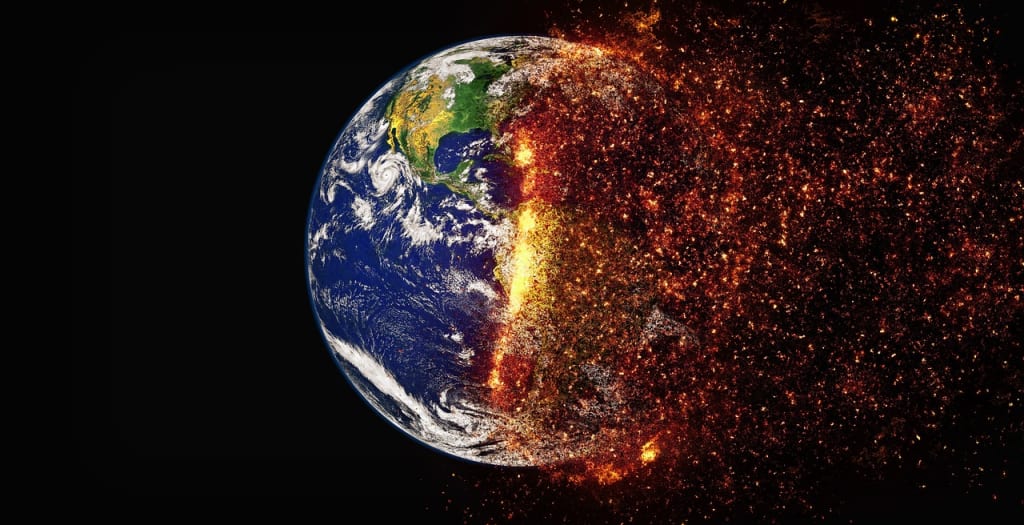
IS THERE STILL HOPE FOR THE DYING PLANET?
The future of humanity is uncertain, and just like any other celestial body, Earth is not immortal. If a catastrophic event were to occur, such as a giant meteor crashing into our planet, it could lead to Earth's eventual destruction. To ensure the long-term survival of our species, one plausible approach would be to explore the universe and establish colonies on other celestial bodies. However, space travel is incredibly complex, and reaching another solar system within a reasonable time frame remains a significant challenge.
An intriguing concept found in science fiction is the construction of artificial planet-sized objects, like the Death Star from Star Wars or a Dyson Sphere. While such creations demonstrate advanced capabilities, the actual construction of such colossal structures would be immensely demanding.
If we were to consider building an artificial planet-sized object, there are two possibilities: a replica of a planet like Earth or a space station similar in size to a small moon. Replicating a planet like Earth would require careful mass and element combinations, while constructing a space station would still involve enormous engineering feats.
Take, for instance, the Death Star, which is estimated to be 74 miles in diameter, compared to Earth's 8,000 miles. Building such a structure would necessitate materials weighing approximately one quadrillion tons, a task currently impossible with existing technologies. Even the production of the required materials would be an enormous challenge. Transporting such materials into space would be costly and complicated.
However, if we could overcome these obstacles and transport the materials into space, the actual construction process would be relatively straightforward. Robotics could handle most of the work in low gravity, making assembly feasible over time.
An alternative approach might involve mining materials from asteroids already present in space. Several companies are exploring the feasibility of asteroid mining, which could significantly reduce construction costs. To avoid structural issues, some researchers suggest using carbon-based materials instead of steel.
Building an actual planet from scratch would be an even more daunting task. Earth has formed over billions of years through natural processes, and replicating this process is currently beyond our capabilities. However, some researchers propose the idea of terraforming an already existing planet, like Mars. This involves altering its environment through nuclear detonations or creating an artificial magnetic field to thicken the atmosphere, potentially warming the planet and making it more habitable.
In conclusion, while the idea of building an artificial planet is exciting, it is currently far beyond our technological reach. Instead, a more realistic approach is to focus on terraforming neighboring planets to make them suitable for human habitation. By adapting their environments, we may find potential new homes for humanity beyond Earth.
The future of humanity is uncertain, and just like any other celestial body, Earth is not immortal. If a catastrophic event were to occur, such as a giant meteor crashing into our planet, it could lead to Earth's eventual destruction. To ensure the long-term survival of our species, one plausible approach would be to explore the universe and establish colonies on other celestial bodies. However, space travel is incredibly complex, and reaching another solar system within a reasonable time frame remains a significant challenge.
An intriguing concept found in science fiction is the construction of artificial planet-sized objects, like the Death Star from Star Wars or a Dyson Sphere. While such creations demonstrate advanced capabilities, the actual construction of such colossal structures would be immensely demanding.
If we were to consider building an artificial planet-sized object, there are two possibilities: a replica of a planet like Earth or a space station similar in size to a small moon. Replicating a planet like Earth would require careful mass and element combinations, while constructing a space station would still involve enormous engineering feats.
Take, for instance, the Death Star, which is estimated to be 74 miles in diameter, compared to Earth's 8,000 miles. Building such a structure would necessitate materials weighing approximately one quadrillion tons, a task currently impossible with existing technologies. Even the production of the required materials would be an enormous challenge. Transporting such materials into space would be costly and complicated.
However, if we could overcome these obstacles and transport the materials into space, the actual construction process would be relatively straightforward. Robotics could handle most of the work in low gravity, making assembly feasible over time.
An alternative approach might involve mining materials from asteroids already present in space. Several companies are exploring the feasibility of asteroid mining, which could significantly reduce construction costs. To avoid structural issues, some researchers suggest using carbon-based materials instead of steel.
Building an actual planet from scratch would be an even more daunting task. Earth has formed over billions of years through natural processes, and replicating this process is currently beyond our capabilities. However, some researchers propose the idea of terraforming an already existing planet, like Mars. This involves altering its environment through nuclear detonations or creating an artificial magnetic field to thicken the atmosphere, potentially warming the planet and making it more habitable.
In conclusion, while the idea of building an artificial planet is exciting, it is currently far beyond our technological reach. Instead, a more realistic approach is to focus on terraforming neighboring planets to make them suitable for human habitation. By adapting their environments, we may find potential new homes for humanity beyond Earth.
The future of humanity is uncertain, and just like any other celestial body, Earth is not immortal. If a catastrophic event were to occur, such as a giant meteor crashing into our planet, it could lead to Earth's eventual destruction. To ensure the long-term survival of our species, one plausible approach would be to explore the universe and establish colonies on other celestial bodies. However, space travel is incredibly complex, and reaching another solar system within a reasonable time frame remains a significant challenge.
An intriguing concept found in science fiction is the construction of artificial planet-sized objects, like the Death Star from Star Wars or a Dyson Sphere. While such creations demonstrate advanced capabilities, the actual construction of such colossal structures would be immensely demanding.
If we were to consider building an artificial planet-sized object, there are two possibilities: a replica of a planet like Earth or a space station similar in size to a small moon. Replicating a planet like Earth would require careful mass and element combinations, while constructing a space station would still involve enormous engineering feats.
Take, for instance, the Death Star, which is estimated to be 74 miles in diameter, compared to Earth's 8,000 miles. Building such a structure would necessitate materials weighing approximately one quadrillion tons, a task currently impossible with existing technologies. Even the production of the required materials would be an enormous challenge. Transporting such materials into space would be costly and complicated.
However, if we could overcome these obstacles and transport the materials into space, the actual construction process would be relatively straightforward. Robotics could handle most of the work in low gravity, making assembly feasible over time.
An alternative approach might involve mining materials from asteroids already present in space. Several companies are exploring the feasibility of asteroid mining, which could significantly reduce construction costs. To avoid structural issues, some researchers suggest using carbon-based materials instead of steel.
Building an actual planet from scratch would be an even more daunting task. Earth has formed over billions of years through natural processes, and replicating this process is currently beyond our capabilities. However, some researchers propose the idea of terraforming an already existing planet, like Mars. This involves altering its environment through nuclear detonations or creating an artificial magnetic field to thicken the atmosphere, potentially warming the planet and making it more habitable.
In conclusion, while the idea of building an artificial planet is exciting, it is currently far beyond our technological reach. Instead, a more realistic approach is to focus on terraforming neighboring planets to make them suitable for human habitation. By adapting their environments, we may find potential new homes for humanity beyond Earth.
About the Creator
Keep reading
More stories from writers in Earth and other communities.
Camp Fire (2018) – The Largest and Deadliest Wildfire in United States History
1. Introduction The Camp Fire, which broke out in November 2018 in Northern California, is widely regarded as the deadliest and one of the most destructive wildfires in the history of the United States. The scale of devastation, the number of fatalities, and the extraordinary speed at which the fire spread made it a turning point in how wildfires are perceived and managed across the country. This was not a disaster that unfolded over days—it was a catastrophe that erased an entire town within hours.
By firefighter6 days ago in Earth
Trouble at the Tea Leafing Café
The rain had started right around the time that Annie was buttering her second thick slice of homemade toast for breakfast, and hadn’t paused since. Not that anyone could tell. The windows of the café were fogged over, and with every seat filled with happy customers munching on fresh baked pastries or steaming bowls of the delicious soup of the day, it was hardly surprising. Annie looked around the room, finally taking a moment to breathe after the lunch time rush. Her old life already felt like a bad memory, a part of her history, always, but just that. History.
By Hannah Moore2 days ago in Fiction



Comments
There are no comments for this story
Be the first to respond and start the conversation.