
Is the announcement of a 50 percent tariff on India a golden opportunity for Pakistan to increase exports to the United States?
From basmati rice to textiles, experts say Pakistan could benefit from Donald Trump’s new tariff war with India — but only if it moves fast.

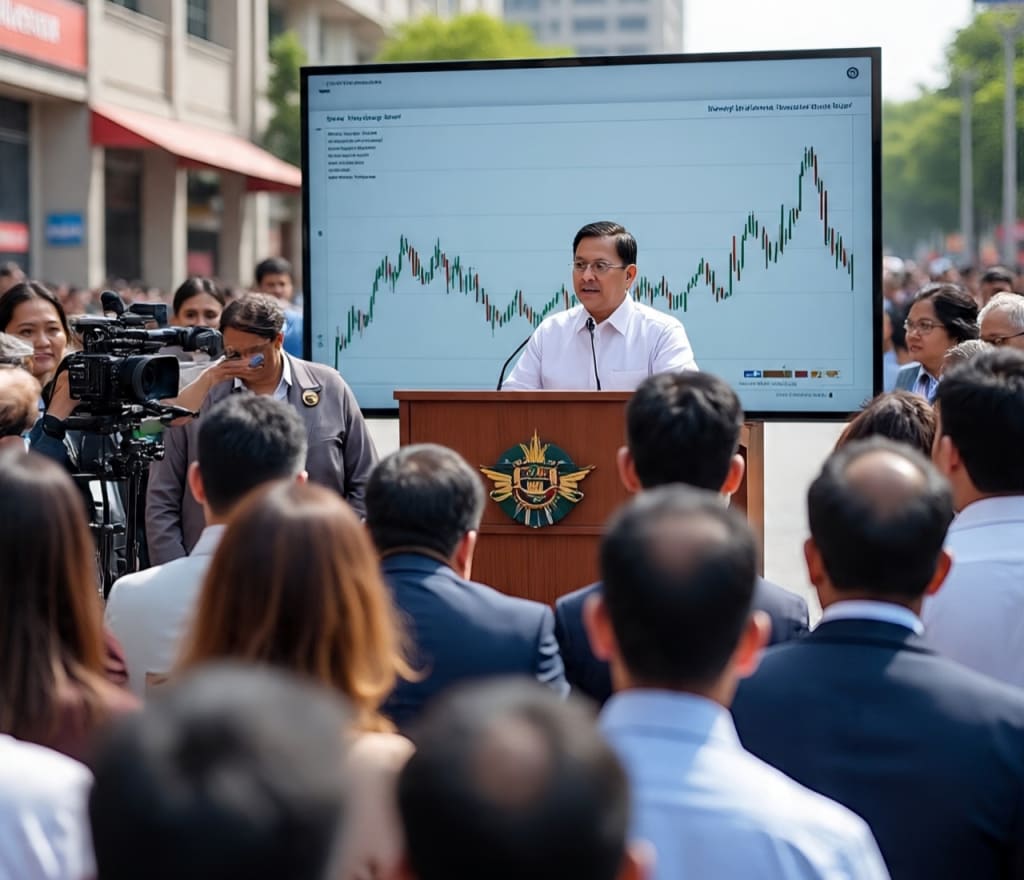
If you’ve ever visited a South Asian grocery store in the US—perhaps with a friend or relative living in a Pakistani or Indian community—you’ve probably seen shelves lined with jars of pickles, packets of ready-made spice mixes, tins of leafy greens, and sacks of fragrant basmati rice.
In New York and other US cities, there are many such stores selling every kind of Pakistani and Indian product.
In addition to these community-based shops, major American retailers like Target, Walmart, and Costco also have “Indian sections” where you’ll find Haldiram spice mixes, basmati rice, dry fruits, and other South Asian goods.
The large US retail chains are also stocked with clothing and textile products made in India, China, Bangladesh, and Pakistan.
Now, the US has imposed tariffs of up to 50% on Indian products. This raises concerns that Indian goods will become more expensive for American consumers, but analysts believe it could also open new opportunities in US markets for countries like Pakistan.
Aiza Irfan, who lives in New York, says she and her family prefer South Asian food.
“We do most of our kitchen and grocery shopping from Indian stores, and around 50% to 60% of these products are imported from India,” she said.
By comparison, Pakistani goods are subject to only a 19% US tariff, giving Pakistani officials hope that their products could gain better access to American markets.
The Reality vs. Expectations – Can Pakistan Take a Share of the US Market in This ‘Tariff War’?
Do Idia and the US Trade With Each Other?
Former President Donald Trump initially imposed a 25% tariff on Indian products, and later added another 25%—citing India’s oil imports from Russia—bringing the total tariff to 50%.
Starting at the end of this month, the higher tariffs will take effect, potentially making Indian products less competitive in US markets.
Economists and credit rating agencies warn that these tariffs could impact India’s GDP.
Bilateral trade between the US and India exceeds $128 billion.
According to the US Census Bureau, India exports to the US in large quantities: raw materials for pharmaceuticals, textiles, precious stones, gold and silver jewelry, rice, spices, tea, and petrochemicals.
In 2024, India exported $87 billion worth of goods to the US, while importing $41.5 billion worth from the US. The trade balance tilts in India’s favor, with a $45.8 billion trade surplus in goods alone.
Can Pakistani Goods Replace Indian Products?
Donald Trump once said that India is a friend of the US, “but the trade partnership is not on fair terms.”
In February, Indian Prime Minister Narendra Modi visited the US, and both countries agreed to aim for $500 billion in trade by 2030.
Aiza Irfan said she usually buys spices, basmati rice, and ingredients for South Asian dishes from “desi stores” like Patel Brothers and Apna Bazaar—Indian-American retail chains spread across the US that import goods directly from India and sell them at lower prices.
However, she fears that after the tariff hike, Indian products will become too expensive, forcing her to switch to cheaper alternatives.
Economists say the new tariffs on China and India have created more space for Pakistani goods in the US market.
In 2025, Pakistan’s total exports were $35.9 billion. US trade data shows total bilateral trade between Pakistan and the US at $7.2 billion.
In 2024, Pakistan exported $5 billion worth of goods to the US while importing $2 billion worth from it. The US is one of the few countries with which Pakistan enjoys a trade surplus.
50% Tariff on India – A ‘Rare’ Opportunity for Pakistan?
Former Pakistani ambassador to the World Trade Organization (WTO) Dr. Manzoor Ahmad says Pakistan’s exports have been stagnant for years, but now the “tariff war” offers a chance to increase market share.
A member of Pakistan’s Tariff Reforms Committee, Dr. Ahmad believes that in sectors like textiles, leather goods, sports equipment, and food products, Pakistan has the capacity and experience to capture some of India’s market share.
However, India is a major trade partner for the US. Such high tariffs could hurt not only India but also US businesses. Some business circles believe both countries will eventually try to resolve the dispute.
India accounts for 18% of total US imports.
Challenges for Pakistani Exporter
Pakistan’s biggest export to the US is textiles, but industry reactions have been mixed.
Interloop, one of Pakistan’s largest exporters to the US, says big US retailers will likely wait a few weeks to see if a tariff-reduction deal happens before shifting orders.
According to Interloop’s CEO, Musaddiq Zulqarnain, if the 25% additional tariff on India stays, Pakistan could benefit most in home textiles. In garments, the first choice for order shifts would be Bangladesh, then Vietnam, and then Pakistan.
If Pakistan captures 10–15% of India’s market share, that could mean an additional $500–750 million in exports—but only if Pakistani prices are close to India’s.
Textile exporter Masood Naqi says India’s share of the US textile market is 8%, while Pakistan’s is only 2.5%.
Of Pakistan’s $17 billion total textile exports, about $4 billion go to the US.
Naqi points out that Pakistan and India are not always direct competitors in textiles—Pakistan’s main rivals are China and Bangladesh, both of which have much larger production capacity.
Trump has imposed 30% tariffs on China and 20% on Bangladesh.
Naqi notes that some textile units are already moving out of China, and if Pakistan can create a favorable environment—especially in terms of security—it could benefit in the long term.
However, he warns that if US consumers find products too expensive, they might stop buying them altogether, hurting both India and Pakistan.
Dr. Manzoor Ahmad says Pakistan’s recent tariff reforms now allow easier machinery imports, making it possible for big tech companies like Apple and Samsung to invest in Pakistan—something that wasn’t feasible before.
Economist Uzair Younus, based in the US, says Pakistan now has a better competitive position than India in textiles because of the lower 19% tariff, but it’s important to complete IMF-backed energy reforms to reduce production costs.
A Big Opportunity for Pakistani Basmati Rice
Basmati rice is grown in both India and Pakistan and is very popular in the US and Europe. In the US, most basmati rice sold is Indian, with Pakistani exports relatively small.
According to S.M. Sabeer-ur-Rehman of the Pakistan Rice Exporters Association, India’s basmati rice exports to the US are three times higher than Pakistan’s.
With the tariff on India, Pakistan now has a strong opportunity to increase its exports—but the next three weeks will be crucial.
Pakistan exported $3.93 billion worth of rice in FY2025, of which basmati accounted for $830 million.
Sabeer says he is in contact with US buyers, but most are waiting to see if Trump’s decision holds, as his policies have been unpredictable.
He says Pakistan can absolutely increase its exports, but new orders will take time.
In New York, Aiza Irfan says that while the US offers many rice varieties, biryani only tastes right with basmati. If Indian basmati becomes too expensive, she believes Pakistani basmati will be a good alternative since both have the same aroma and flavor.
About the Creator
Keep reading
More stories from Real content and writers in Earth and other communities.
Elon Musk Says Retirement Savings “Won’t Matter” in 20 Years—Here’s What Experts Think
Recently, Elon Musk sparked a heated debate on social media with a bold claim: in 20 years, traditional retirement savings “won’t matter.” The Tesla and SpaceX CEO suggested that the way people think about money and retirement today might be completely obsolete in a couple of decades. As usual, Musk’s statements are equal parts provocative and visionary, leaving many wondering whether they should rethink their financial plans entirely. To get clarity, we reached out to seven personal finance and AI experts to hear their thoughts on Musk’s prediction. Their insights provide a mix of caution, optimism, and futuristic thinking. 1. The Case for Obsolescence: AI and Automation AI strategist Dr. Karen Liu believes Musk isn’t exaggerating when he talks about the diminishing importance of retirement savings. “If AI and automation continue at the current pace, many traditional jobs could disappear,” she explains. “By 2046, people might earn income from AI-driven ventures, digital assets, or royalties rather than a 9-to-5 paycheck. In that case, the way we save for retirement could indeed look very different.” She emphasizes that new financial models might emerge, such as universal basic income (UBI) or AI-managed wealth portfolios, making conventional retirement accounts less critical. “People might no longer need 401(k)s or IRAs in the same way we do now,” she adds. 2. The Human Factor: Some Things Don’t Change Personal finance advisor Marcus Bell takes a more conservative view. “Even if the economy changes drastically, money management skills won’t be irrelevant,” he says. “Musk may be right that retirement savings as we know them may evolve, but having a financial cushion will always matter. Emergencies, healthcare costs, and life changes won’t disappear.” Bell suggests a hybrid approach: continue contributing to traditional retirement accounts while exploring alternative investments like digital currencies, AI-managed funds, or entrepreneurial ventures. 3. Cryptocurrency and the Digital Asset Revolution Crypto expert Priya Desai sees Musk’s comment as a nod toward the rise of digital assets. “By 2046, much of personal wealth may reside in cryptocurrencies, tokenized real estate, and NFTs rather than bank accounts or pensions,” she says. Desai believes that blockchain technology could redefine ownership and wealth accumulation, making traditional retirement savings less central. However, she cautions: “Digital assets are highly volatile. While they may replace some retirement vehicles, they aren’t a guaranteed substitute. Diversification will remain crucial.” 4. AI-Powered Wealth Management AI entrepreneur Rohan Kapoor points out that AI itself could make traditional retirement planning almost obsolete. “Imagine AI systems that continuously optimize your investments, taxes, and spending in real-time,” he says. “If AI handles wealth accumulation more efficiently than humans, you may not need to manually save and plan decades in advance.” Kapoor predicts that by 2046, AI advisors could create personalized financial lifelines that automatically adjust for inflation, market changes, and lifestyle goals. In this scenario, traditional 401(k)s might feel outdated. 5. The Social Safety Net Factor Economist Dr. Elise Morgan reminds us that social and political structures will also play a role. “Even if technology changes how wealth is accumulated, government programs like Social Security, healthcare, or UBI will shape retirement,” she explains. “Musk’s statement assumes a high-tech, highly automated economy, which is just one possible scenario.” Morgan urges caution: relying solely on futuristic predictions could be risky. Traditional savings may still act as a fallback if economic or technological disruptions fail to deliver as Musk anticipates. 6. Mindset and Wealth Beyond Money Financial psychologist Sandra Liu emphasizes that wealth isn’t only monetary. “Even if retirement accounts lose their traditional meaning, financial literacy, resourcefulness, and the ability to leverage technology will remain critical skills,” she says. “Musk’s prediction is more about mindset than accounts. People who can adapt, innovate, and use technology to generate income will thrive regardless of conventional savings.” 7. Preparing for the Future, Not Panicking Finally, futurist Jared Thompson encourages a pragmatic approach: “Don’t panic or abandon your retirement plan just because Elon Musk said so. Think of it as a signal to diversify—invest in tech, learn AI skills, and explore new income streams.” Thompson suggests a “layered strategy”: keep some traditional retirement savings while experimenting with AI-driven investment platforms, cryptocurrencies, and entrepreneurial projects. What Does This Mean for You? Musk’s prediction may sound extreme, but the expert opinions reveal a spectrum of possibilities. Here’s a practical takeaway: Keep saving, but diversify: Don’t abandon retirement accounts, but explore AI-driven investments, crypto, or digital assets. Invest in skills: AI, coding, and tech literacy may be as valuable as cash reserves in 20 years. Embrace flexibility: Financial plans should be adaptable to rapid technological and societal changes. Mind the basics: Emergency funds, debt management, and smart spending remain essential regardless of tech trends. In short, Musk’s warning isn’t necessarily a call to abandon traditional retirement planning—it’s a reminder that the future of money is changing rapidly. Those who combine conventional strategies with an eye on emerging technologies may be the ones who truly thrive in 2046. Conclusion: Elon Musk’s claim that retirement savings “won’t matter” in 20 years is provocative, but it opens an important conversation about the intersection of finance, technology, and the future of work. While some experts see it as a harbinger of radical change, others stress prudence and flexibility. Either way, the message is clear: the next two decades will demand both financial savvy and tech literacy. The question isn’t whether retirement savings will disappear—it’s whether you’ll adapt to the evolving financial landscape.
By Muhammad Hassan5 days ago in Earth
Things you don't know about Africa
Africa: What You Probably Didn’t Know Article No. 1671 Tuesday, 25 February 2020 By Wardah Baloch In terms of land area, Africa is the second-largest continent in the world. It covers nearly 22 percent of the world’s total landmass and about 6 percent of the Earth’s total surface area. Only Asia is larger than Africa in size.
By Sudais Zakwan5 days ago in Earth


Comments
There are no comments for this story
Be the first to respond and start the conversation.