

Introduction to Invertebrates
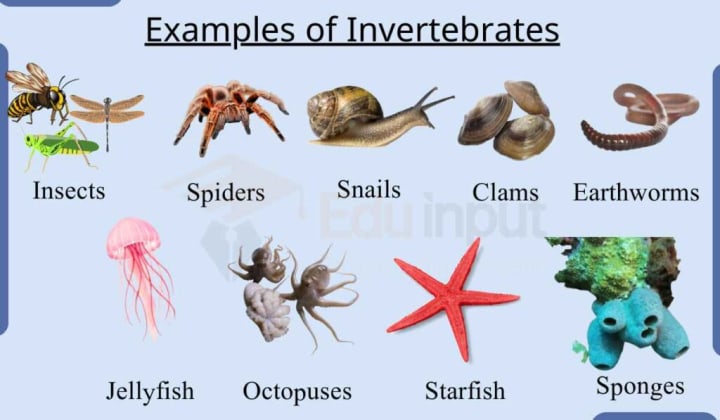
Invertebrates are a diverse group of animals that lack a vertebral column (backbone). They represent over 95% of all animal species on Earth and can be found in virtually every habitat, from the deepest oceans to the highest mountains. This group includes a vast array of organisms, ranging from the microscopic to the visibly complex and large. Invertebrates play crucial roles in ecosystems, serving as primary consumers, decomposers, and even pollinators. This blog will explore the fascinating world of invertebrates, delving into their classification, biology, ecological significance, and their importance to humans.
Classification of Invertebrates
Invertebrates are classified into several major phyla, each with its own unique characteristics and evolutionary history. Here are some of the most well-known invertebrate phyla:
1. Porifera (Sponges)

Characteristics:
Simplest of all animals.
Lack true tissues and organs.
Possess a porous body with an internal skeleton made of spicules.
Mostly marine, with a few freshwater species.
Biology:
Filter feeders, drawing water through their pores to extract nutrients.
Can reproduce both sexually and asexually.
Have remarkable regenerative abilities.
Ecological Role:
Provide habitat for a variety of marine organisms.
Play a role in nutrient cycling and water filtration.
2. Cnidaria (Jellyfish, Corals, and Sea Anemones)

Characteristics:
Radially symmetrical.
Possess specialized cells called cnidocytes, which contain stinging organelles called nematocysts.
Two main body forms: polyp (sessile) and medusa (free-swimming).
Biology:
Have a simple digestive cavity with a single opening.
Can reproduce both sexually and asexually.
Exhibit a wide range of behaviors and symbiotic relationships.
Ecological Role:
Important components of marine ecosystems.
Coral reefs, formed by colonial cnidarians, are biodiversity hotspots.
3. Platyhelminthes (Flatworms)

Characteristics:
Bilaterally symmetrical.
Flattened body.
Lack a body cavity (acoelomates).
Biology:
Many are parasitic, including tapeworms and flukes.
Have a simple digestive system, or none at all in parasitic forms.
Can reproduce sexually and asexually.
Ecological Role:
Parasitic species can impact the health of other animals.
Free-living species play a role in controlling populations of other small invertebrates.
4. Nematoda (Roundworms)

Characteristics:
Bilaterally symmetrical with a cylindrical body.
Possess a pseudocoelom (a fluid-filled body cavity).
Covered by a tough cuticle that molts as they grow.
Biology:
Many are parasitic, affecting plants, animals, and humans.
Simple digestive system with a mouth and anus.
Reproduce sexually, with some species exhibiting hermaphroditism.
Ecological Role:
Play a role in nutrient cycling and soil health.
Can be pests or beneficial organisms in agriculture.
5. Annelida (Segmented Worms)

Characteristics:
Bilaterally symmetrical with a segmented body.
Possess a true coelom (body cavity).
Have bristles called setae or chaetae.
Biology:
Include earthworms, leeches, and polychaetes.
Complex digestive, circulatory, and nervous systems.
Reproduce sexually, with some capable of asexual reproduction.
Ecological Role:
Earthworms enhance soil structure and fertility.
Leeches can be used in medical treatments.
6. Mollusca (Mollusks)

Characteristics:
Bilaterally symmetrical, with a soft body often protected by a hard shell.
Possess a muscular foot, visceral mass, and mantle.
Diverse group, including snails, clams, squids, and octopuses.
Biology:
Have complex organ systems, including a radula for feeding.
Reproduce sexually, with some exhibiting complex life cycles.
Highly adaptable, found in marine, freshwater, and terrestrial environments.
Ecological Role:
Important food source for many animals.
Play roles in ecosystem engineering, nutrient cycling, and as bioindicators.
7. Arthropoda (Insects, Arachnids, Crustaceans)

Characteristics:
Bilaterally symmetrical with a segmented body.
Exoskeleton made of chitin, which molts as they grow.
Jointed appendages and a highly developed nervous system.
Biology:
Most diverse animal phylum, with millions of described species.
Exhibit complex behaviors and social structures.
Reproduce sexually, with many undergoing metamorphosis.
Ecological Role:
Pollinators, decomposers, and key players in food webs.
Some species are pests or vectors of diseases.
8. Echinodermata (Starfish, Sea Urchins, and Sea Cucumbers)

Characteristics:
Radially symmetrical as adults, bilaterally symmetrical as larvae.
Possess a water vascular system for movement and feeding.
Endoskeleton made of calcareous plates.
Biology:
Exhibit unique regenerative abilities.
Have simple digestive and nervous systems.
Reproduce sexually, with some capable of asexual reproduction.
Ecological Role:
Important in maintaining the health of marine ecosystems.
Sea urchins help control algal growth on coral reefs.
Biology and Adaptations
Invertebrates have evolved a myriad of adaptations to survive and thrive in diverse environments. Here are some key aspects of their biology and adaptations:
Sensory and Nervous Systems
Invertebrates exhibit a wide range of sensory and nervous system complexities. Simple invertebrates like sponges lack a nervous system entirely, relying on cellular communication for coordination. Cnidarians have a nerve net, a decentralized network of neurons. More complex invertebrates, such as arthropods and cephalopods, have sophisticated nervous systems with centralized brains and advanced sensory organs, allowing them to exhibit complex behaviors and learning abilities.
Locomotion
Invertebrates employ various methods of locomotion, adapted to their environments. For example:
Cilia and Flagella: Used by many microscopic invertebrates, such as protozoans and small larvae, for swimming.
Hydrostatic Skeleton: Found in organisms like annelids and nematodes, where fluid-filled cavities provide support and facilitate movement through muscle contractions.
Jointed Appendages: Characteristic of arthropods, allowing for efficient and versatile movement.
Jet Propulsion: Utilized by cephalopods like squids and octopuses for rapid movement.
Reproduction and Life Cycles
Invertebrate reproduction strategies are incredibly diverse. Many species reproduce sexually, while others can reproduce asexually through budding, fragmentation, or parthenogenesis. Some invertebrates, like cnidarians, alternate between sexual and asexual reproductive stages. Life cycles can be simple or involve complex metamorphosis, as seen in insects, where larvae transform into adults through distinct developmental stages.
Feeding and Digestion
Feeding strategies among invertebrates are equally varied:
Filter Feeding: Employed by sponges and many bivalves, where water is filtered to extract nutrients.
Grazing: Seen in mollusks like snails that scrape algae or plant material using a radula.
Predation: Exhibited by cephalopods and many arthropods, which have specialized adaptations for hunting and capturing prey.
Parasitism: Common in many nematodes and flatworms, which have evolved to live and feed within host organisms.
Defense Mechanisms
Invertebrates have developed numerous defense mechanisms to protect themselves from predators:
Camouflage and Mimicry: Used by many insects and cephalopods to blend into their surroundings or mimic other organisms.
Venom and Toxins: Produced by cnidarians, arachnids, and some mollusks for predation and defense.
Physical Defenses: Such as the hard shells of mollusks and the exoskeletons of arthropods, providing protection and support.
Ecological Significance
Invertebrates play indispensable roles in ecosystems. Here are some of their key ecological functions:
Pollination
Many flowering plants depend on insects like bees, butterflies, and beetles for pollination. This mutualistic relationship is crucial for the reproduction of many plants and the production of fruits and seeds, which in turn support a wide range of animal species, including humans.
Decomposition and Nutrient Cycling
Invertebrates like earthworms, beetles, and fungi play a vital role in breaking down organic matter, recycling nutrients back into the soil. This process is essential for soil health and fertility, supporting plant growth and sustaining ecosystems.
Food Web Dynamics
Invertebrates are integral components of food webs. They serve as primary consumers, feeding on plants and algae, and as prey for a variety of predators, including birds, mammals, and other invertebrates. This trophic role helps maintain the balance and stability of ecosystems.
Ecosystem Engineers
Certain invertebrates, such as corals and earthworms, significantly alter their environments, creating habitats for other organisms. Coral reefs, for example, provide complex structures that support a high diversity of marine life, while earthworms improve soil structure and aeration.
Invertebrates and Humans
Invertebrates have a profound impact on human life, both positively and negatively:
Beneficial Invertebrates
Pollinators: Insects like bees are essential for the pollination of many crops, contributing to food production and agriculture.
Decomposers: Invertebrates that break down organic matter help maintain healthy soils and nutrient cycles, supporting agriculture and forestry.
Medical Uses: Leeches and certain insect larvae are used in medical treatments, while compounds derived from invertebrates are being explored for pharmaceutical applications.
Harmful Invertebrates
Pests: Some invertebrates, such as locusts and certain beetles, can cause significant damage to crops and stored food, impacting food security and economies.
Disease Vectors: Insects like mosquitoes and ticks transmit diseases such as malaria, dengue fever, and Lyme disease, posing serious public health threats.
Parasites: Many invertebrates are parasitic, affecting livestock, pets, and humans, leading to health issues and economic losses.
Conservation of Invertebrates
The conservation of invertebrates is critical for maintaining biodiversity and ecosystem health. However, many invertebrate species are threatened by habitat loss, pollution, climate change, and overexploitation. Conservation efforts must focus on:
Habitat Protection
Preserving natural habitats is essential for the survival of invertebrate populations. Protected areas, marine reserves, and sustainable land-use practices can help safeguard invertebrate habitats and the ecosystems they support.
Pollution Control
Reducing pollution, particularly in aquatic environments, is vital for invertebrate conservation. This includes addressing issues like plastic pollution, chemical runoff, and habitat degradation caused by human activities.
Climate Change Mitigation
Climate change poses significant threats to invertebrates, particularly those with limited dispersal abilities or specific habitat requirements. Mitigating climate change through reducing greenhouse gas emissions and protecting resilient ecosystems is crucial for their survival.
Sustainable Practices
Promoting sustainable agricultural, forestry, and fishing practices can help reduce the negative impacts on invertebrate populations. Integrated pest management, organic farming, and sustainable harvesting techniques are examples of practices that benefit invertebrate conservation.
Research and Education
Further research on invertebrate biology, ecology, and conservation is essential for informed decision-making. Public education and awareness campaigns can also play a significant role in fostering appreciation and support for invertebrate conservation efforts.
Conclusion
Invertebrates are a diverse and fascinating group of animals that play crucial roles in ecosystems and have significant impacts on human life. Understanding their biology, ecological significance, and the challenges they face is essential for their conservation and the health of our planet. By appreciating the intricate and often overlooked world of invertebrates, we can better recognize their value and work towards a sustainable future where both humans and invertebrates can thrive.
About the Creator
Keep reading
More stories from Mohammed thanvir and writers in Earth and other communities.
Mammoth VS T-rex
Mammoth Features and Ecology Introduction Mammoths, particularly the woolly mammoth (Mammuthus primigenius), are among the most iconic prehistoric animals. These majestic creatures roamed the Earth during the Pleistocene epoch, thriving in the cold, glacial environments of the Northern Hemisphere. This blog delves into the physical characteristics, ecological roles, and the environments that supported mammoth populations.
By Mohammed thanvir2 years ago in Earth
United States Malted Wheat Flour Market Size and Forecast 2025–2033
United States Malted Wheat Flour Market The United States Malted Wheat Flour Market is entering a phase of steady and value-driven growth, supported by evolving consumer preferences, technological advances in milling, and rising demand from bakeries, confectioneries, and craft breweries. According to Renub Research, the market is projected to reach US$ 19.54 billion by 2033, expanding from US$ 12.37 billion in 2024, at a compound annual growth rate (CAGR) of 5.21% from 2025 to 2033.
By jaiklin Fanandish4 days ago in Earth


Comments (1)
Thanks for sharing