
Innovative Solutions for Rising Seas: Engineering a Resilient Future
Rising Seas, Ingenious Solutions: Engineering a Future Above the Tides
Innovative Solutions for Rising Seas: Engineering a Resilient Future
The world is at a crossroads, where the consequences of climate change are felt more intensely than ever. Rising sea levels, driven by melting ice caps and thermal expansion, pose an imminent threat to coastal communities worldwide. As the urgency of this crisis becomes increasingly evident, engineers and visionaries are channeling their ingenuity toward designing innovative solutions that defy the encroaching tides. In this era of environmental urgency, engineering is not just about constructing bridges and buildings; it's about constructing a resilient future.
Coastal regions are on the front lines of climate change, and one of the most striking innovations to emerge is the concept of floating cities. Architects and engineers are reimagining urban living by crafting communities that adapt to the ebb and flow of the tides. These floating metropolises, anchored by principles of sustainability, utilize renewable energy sources, efficient waste management systems, and aquaponics-based agriculture that thrive on the surrounding water. What once seemed like a futuristic dream is materializing into reality in the Netherlands and other vulnerable coastal areas, offering a ray of hope to the countless lives that could be impacted by rising seas.
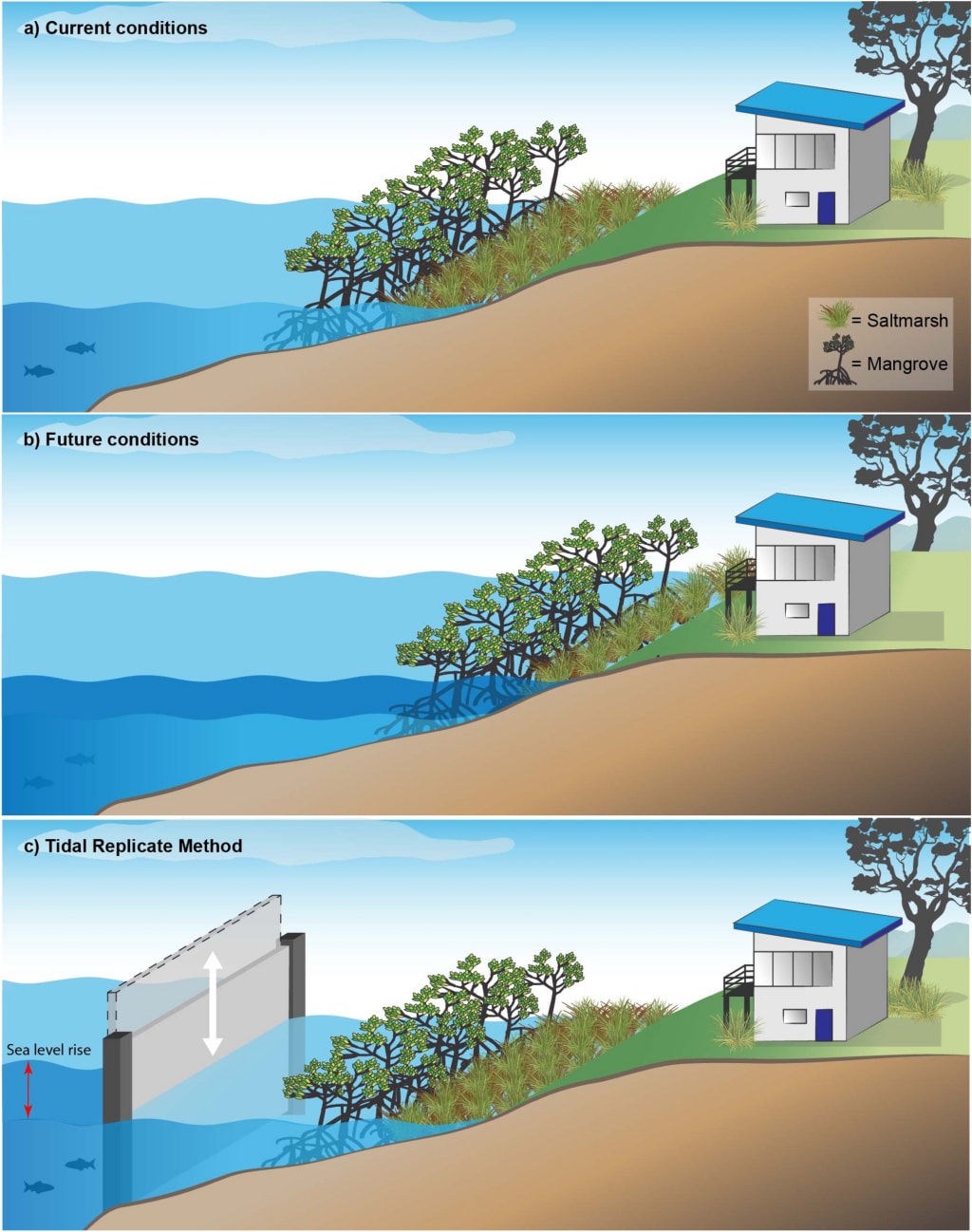
The traditional notion of seawalls has also evolved into an innovative hybrid approach—introducing "living" seawalls. Combining the strength of concrete structures with the regenerative power of natural features like oyster beds and mangrove forests, these living barriers serve a dual purpose. Not only do they defend against the battering force of storm surges and encroaching waters, but they also provide a sanctuary for biodiversity to flourish. Thus, in engineering these seawalls, a synergy is created between human-built structures and the intricate ecosystems they protect—a testament to the harmonious coexistence of nature and innovation.
In a world where many view concrete as the ultimate solution, the power of mimicry shines through with the concept of "reef balls." These artificial structures emulate natural coral reefs, providing a habitat for marine life to thrive and offering protection against coastal erosion. While their impact may be small, their collective contribution towards carbon sequestration plays a significant role in mitigating the very factors that lead to rising sea levels.
In urban landscapes vulnerable to the encroachment of waters, architects are embracing the principles of amphibious architecture. This innovative approach equips buildings with buoyancy mechanisms that allow them to float during floods and return to their foundations once waters recede. This adaptable design not only protects property but also safeguards the social fabric of communities, ensuring they remain intact even as tides rise.
However, in the pursuit of engineering solutions, it is essential to recognize that sometimes the simplest path is the most effective. Japan, a nation acutely aware of the perils of rising seas, has embraced the "soft path" strategy. This approach focuses on the restoration of natural coastal features like dunes and wetlands, creating a buffer against the encroaching tides. In a world often entranced by grandeur, the beauty of the soft path lies in its simplicity—a solution that not only defends but also restores the fragile balance of nature.
Technology is proving to be an ally in this race against time. Advanced simulation models and data analytics enable engineers to predict and plan for the future impacts of climate change with greater accuracy. Armed with this information, decision-makers can invest in solutions that will yield the most substantial and effective results.
Furthermore, 3D printing technology has found a surprising niche in the battle against rising seas. Coastal cities are experimenting with 3D-printed reefs that mimic natural formations. These printed structures provide a barrier against erosion while nurturing marine life growth. This fusion of technology and nature exemplifies humanity's capacity to innovate while respecting the delicate equilibrium of ecosystems.
The urgency of rising seas has catalyzed governments and organizations to fund ambitious infrastructure projects. The Thames Barrier in London, an immense mechanical flood defense system, stands as a testament to human engineering's triumph in the face of climate change. With its colossal steel gates that rise from the riverbed to shield against storm surges, the barrier is a striking symbol of what can be achieved when science and determination unite.
Although the innovative solutions range in scale and complexity, they share a common thread—the shared urgency to shield vulnerable coastlines and the communities they harbor. Engineering against rising seas stands as a testament to human adaptability, collective determination, and the undeniable truth that we possess the tools to confront one of the most pressing challenges of our era.
As the waves persistently lap at the world's shores, and the urgency of our situation becomes more pronounced, these innovative solutions offer a glimpse into what can be accomplished when humanity unites against adversity. Each floating city, living seawall, and 3D-printed reef stands as a testament to our capacity to engineer a future that is both resilient and sustainable—a future where the rising seas are met with ingenuity, where urgency is transformed into action, and where our shared planet remains a sanctuary for generations to come.
In the grand tapestry of human progress, it is our response to challenges that define our legacy. The innovative solutions forged to counter the rising seas encapsulate the very essence of our determination and creativity. These solutions are not just physical constructs; they are symbols of our unwavering commitment to securing a future for generations to come.
As we stand at the nexus of urgency and opportunity, the task ahead is both daunting and inspiring. The power of innovation has illuminated a path forward—one where engineering prowess meets environmental stewardship, where the dynamic interplay of human ingenuity and nature's resilience is on full display.
The magnitude of the rising seas necessitates the collaboration of minds, industries, and nations. It beckons us to bridge differences, transcend borders, and unite under a shared cause—the preservation of our planet. This journey is not one for the faint-hearted; it requires courage, resourcefulness, and unwavering dedication. But every step, every idea, every innovation is a building block in the construction of a resilient future.
The story of innovative solutions for rising seas is a testament to our ability to find light even in the darkest of times. It is a reminder that within each challenge lies an opportunity, and within each obstacle an invitation to push the boundaries of our imagination. As we embrace these solutions, we are crafting a narrative of hope and progress—a narrative that transcends the immediate urgency and sets the stage for a future defined by our tenacity and audacity.
In the years to come, our work will stand as a monument to our resilience, an embodiment of our collective will to confront adversity, and a testament to the beauty of human collaboration. Let these innovative solutions inspire us to dream boldly, to innovate relentlessly, and to forge a resilient future that speaks not only of the challenges we face but of the extraordinary heights to which humanity can rise when confronted with the urgent call of the times.
About the Creator
John Paul Johni
Self Writer
Keep reading
More stories from John Paul Johni and writers in Earth and other communities.
Echoes of the Mangrove
The mangrove forest stood as a testament to the delicate balance of nature—a symphony of intertwined roots, tangled branches, and whispered secrets. Nestled along the edge of Serenity Bay, it had long been a sanctuary for both life and tranquility. But now, as the echoes of climate change reverberated through its heart, the mangroves faced an uncertain future, and a group of unlikely heroes emerged to protect their legacy.
By John Paul Johni2 years ago in Earth
Rape Trial Puts Norway's Royal Family in Unwelcome Glare of Public
Norway’s royal family, long regarded as one of Europe’s most respected and low-profile monarchies, has recently found itself under intense public scrutiny following a high-profile rape trial connected to individuals within its extended social and public circle. The case has triggered widespread media attention, national debate, and renewed discussion about how institutions — even symbolic ones like monarchies — navigate crises involving criminal allegations.
By Aarif Lashari2 days ago in Earth
I Never Imagined This!’ How KPop Demon Hunters Could Make History at the Grammys and the Oscars
When KPop Demon Hunters was first announced, even its creators likely did not expect it to spark serious awards-season conversations. Blending high-energy K-pop music, supernatural action, animation, and global storytelling, the project initially seemed like a bold experiment aimed at younger audiences and niche fandoms. Today, however, it is being discussed as a potential history-maker—one that could break barriers at both the Grammys and the Academy Awards.
By Aarif Lashari3 days ago in Earth


Comments (1)
Nice story you can also read the one I have prepared for you