
India's Wildlife Conservation: Tamenglong, Manipur, Is the Safe Haven for Amur Falcons and Their Amazing Migration
Amur Falcon

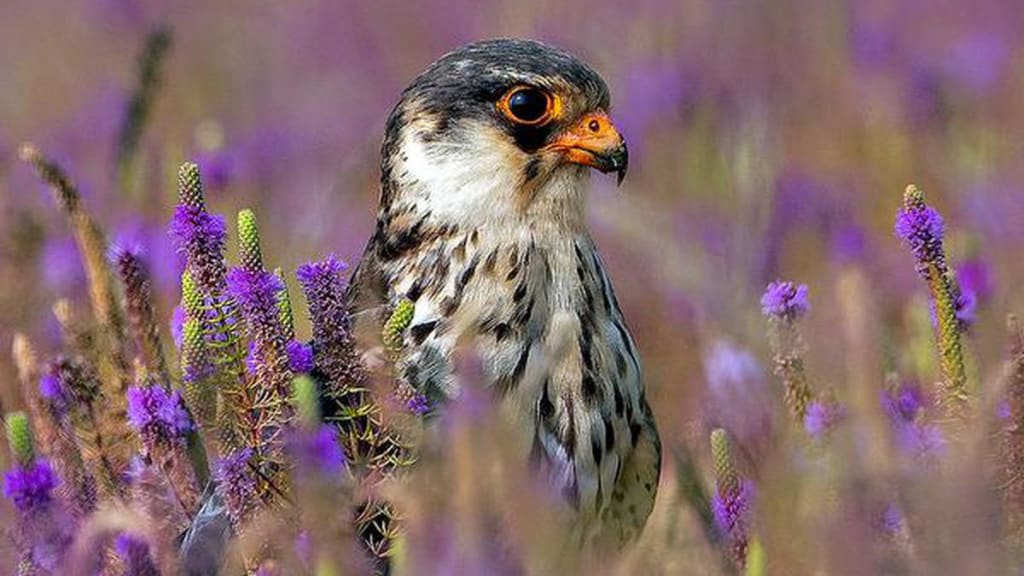
Wildlife Conservation in India: The Incredible Migration of Amur Falcons and Their Safe Haven in Tamenglong, Manipur
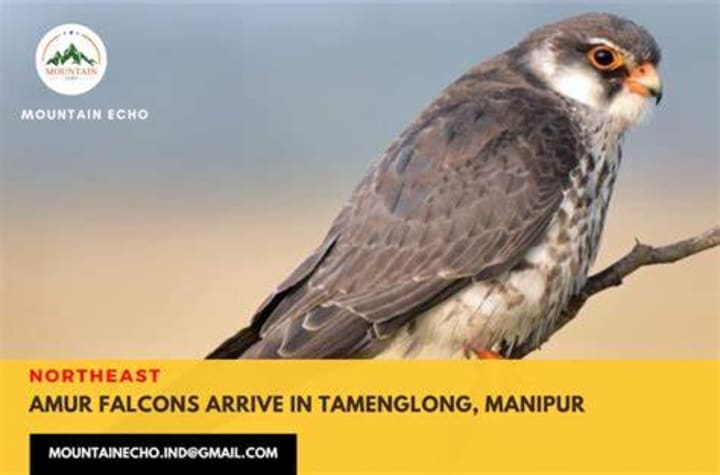
Introduction
India is a biodiversity hotspot, home to a rich array of flora and fauna. Among the many conservation success stories in the country, the tale of the Amur Falcons and their migration to the Northeastern state of Manipur is both inspiring and remarkable. The story revolves around their epic journey, the ecological importance of their presence, and the community-driven efforts that have turned their wintering grounds in Tamenglong into a safe haven.
This narrative highlights not only the resilience of these migratory birds but also the commitment of local communities, environmental organizations, and the government in protecting them.
Amur Falcons: The World's Longest Migratory Raptor
The Amur Falcon (Falco amurensis) is a small bird of prey with a wingspan of about 63–71 cm. These remarkable falcons breed in Siberia and northeastern China, and undertake one of the longest migrations of any raptor, traveling over 22,000 kilometers annually. Their migration route spans the entire length of Asia and Africa, from their breeding grounds in the Amur River basin to their wintering grounds in southern Africa.
Physical Characteristics
Appearance: The males are dark slate-grey, while females are slightly larger with a bluish-grey back and a whitish belly with black streaks. Both sexes have bright orange-red legs and eye-rings.
Diet: Amur Falcons primarily feed on insects, especially termites and locusts, which they often catch mid-flight.
Migration Path and Stopovers
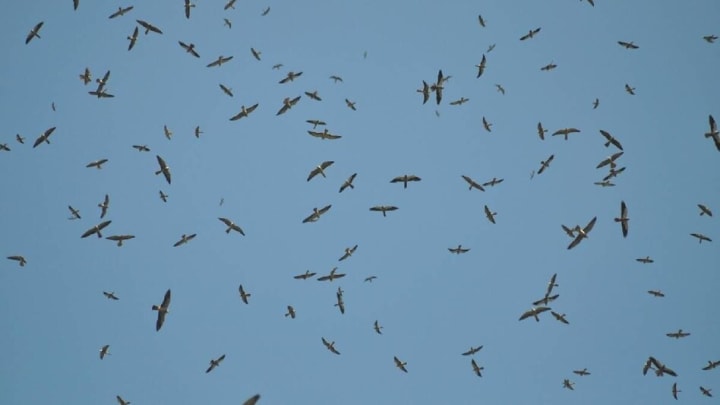
The migration of the Amur Falcons is a breathtaking journey. After the breeding season, they begin their southward migration in September-October. They travel over the Himalayas, stopping in parts of Northeast India, particularly Nagaland and Manipur. From there, they traverse the Arabian Sea, crossing over 3,000 kilometers of open ocean, before finally reaching southern Africa.
One of the most critical stopover sites for the falcons is Tamenglong in Manipur. Here, the birds rest and refuel, feeding on the abundant insects before continuing their arduous journey. These stopovers are essential for their survival, as they replenish their energy reserves for the next leg of their migration.
Tamenglong: A Safe Haven for Amur Falcons
Tamenglong, a district in Manipur, has become synonymous with the conservation of Amur Falcons. The dense forests, rivers, and wetlands in this region provide an ideal habitat for the birds during their brief stay in October and November. Once a site of large-scale hunting, Tamenglong is now a symbol of successful community-driven conservation.
The Hunting Crisis
In the past, Amur Falcons were hunted in massive numbers for meat and trade. In Nagaland alone, it is estimated that over 100,000 falcons were killed annually until the early 2010s. In Tamenglong, too, hunting was a common practice. The birds were trapped using nets or shot down as they roosted. This unsustainable hunting posed a severe threat to their population, raising alarms among conservationists.
Conservation Efforts in Tamenglong
The transformation of Tamenglong from a hunting ground to a safe haven for Amur Falcons is a testament to the power of collective action. Several stakeholders, including local communities, environmental NGOs, and government bodies, played crucial roles in this change.
Community Participation
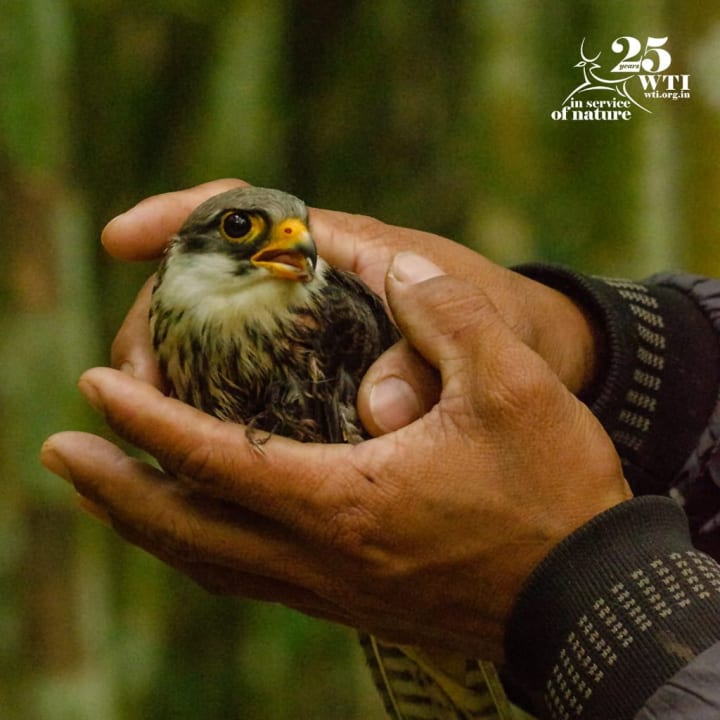
Local communities in Tamenglong were initially unaware of the ecological importance of Amur Falcons. With awareness campaigns led by organizations like the Wildlife Trust of India (WTI) and local conservationists, the perception of these birds changed. Villagers were educated about the falcons' role in pest control and their extraordinary migratory journey.
Community leaders and village councils implemented bans on hunting and trapping. Tamenglong’s youth, in particular, became active participants in monitoring and protecting the falcons.
Role of NGOs and Government
The Manipur Forest Department, in collaboration with NGOs, introduced various initiatives to conserve the Amur Falcons:
Satellite Tracking: Researchers tagged several Amur Falcons with GPS transmitters to study their migration patterns. This data helped highlight the importance of Tamenglong as a stopover site.
Eco-Tourism Development: Eco-tourism initiatives provided alternative livelihoods to local communities, reducing their dependence on hunting.
Policy Enforcement: Strict laws against hunting, coupled with rewards for informants, were introduced to deter poaching.
"Amur Falcon Festival"
Tamenglong hosts the annual Amur Falcon Festival, celebrating the arrival of the birds. The festival promotes conservation awareness and showcases the district's rich cultural heritage. It attracts tourists and birdwatchers, providing a boost to the local economy and reinforcing the community's commitment to protecting the falcons.
Significance of Conservation in Tamenglong
The conservation of Amur Falcons in Tamenglong holds broader implications for biodiversity, ecosystems, and communities:
Ecosystem Balance: Amur Falcons help control insect populations, benefiting agriculture and maintaining ecological balance.
Cultural Pride: The successful conservation of the falcons has instilled a sense of pride among the local communities in Tamenglong, fostering a culture of environmental stewardship.
Global Conservation Impact: The safe passage of Amur Falcons through India is crucial for their global population. Their survival ensures the continuation of one of nature's most extraordinary migrations.
Challenges and Future Directions
Despite the success in Tamenglong, challenges remain:
Habitat Loss: Deforestation and land-use changes threaten the falcons’ roosting sites.
Climate Change: Altered weather patterns and changing ecosystems could disrupt migration timings and food availability.
Sustaining Community Involvement: Ensuring continued community participation and providing sustainable livelihoods remain critical.
To address these challenges, long-term strategies are needed:
Strengthening Conservation Policies: Governments must enforce stricter protections for critical habitats.
Expanding Research: Continued satellite tracking and ecological studies will provide insights into the falcons’ needs.
Promoting Eco-Tourism: Expanding eco-tourism initiatives can provide stable income sources for local communities, reducing dependence on hunting or land exploitation.
Conclusion:
The incredible migration of the Amur Falcons and their conservation in Tamenglong, Manipur, is a heartwarming story of hope and determination. It underscores the importance of community-driven initiatives and collaborative efforts in wildlife conservation. By safeguarding these magnificent raptors, Tamenglong has set an example for the world, demonstrating that coexistence with nature is not only possible but also essential for our planet's future.
As the falcons continue their awe-inspiring journey across continents, their story reminds us of the interconnectedness of life on Earth and the shared responsibility to protect it. Tamenglong’s transformation into a sanctuary for these migratory birds is a beacon of hope, showing how local actions can have a global impact.
About the Creator
Keep reading
More stories from Mohammed thanvir and writers in Earth and other communities.
Wildlife in Africa's Savanna Fears Humans More Than Lions
The African savanna, one of the world’s most iconic and biodiverse ecosystems, is often imagined as a vast expanse where wild animals roam freely and lions reign supreme as top predators. However, a recent groundbreaking study reveals an unexpected truth about how wildlife perceives threats: many animals in the African savanna fear humans even more than they fear their natural predators, including lions. This finding sheds light on the profound impact of human presence on wildlife behavior and survival, altering longstanding perceptions of the African ecosystem and highlighting the urgent need for conservation measures.
By Mohammed thanvirabout a year ago in Earth
Denmark and Greenland Prepare for US Talks as Trump Says Territory’s PM Has a ‘Big Problem’
Denmark and Greenland are preparing for crucial talks with the United States amid renewed diplomatic tension, after former US President Donald Trump claimed that Greenland’s prime minister has a “big problem.” The remarks, reported as part of ongoing European political coverage, have drawn attention to the fragile balance between diplomacy, sovereignty, and strategic interests in the Arctic. As delegations ready themselves for discussions in Washington, the episode underscores how Greenland has once again become a focal point in global geopolitics.
By Aarif Lashari6 days ago in Earth



Comments
There are no comments for this story
Be the first to respond and start the conversation.