

The modern evolutionary theory believes that all existing organisms on the earth are those primitive beings that evolved over a long period, and in the process of evolution, due to the existence of genetic mutations, organisms will undergo some subtle changes from time to time in the process of reproduction from generation to generation. If some changes are conducive to better survival and reproduction, then these changes will pass the test of "natural selection" and be preserved and passed on from generation to generation, while the other way around, they will be eliminated by "natural selection".
Such a description will inevitably lead to a variety of doubts, for example, some people have raised the question: if evolution is correct, why do not plants evolve to be very difficult to eat? And some plants even produce sweet fruits?
Most of the plants that we think are delicious have undergone hundreds or even thousands of years of artificial selection, which simply means that during the process of reproduction of these plants from generation to generation, human beings will intentionally leave those plants that are relatively delicious and eliminate those that are relatively unpalatable, and only under human intervention will these plants evolve in the direction of "delicious". "tasty" direction.
The wild plants in nature, have been evolving in the direction of "unpalatable", a typical example is the most common plant in nature - grass.
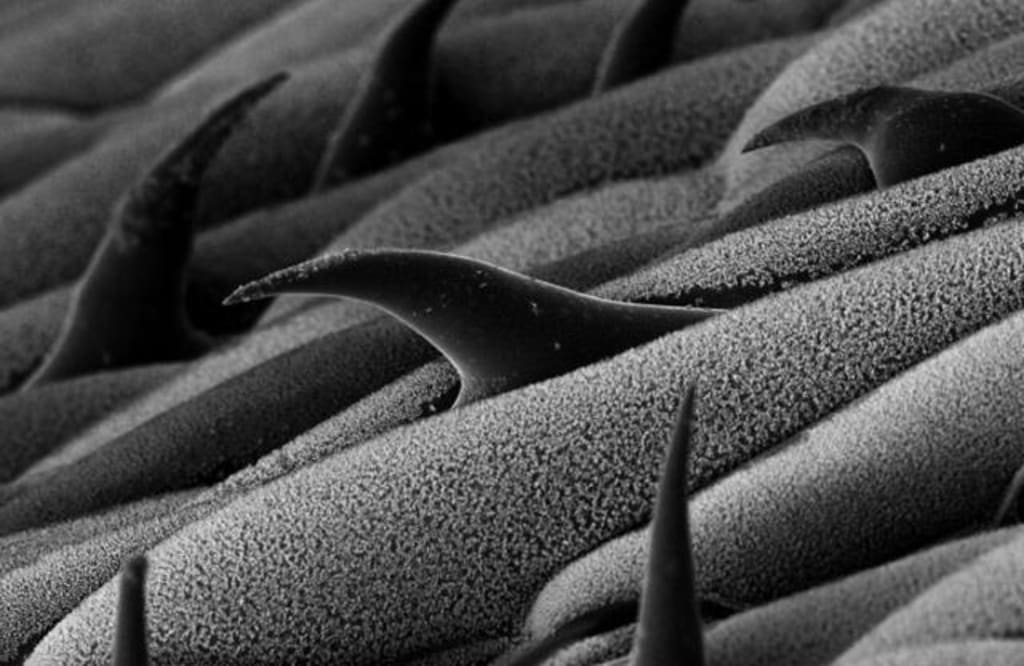
The grass looks green and tender, its stems and leaves are covered with extremely coarse plant fibers, in addition, the grass will also absorb the silica in the soil, and will be built on the surface of its stems and leaves, in addition, many grass blades also exist in large quantities of hard keratinized barbs.
This structure not only makes the grass hard to eat, but also causes great wear and tear on the animal's teeth, even if it is swallowed by the animal, it is difficult to digest, so it can be seen that after a long time, the grass has evolved to be very hard to eat.
The evolutionary route of grasses has been somewhat successful, and fossil evidence shows that during the Eocene period, grasses used to proliferate on the surface of the Earth, and one important reason was that many phytophagous animals on the Earth at that time could not feed on grasses at all.
Yet we all know that on modern Earth, grass has become the main food of herbivores, so why can they eat it?
The reason is that they have evolved the ability to digest grass. For example, herbivores represented by horses have evolved high-crowned teeth that are very resistant to wear and tear and a well-developed intestinal system that allows them to chew the stems and leaves of grasses and digest them through a well-developed intestinal system, while herbivores represented by cattle have evolved a more powerful digestive ability than horses, although their teeth are not as resistant to wear and tear --Ruminate.
Cattle have four stomachs, three of which are "pneumogastric" evolved from their esophagus: the rumen, reticulum, and retruded stomach, of which rumen is the largest, and the other is the real stomach of cattle, the wrinkled stomach.
After some time, the grass swallowed by them will become soft and easy to chew, after which the grass will return to the cow's mouth through reverse vomiting.
After being chewed by the cattle, the grass is sent to the other two "false stomachs" for further processing to make it more digestible before it is sent to the cattle's wrinkled stomach and the intestinal system behind it, where it is digested and absorbed.
This is the case of grass, other plants on Earth are much the same, to avoid the gnawing of animals, they have evolved a variety of defense strategies, and for animals, food is an important guarantee of survival, so those animals that feed on plants must co-evolve with plants.
For example, cactus is a common plant in the desert, and camels want to survive in the desert, they have to evolve the ability to eat this spiky plant, which they do.
So the question is, from an evolutionary point of view, if plants have been evolving in the direction of "unpalatable", then why do some plants still produce sweet fruits? This is quite explainable.
These fruits contain plant seeds because these seeds are difficult to be digested by animals, so when animals eat the fruit, most of these seeds will be expelled intact by animals, if they happen to fall into a suitable environment for survival, they can be in a new area to branch out.
This is equivalent to the seeds of the plant with the help of animal mobility so that the plant population can spread at a faster rate, thus achieving the purpose of "better survival and reproduction". In other words, the purpose of these plants growing fruit is to attract animals to eat, which is a kind of plant-to-animal use, on the other hand, animals do not mind being used by plants, after all, there are sweet fruits that can eat.
About the Creator
Robert Jack
One of the secrets of emotional stability for adults is to keep the expectations of others to a minimum.
Keep reading
More stories from Robert Jack and writers in Earth and other communities.
Earth has more than 8,000 meters high mountains
The Earth is round, this is a scientific common sense known to modern mankind, so how round is the Earth in the end? The answer given by scientists is that the Earth is very round and can be said to be a near-perfect sphere.
By Robert Jack4 years ago in Earth
It’s too warm': Greenland’s fishermen are under threat from climate change
Greenland’s traditional fishing communities are facing an uncertain future as the Arctic warms faster than any other region on Earth, dramatically reshaping the landscapes and livelihoods of the semiautonomous Danish territory. Local fishermen, whose lives have long been tied to sea ice and predictable seasonal patterns, are now confronting unpredictable weather, shifting fish populations, and economic pressures that threaten both their culture and the local economy. A Changing Arctic Reality In the small coastal town of Ilulissat, veteran fisherman Helgi Áargil described how climate change has upended his routines. Where once he relied on stable sea ice and consistent fishing grounds, he now finds warmer waters, rainier conditions, and fish moving to deeper, cooler waters. Last year his boat became trapped in ice that calved from a nearby glacier; this year, instead of strengthening ice, it has been unusually wet — making conditions less predictable and incomes more volatile. Fishing accounts for up to 95 percent of Greenland’s exports, with key markets including China, the United States, Japan and Europe. This heavy economic reliance amplifies the impact of climate effects on fish patterns and harvests. Disappearing Ice, Changing Practices Traditional ice fishing — once conducted on sea ice more than a metre thick — has declined sharply. Older generations recall times when they could easily drill holes in stable ice to fish for cod, halibut, shrimp and snow crab. Today, sea ice is retreating earlier and forming later, forcing many fishermen to rely on boats even in the coldest months. While boats allow access to broader waters, they come with higher fuel costs and greater exposure to the elements, challenging sustainability. Karl Sandgreen, head of the Icefjord Center in Ilulissat, noted that ice thick enough to support traditional fishing began disappearing roughly three decades ago. The shift has not only changed how fishers operate but also increased competition and pressure on stocks closer to shore. Ecological and Economic Pressures Warmer conditions are also affecting fish behavior. Many species are moving deeper or into new areas as they seek cooler waters, complicating efforts to maintain stable catches. A warming ocean can temporarily boost plankton growth — potentially increasing some fish stocks — but it also alters ecosystems in unpredictable ways. Experts warn that fish may not behave as they once did, complicating traditional fishing forecasts and practices. The head of Royal Greenland, the territory’s largest employer, has expressed concern about a future with significantly diminished sea ice, which could push more traditional fishers toward larger, commercial fishing operations. However, this transition is not without risks. Increased fishing pressure near shorelines already shows early signs of overfishing; halibut are getting smaller, a classic indicator of stock stress noted by experts. Cultural Identity at Risk Fishing in Greenland is more than an economic activity; it is a cultural bedrock. In towns and villages across the island, harbours where daily catches are unloaded and sold remain central to community life. Many Greenlanders associate fishing with identity and tradition, and climate change is directly threatening these cultural ties as environmental conditions change faster than adaptation measures can keep pace. “You can have too much ice to sail and yet too little to qualify for safe ice fishing,” noted Toke Binzer, describing the paradoxical challenges fishermen now face. The unpredictability makes planning difficult and income erratic — one trip might bring significant earnings, while the next yields little or nothing. Limited Alternatives and Future Paths Beyond fishing, economic alternatives in Greenland remain limited. Tourism is growing but not at a pace that could offset losses in the fishing sector. With a total population barely over 50,000, opportunities outside harvesting marine resources are comparatively sparse. As dog sledding and other ice‑based traditions also diminish due to changing conditions, entire ways of life are under threat. Efforts to support traditional fishers include loans for boats and business assistance, but long‑term resilience will likely require broader strategies. These could involve sustainable fishing quotas, diversification into aquaculture, and investments in climate adaptation infrastructure. Yet many local observers emphasize that meaningful change must also address the root causes of warming — a challenge far beyond Greenland’s shores. A Climate Warning Sign Greenland’s fishermen are becoming a human indicator of rapid Arctic change. The region is warming faster than the global average, reshaping ecosystems and economies alike. As these communities adapt or struggle, their challenges shed light on the broader global consequences of climate change — illustrating how environmental shifts ripple through cultures, industries and livelihoods thousands of kilometres from major industrial centres.
By Fiaz Ahmed 6 days ago in Earth



Comments
There are no comments for this story
Be the first to respond and start the conversation.