
How Trump's threats have brought Canada's Liberals back from the dead
Justin Trudeau's resignation and the emergence of Mark Carney as the front-runner to replace him amid Donald Trump's tariffs has reversed the Liberals' fortunes.
If you had asked Canadians a few months ago who would win the country's next general election, most would have predicted a decisive victory for the Conservative Party.
That outcome does not look so certain now.
In the wake of US President Donald Trump's threats against Canada, Prime Minister Justin Trudeau's Liberal Party has surged in the polls, shrinking the double-digit lead their Conservative rivals had held steadily since mid-2023.
The dramatic change in the country's political landscape reflects how Trump's tariffs and his repeated calls to make Canada "the 51st state" have fundamentally altered Canadian voters' priorities.
Trump's rhetoric has "pushed away all of the other issues" that were top of mind for Canadians before his inauguration on 20 January, notes Luc Turgeon, a political science professor at the University of Ottawa.
It has even managed to revive the once deeply unpopular Trudeau, whose approval rate has climbed by 12 points since December. The prime minister, of course, will not be in power for much longer, having announced his resignation at the start of the year.
On Sunday, his Liberals will declare the results of the leadership contest to determine who takes over a party running a precarious minority government. The new leader will have two immediate decisions to make: how to respond to Trump's threats, and when to call a general election. The answer to the first dilemma will surely influence the second.
Who is in the running to replace Trudeau as Liberal Party leader?
A federal election must be held on or before 20 October, but could be called as early as this week.
Polls indicate that many Canadians still want a change at the top. But what that change would look like - a Liberal government under new leadership, or a complete shift to the Conservatives - is now anyone's guess, says Greg Lyle, president of the Toronto-based Innovative Research Group, which has been polling Canadians on their shifting attitudes.
That is because the centre-right party led by Pierre Poilievre, has been effective in its messaging on issues that have occupied the Canadian psyche for the last few years: the rising cost of living, housing unaffordability, crime and a strained healthcare system.
Poilievre successfully tied these societal problems to what he labelled Trudeau's "disastrous" policies, and promised a return to "common sense politics".
But with Trudeau's resignation, and Trump's threats to Canada's economic security and even its sovereignty, that messaging has become stale, Mr Lyle says. His polling suggests the majority of the country is now most afraid of Trump's presidency and the impact it will have on Canada.
Trump's 25% tariffs on all Canadian imports to the US, some of which have been paused until 2 April, could be devastating for Canada's economy, which sends three-quarters of all its products to the US. Officials have predicted up to a million job losses as a result, and Canada could head into a recession if the tax on goods persists.
Trudeau left no doubt how seriously he is taking the threat, when he told reporters this week that Trump's stated reason for the US tariffs - the flow of fentanyl across the border - was bogus and unjustified.
"What he wants is to see a total collapse of the Canadian economy, because that'll make it easier to annex us," the prime minister warned.
"In many ways, it's an all encompassing, fundamental issue about the survival of the country," Prof Turgeon tells the BBC. Who is best placed to stand up for Canada against Trump has therefore become the key question in the forthcoming election.
The Conservatives are still ahead in the polls, with the latest averages suggesting 40% of voters back them. The Liberals' fortunes, meanwhile, have been revived, with their support climbing to slightly over 30% - up 10 points from January.
About the Creator
Keep reading
More stories from Mohammad Sharif Hossan and writers in Earth and other communities.
Kyrsten Sinema Panel Interrupted by Men Claiming Affairs Amid Fresh Lawsuit
Former U.S. Senator Kyrsten Sinema faced a strange and uncomfortable moment during a public policy panel in Salt Lake City on January 16, 2026. Two men in the audience interrupted the discussion, loudly claiming they were having affairs with her. The incident occurred just days after Sinema became the subject of a civil lawsuit alleging she was romantically involved with a married member of her former Senate security team.
By Aarif Lashari2 days ago in Earth
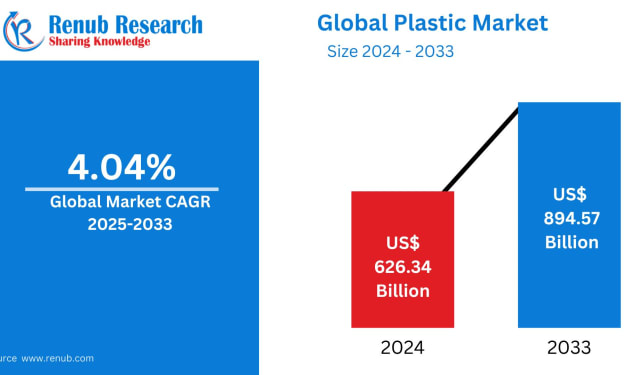
Global Plastic Market Size and Forecast 2025–2033: Innovation, Sustainability, and the Future of a $894 Billion Industry
Introduction: A Market That Touches Every Industry The global plastics industry remains one of the most influential pillars of modern manufacturing, supporting everything from food packaging and construction to healthcare, automotive, and electronics. Despite growing environmental scrutiny, plastics continue to evolve, adapt, and expand—driven by technological innovation, economic growth in emerging markets, and the urgent shift toward recyclable and biodegradable materials.
By Janine Root 3 days ago in Earth
How, Too
Many people wonder how, too. You are not alone, and I am an expert. I will teach you how, too! First, you need to remit a small application fee and fill out an application describing the nature of your financial situation and how often payments will be made, as this will have great bearing on how well I teach you how, too.
By Harper Lewis5 days ago in Fiction



Comments
There are no comments for this story
Be the first to respond and start the conversation.