
How To Prepare Raw Land for Development: A Complete Timeline and Checklist
Master the 3-phase process of preparing raw land for development. From due diligence to physical site prep, learn how to ready your property for construction.


Key Takeaways:
- The standard process of preparing raw land for development includes three phases, comprising soft (paperwork) and hard work (physical labor).
- Phase one typically covers the first three months of development and focuses on zoning, title searches, and boundary surveys.
- Phase two involves developers conducting critical research into soil composition and utility planning; it typically spans months three through six of the development process.
- Finally, phase three focuses on site preparation, transitioning from the soft work of the previous steps to more labor-intensive work, such as land clearing.
Preparing raw land for development is a multi-phase process that transitions from financials (soft work) to physical land clearing (hard work). For commercial and subdivision projects, land developers can expect to spend at least 12 to 24 months on the entitlement process alone. However, a standard development may take only 12 months or fewer before vertical construction can begin.
Regardless of the project type, the transition of raw land for development occurs in three phases; however, it’s important to note that each phase includes several tasks. The three-phase structure is only a way to simplify management and risk assessment.
Phase 1: Due Diligence and Legal (Months 1 to 3)
Phase one is all about due diligence, project feasibility, and legal security. It’s about paperwork. Once a piece of real estate has been selected, developers should verify zoning and check for any overlay districts to ensure they can develop the property as intended.
They’ll also want to conduct any necessary title searches, focusing on liens, encumbrances, and deed restrictions. These things can sneak up on a developer, leading to cost overages or project delays and denials.
During this initial phase, developers should also conduct boundary surveys, environmental assessments, and wetland and wildlife reviews. Boundary surveys identify exact property lines, existing easements, and a topography map. Environmental assessments investigate past land use to identify potential hazardous waste or contamination. And finally, wetland and wildlife reviews are necessary to locate protected areas, floodplains, and endangered species that may require federal or state permits to disturb.
Ultimately, phase one focuses on land studies and any potential legal implications from its purchase. For standard development projects, phase one typically takes 1 to 3 months.
Phase 2: Feasibility and Engineering (Months 3 to 6)
In phase two, developers focus on site feasibility and planning. This phase is about soil stability, gradation, percolation, and utility planning. The critical element of this phase is geological soil testing, as this determines whether the land is suitable for development. The test determines soil type, compaction suitability, and foundation capabilities.
If soil tests are favorable, developers can perform a percolation test. This is a drainage test for areas where a public sewer is unavailable. The test determines the viability of a septic system.
Depending on local ordinances and property grading, developers may need to invest in some form of stormwater management. Typical systems include swale drains, retention ponds, and French drains.
The final step in determining the land's feasibility is utility planning. Developers should contact local providers to determine access to utilities and the costs of extending them to the property. In many secondary markets, raw land is located at the boundary of existing infrastructure, which places much of the development cost on the landowner.
Phase two is mainly about research and design. It begins to mesh soft and hard work before transitioning into the final phase, land clearing and site prep. Standard development projects typically complete phase two between months 3 and 6.
Phase 3: Physical Site Prep (Months 6 to 12+)
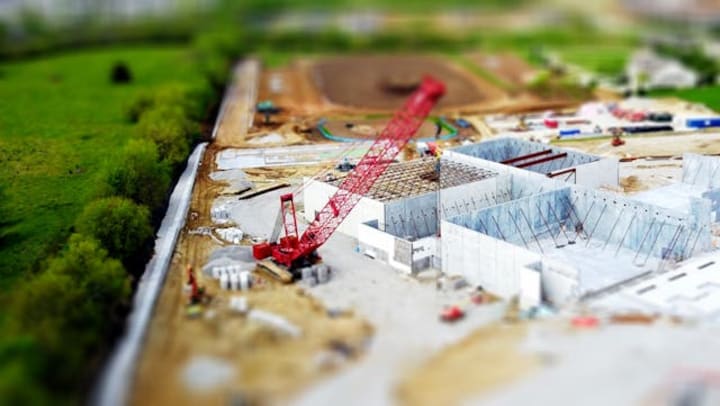
Phase three focuses primarily on physical work, but there is one piece of soft work that’s essential: permits. Before any land clearing, grading, or utility installation can occur, developers must secure all essential permits. Applications for these are likely to have occurred in phase two, during the planning stages.
With the permits in hand, developers can clear the land. Most developers hire a company for land-clearing services because it’s cost-effective. These companies have the necessary equipment to remove brush, trees, and roots. Typically, these services are more familiar with local ordinances for tree preservation.
Once the land is clear, it’s time to install gravel or paved access roads and level the building sites, incorporating necessary grading for drainage. The final step in site prep is digging the trenches for water, sewer, and power lines.
Phase three is the hard-work phase, typically occurring in the last six months before vertical development. This is based on standard developments, not commercial or subdivision projects.
Based on this standard three-phase structure, developers can expect to begin vertical construction on most projects within a year. However, construction projects vary in scope and complexity, so take that window with a grain of salt. For a better estimate of raw land development, use a specific plot for research and, if possible, look to past projects for comparison.
About the Creator
Andrew Lemieux
Andrew is a creative writer, poet, and content strategist. He is passionate about literature, food, wine, travel, and sports. In his spare time he enjoys working on home projects and restoring the 1837 Greek Revival he and his wife own.
Keep reading
More stories from Andrew Lemieux and writers in Earth and other communities.
From Blueprint to Reality: A Step-by-Step Guide to Planning Your Dream Home Remodel
Key Takeaways Home remodelling requires careful planning and patience. Setting a realistic budget saves unnecessary spending. Creating a blueprint for your home remodeling is crucial. Seek permissions and approvals from building authorities before remodelling your home. Keeping aside extra money for emergencies and surprises is important.
By Andrew Lemieux2 months ago in Families
A Planetary Alignment Will Coincide With Mercury Retrograde
Skywatchers are preparing for a striking celestial event as a planetary alignment is set to coincide with Mercury retrograde — a pairing that has generated buzz across both scientific and astrological communities. While planetary alignments are not uncommon on cosmic timescales, the overlap with Mercury’s apparent backward motion adds a layer of intrigue that has captured global attention.
By Aarif Lashari5 days ago in Earth


Comments