
How Mountains Are Formed: The Amazing Story of Earth’s Giants
"A simple guide to understanding how powerful natural forces shape the tallest landforms on our planet."
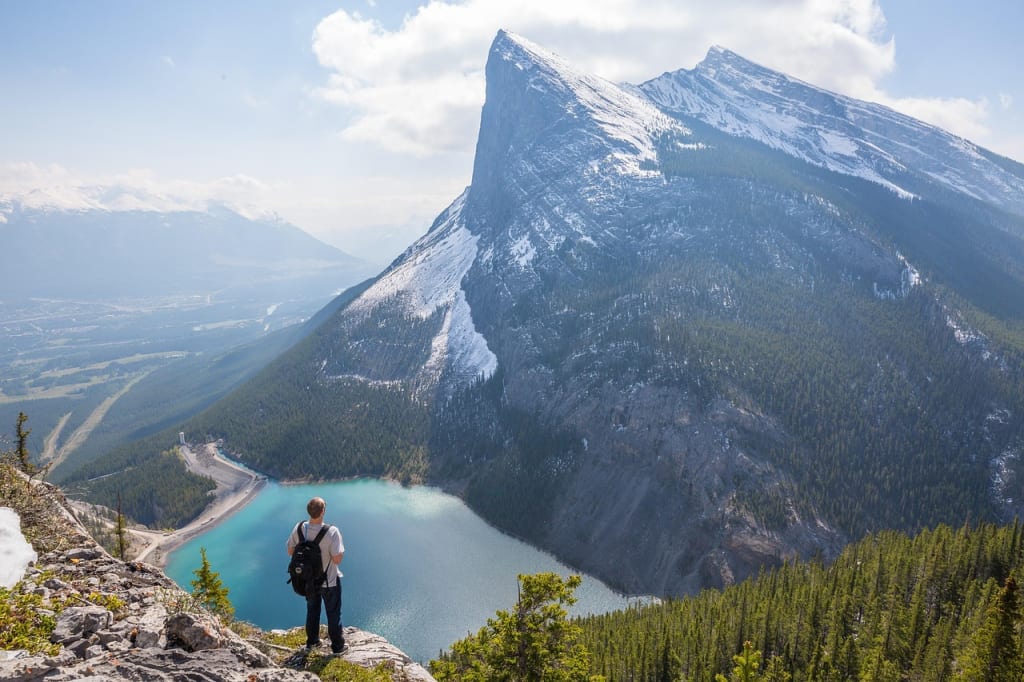
Mountains are some of the most beautiful and powerful parts of our planet. They rise high into the sky, covered in trees, rocks, or snow. People travel from far away to see them, climb them, or live near them. But have you ever wondered how mountains are formed?
The story of how mountains are made is very interesting. It takes a lot of time — millions of years! — and it all begins deep under the ground.
The Earth Under Our Feet
To understand mountains, we need to learn a little bit about the Earth. The Earth has different layers, like a cake. The top layer is called the crust. It’s the layer we walk on. Below that is the mantle, which is made of hot, soft rock. Then comes the core, which is the center of the Earth.
But the Earth’s crust is not one solid piece. It is broken into big sections called tectonic plates. These plates move very slowly — sometimes just a few centimeters a year. But even this slow movement can create big changes over time.
How Tectonic Plates Build Mountains
Mountains are mainly formed when tectonic plates collide, push against each other, or slide under one another. Let’s look at the main ways this happens:
1. Folding Mountains
These are the most common type of mountains. They are formed when two plates push toward each other. The pressure causes the rocks to bend and fold, just like when you push the ends of a piece of paper together and it crumples in the middle.
Over millions of years, these folds become huge and rise into mountains.
Examples: The Himalayas in Asia, including Mount Everest, and the Alps in Europe.
2. Fault-Block Mountains
Sometimes, instead of folding, the Earth's crust cracks. These cracks are called faults. When blocks of rock between faults move, some parts go up while others go down. The parts that rise become fault-block mountains.
Examples: The Sierra Nevada mountains in the USA.
3. Volcanic Mountains
Volcanic mountains form in a very different way. They are made when magma (hot, melted rock from inside the Earth) comes out through a crack in the surface. When it cools, it turns into solid rock. After many eruptions, the rock builds up and forms a mountain.
Examples: Mount Fuji in Japan, Mount St. Helens in the USA.
4. Dome Mountains
Dome mountains are formed when magma rises under the crust but doesn’t come out. Instead, it pushes the rock above it upward, like a bubble. Over time, the top can wear away, showing the hard rock inside.
Examples: The Black Hills in South Dakota, USA.
Mountains Take Time
One thing to remember is that mountains don’t form quickly. The process is very slow. It can take millions of years for a mountain to grow. Some mountains are still rising even today because the tectonic plates are still moving!
Do Mountains Last Forever?
No, mountains do not last forever. Even though they are strong and huge, they are slowly worn down by wind, rain, ice, and rivers. This process is called erosion. Over time, erosion makes mountains shorter and smoother.
But don’t worry — new mountains are always being made too. The Earth is always changing!
Why Are Mountains Important?
Mountains are more than just pretty to look at. They are very important to life on Earth:
They give us fresh water from melting snow.
They are home to many plants and animals that don’t live anywhere else.
People use mountain land for farming, hiking, and tourism.
Mountains also affect the weather. They can block rain or wind, which shapes the climate in different places.
A World of Mountains
Here are some of the most famous mountains in the world:
Mount Everest – The tallest mountain in the world (in the Himalayas).
The Andes – The longest mountain range (in South America).
The Rockies – A large range in North America.
The Alps – Famous mountains in Europe.
Conclusion
Mountains are truly one of Earth’s wonders. They are created by the slow but powerful movement of tectonic plates. Some are made by folding rocks, some by volcanoes, and others by rising blocks or bubbles of magma.
Even though mountains take a long time to form, they play a big role in our world. They give us water, beauty, and a home for many living things. So the next time you see a mountain, remember the amazing story that lies beneath it — a story that took millions of years to build.
About This Story
This story was created with the assistance of an AI writing tool to help organize my thoughts and emotions. I edited and reviewed it to reflect my personal experience and voice.
About the Creator
Keep reading
More stories from shahid khan and writers in Earth and other communities.
The Rise and Fall of the Ottoman Empire
History has seen many empires rise and fall, but few stories are as dramatic and powerful as that of the Ottoman Empire. What began as a small group of nomadic warriors eventually became one of the greatest empires the world has ever known. For more than six centuries, the Ottomans ruled vast lands across Europe, Asia, and Africa. Their journey is a story of ambition, faith, military genius, cultural brilliance, and, eventually, decline.
By shahid khanabout a month ago in History
Supreme Court Set to Issue Rulings, with Trump Tariffs Case Still Pending
The U.S. Supreme Court is gearing up for a series of critical rulings that could have far-reaching effects on American politics, the economy, and ongoing legal controversies involving former President Donald Trump. Among these high-profile cases is the long-awaited decision on the Trump tariffs case, which remains unresolved and continues to draw national attention. A Pivotal Moment for the Supreme Court The Supreme Court, as the highest judicial body in the United States, has the power to shape not only legal precedent but also economic and political landscapes. Every term, the Court issues decisions that can influence everything from civil liberties to federal policies. This session, observers are particularly focused on cases involving trade, executive power, and regulations implemented during Trump’s administration. The Trump tariffs case, in particular, highlights the tension between presidential authority and congressional oversight. The case challenges certain tariffs imposed by Trump on imports from countries like China, Mexico, and the European Union, arguing that they exceeded the executive branch’s authority and bypassed proper legislative procedures. What the Trump Tariffs Case Is About During his presidency, Donald Trump frequently used tariffs as a tool to bolster U.S. manufacturing, address trade imbalances, and pressure foreign governments into renegotiating trade deals. While some praised these measures for protecting domestic industries, critics argued that they overstepped legal boundaries and caused economic strain on American consumers. The case currently pending before the Supreme Court examines whether Trump acted within his executive authority when imposing these tariffs. Legal analysts note that a ruling against Trump could set a precedent limiting future presidents’ power to unilaterally impose trade restrictions without congressional approval. Conversely, a ruling in his favor could reinforce broad executive powers in trade matters. Broader Implications for Trade and the Economy The Supreme Court’s decision is more than just a legal formality—it has significant economic implications. If the Court rules that the tariffs were unlawful, the U.S. could face demands to refund millions in duties collected, impacting businesses and international trade relations. Companies that relied on protective tariffs to compete in global markets might also face increased competition from foreign imports. On the other hand, upholding the tariffs could embolden future administrations to take aggressive action in trade disputes, potentially triggering new tensions with other countries. Investors, trade associations, and policymakers are closely monitoring these developments, as the ruling could influence stock markets, trade negotiations, and long-term economic strategies. Political Stakes Remain High Beyond economics, the Trump tariffs case has political dimensions. Donald Trump’s legal and political team is watching the case closely, as the outcome could influence his broader legal battles and political ambitions. While the case focuses on trade, it also touches on questions of executive authority, a topic central to debates about checks and balances in the U.S. government. Democrats and Republicans alike are analyzing the case for its potential impact on future administrations. Some lawmakers have expressed concern that a broad interpretation of executive power could set a dangerous precedent, allowing presidents to implement sweeping economic measures without sufficient legislative oversight. Other Supreme Court Decisions to Watch While the Trump tariffs case is the most high-profile, the Supreme Court is expected to issue rulings on several other major issues this session, including voting rights, environmental regulations, and federal agency authority. Each decision could have ripple effects across the nation, shaping laws and policies for years to come. Observers are particularly interested in cases that intersect with current political debates. With midterm elections approaching, the timing of these rulings could influence public opinion, political campaigns, and legislative priorities. What Comes Next For now, all eyes remain on the Supreme Court. Legal experts are divided on the likely outcome of the Trump tariffs case, with some predicting a narrow decision and others expecting broader implications. Regardless of the verdict, the ruling will be closely studied by policymakers, businesses, and citizens alike. In the meantime, companies affected by tariffs, trade advocates, and political analysts continue to prepare for potential scenarios. Whether the Court sides with Trump or challenges his administration’s actions, the ruling will shape the legal landscape for presidential authority and U.S. trade policy for years to come. Final Thoughts The Supreme Court’s upcoming rulings, particularly on the Trump tariffs case, underscore the enduring tension between executive authority, congressional oversight, and judicial interpretation. These decisions will not only influence the immediate legal battle but could also redefine the boundaries of presidential power and trade policy in the United States. For citizens, investors, and policymakers, understanding the implications of these rulings is crucial. As the nation waits for the Court’s verdict, one thing is clear: the outcome will resonate far beyond the courtroom, affecting politics, economics, and the balance of power in Washington, D.C.
By Muhammad Hassan5 days ago in Earth
The Plant That Thrives Without Water, Loves Heat, and Turns Any Yard Into a Butterfly Haven
As climate change reshapes weather patterns and water scarcity becomes a growing concern, gardeners around the world are rethinking what they plant. The era of thirsty lawns and delicate flowers is slowly giving way to a new generation of resilient, eco-friendly greenery. Among these standout survivors is a remarkable plant that thrives without regular watering, flourishes in intense heat, and transforms ordinary yards into vibrant butterfly sanctuaries. This plant is commonly known as butterfly weed (Asclepias tuberosa), a hardy native species that is redefining sustainable gardening. Built for Heat and Drought Butterfly weed is naturally adapted to harsh conditions. Native to dry prairies and open grasslands, it has evolved deep roots that allow it to access moisture far below the surface. Once established, it requires little to no supplemental watering, even during prolonged heatwaves. Unlike traditional garden plants that wilt under the sun, butterfly weed actually thrives in full sunlight. Temperatures that scorch lawns and stress ornamentals are exactly what this plant prefers. Its thick, narrow leaves minimize water loss, while its sturdy stems resist wind and heat damage. For homeowners living in drought-prone or arid regions, this makes butterfly weed an ideal solution—beautiful without being demanding. A Magnet for Butterflies and Pollinators What truly sets butterfly weed apart is its powerful role in supporting pollinators. Its bright orange, yellow, or red flower clusters are rich in nectar, attracting a wide range of butterflies, bees, and other beneficial insects. Most notably, butterfly weed is a critical host plant for monarch butterflies. Monarchs lay their eggs exclusively on milkweed species, and butterfly weed provides both food and shelter for their caterpillars. With monarch populations declining due to habitat loss and pesticide use, planting butterfly weed can make a real difference. Beyond monarchs, the plant also draws swallowtails, painted ladies, and native bees, turning even a small yard into a buzzing ecosystem. Low Maintenance, High Impact One of the biggest appeals of butterfly weed is how little effort it requires. After the first growing season, maintenance is minimal. It doesn’t need frequent pruning, fertilizing, or pest control. In fact, overwatering or rich soil can actually harm it. It grows well in poor, sandy, or rocky soil—conditions that many gardeners struggle with. Once planted, it establishes itself slowly but steadily, returning year after year as a reliable perennial. This makes it perfect for busy homeowners, beginners, or anyone looking to reduce water bills and gardening workload without sacrificing visual appeal. Beauty With a Purpose Butterfly weed proves that sustainable gardening doesn’t mean compromising on aesthetics. Its vivid flowers bloom for weeks during summer, creating bold color contrasts in landscapes that might otherwise look dry or dull. It pairs well with ornamental grasses, lavender, and other drought-tolerant plants, making it a favorite in modern xeriscaping designs. Whether planted in borders, wildflower gardens, or urban yards, it brings both structure and color. Unlike invasive ornamentals, butterfly weed coexists peacefully with native plants, strengthening local ecosystems rather than disrupting them. A Climate-Smart Choice As heatwaves become more frequent and water restrictions more common, plants like butterfly weed represent the future of gardening. They reduce dependence on irrigation, support wildlife, and help landscapes remain resilient under changing conditions. By choosing drought-tolerant, native species, gardeners can actively participate in climate adaptation—one plant at a time. Butterfly weed, in particular, shows how small choices can have wide-reaching environmental benefits. How to Grow It Successfully Growing butterfly weed is straightforward. It prefers full sun and well-drained soil. Seeds can be sown directly in the ground, though patience is key—the plant focuses on root development in its first year before producing abundant blooms. Once established, it requires little care. Avoid fertilizers and heavy mulching, and let nature do the rest. In return, the plant will reward you with years of color and life. Final Thoughts The plant that thrives without water, loves heat, and turns any yard into a butterfly haven is more than just a gardening trend—it’s a symbol of a smarter, more sustainable relationship with nature. Butterfly weed proves that beauty and resilience can go hand in hand. In a world facing rising temperatures and shrinking resources, it offers a hopeful reminder: sometimes, the toughest plants create the most vibrant life.
By Fiaz Ahmed Brohiabout 13 hours ago in Earth




Comments
There are no comments for this story
Be the first to respond and start the conversation.