
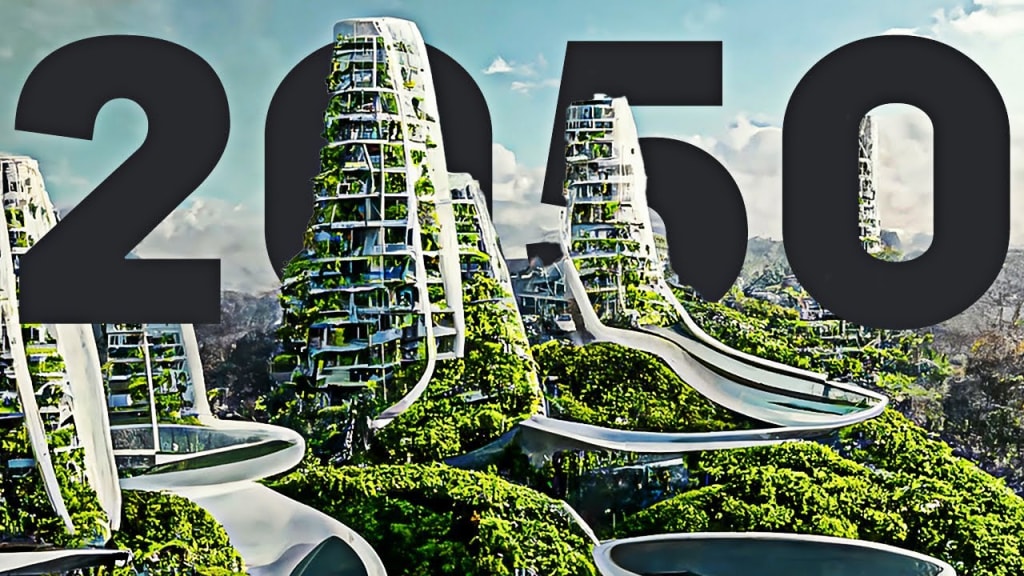
As we reflect he rapid advancements in technology that have reshaped our lives since the turn of the century, it’s intriguing to ponder what the future holds. With countless innovations already enhancing our reality, it's fascinating to speculate how these technologies will continue to evolve over the next 30 years. In exploring this question, we unearth exciting possibilities for life in 2050—ranging from nanotechnology to the metaverse. Let’s take a closer look at how our lives might be transformed.
#### 1. The Rise of Nanotechnology
Nanotechnology has made remarkable strides over the years, and its potential impact on our lives is only beginning to be realized. Experts predict that in 2050, nanobots could be integrated into our brains, using brain-computer interface (BCI) technology to supercharge our cognitive abilities. Imagine connecting directly to the virtual world, accessing endless information, and solving complex problems instantaneously. If this vision takes shape, traditional gadgets like smartphones may become obsolete, fundamentally changing how we engage with the world around us.
#### 2. The 3D Printing Revolution
3D printing technology has already begun to revolutionize manufacturing, and by 2050, we can expect advancements that allow us to print everything from household items to vehicles. With greater accessibility to 3D printers, individuals and communities could produce customized products on demand. A particularly ambitious prospect is the development of affordable 3D food printers, which could help mitigate global hunger by providing instantly available meals tailored to nutritional needs.
#### 3. Breakthroughs in Medicine
The future of medicine could be equally staggering. By 2050, we may witness the eradication of death as we know it, with our memories and consciousness potentially transferable to advanced humanoid robots. Such technology could preserve the brightest minds, ensuring that their knowledge and expertise continue to contribute to society indefinitely. In addition to this, breakthroughs in treating serious diseases, such as cancer, could become a reality. However, the initial cost of such technologies may limit accessibility, presenting challenges we will need to address.
#### 4. Transportation Transformation
Transportation is set to undergo significant changes, propelled by advancements in automated vehicles. Fully self-driving cars could eliminate traffic-related deaths and enhance our daily commutes, allowing passengers to spend travel time in leisure or productivity. Meanwhile, projects like Elon Musk's Hyperloop aim to revolutionize public transportation with extraordinarily high-speed underground travel. Expect a future where congestion is minimized, and commuting becomes an efficient, stress-free experience.
#### 5. Embracing Renewable Energy
As the urgency to combat climate change increases, renewable energy sources will likely become the norm in transportation by 2050. This includes advances in electric vehicles and technologies harnessing wind, solar, and ocean thermal energy. Companies actively pursuing carbon-neutral solutions could lead us toward a more sustainable future, drastically reducing our reliance on fossil fuels.
#### 6. Space Exploration
The ambition for space exploration will likely reach new heights in 2050. Organizations like SpaceX and Blue Origin are pushing the boundaries to make off-planet living a reality. By then, space tourism could offer journeys to destinations like Mars and the Moon, albeit initially accessible only to the affluent. This not only broadens travel opportunities but also presents potential solutions to environmental challenges on Earth by exploring new habitats in space.
#### 7. Advanced Artificial Intelligence
Artificial intelligence (AI) is already transforming various aspects of our lives, and predictions for its evolution suggest that, by 2050, AI will surpass human cognitive abilities. While this presents exciting possibilities for automation and efficiency, it also raises ethical concerns about job displacement and the integration of human values into AI systems. As AI takes on more roles traditionally held by humans, adapting our workforce and educational systems will be crucial.
#### 8. The Future of Education
Education, too, will likely be transformed with the rise of digital learning. By 2050, fully online education systems could become standard, making quality learning accessible globally. With AI-powered teaching assistants, robots may deliver lectures, provide personalized learning experiences, and streamline administrative tasks. As we embrace this digital transition, we must ensure equitable access to technology and education.
#### 9. Entering the Metaverse
Mark Zuckerberg has popularized the concept of the metaverse, a virtual reality space for social interaction and activities. By 2050, we can anticipate a fully developed metaverse, offering immersive experiences—from shopping to traveling—without ever leaving home. While this presents exciting opportunities for social engagement, it also brings concerns about isolation and the potential decline in face-to-face interactions.
#### 10. The Evolution of Currency
The future of money appears to trend towards a cashless society, where transactions occur virtually and seamlessly. With the rise of decentralized finance and AI, everyday transactions could be managed automatically. Imagine smart appliances that reorder groceries based on consumption, streamlining our daily lives and minimizing the hassle of shopping.
#### 11. Automation in Real Estate
Finally, the residences of 2050 may be entirely automated, with smart homes equipped with AI that adapts to our needs. These homes could anticipate our actions and adjust the environment for optimal comfort, while interactive holographic televisions could bring entertainment directly into our living spaces. These advancements could redefine what it means to dwell in a home.
### Conclusion
While the visions of our future presented here may seem extraordinary, they are far from impossible. Each advancement hints at a reality already taking shape, revealing our inherent potential for innovation. As we navigate this technological landscape, it’s vital to consider the social, ethical, and environmental implications of these changes. The road to 2050 is filled with both promise and challenge—one that will require our collective effort to ensure that these advancements benefit all of humanity. What do you think the world will look like in 2050? Share your thoughts and predictions as we journey into this uncharted future together.wer
About the Creator
Keep reading
More stories from David Iliya and writers in Earth and other communities.
Boost Your Network Speed: The Secret APN Code to Unlock 5G Potential
The allure of faster internet speeds is undeniable, especially for mobile users. With 5G networks rolling out, whispers of a 'secret' APN setting that can boost your phone's network speed, even turning a 4G connection into 5G, have spread across the internet. This supposed hack promises to unlock hidden network potential and catapult users into the realm of blazing-fast downloads and seamless streaming. But does it actually work? Let's delve into the details and separate fact from fiction.
By David Iliya2 years ago in Earth
Earth has warmed considerably more quickly over the last 15 years, according to new analysis.
The Earth's temperature has been rising for decades due to global warming. However, recent studies indicate that during the previous ten years, the rate of warming may have accelerated.
By Francis Dami5 days ago in Earth




Comments (1)
This is a fantastic and engaging exploration of the future! The way you've organized the predictions, from nanotechnology to automated real estate, creates a compelling and thought-provoking narrative. Overall, this is a well-researched, insightful, and inspiring piece that offers a glimpse into the exciting and potentially transformative future that awaits us. Excellent work!👍✨