
How is a potentially threatening celestial body determined? What are the circumstances under which an Earth impact notification will be received?
When will you receive notification of an impact on Earth

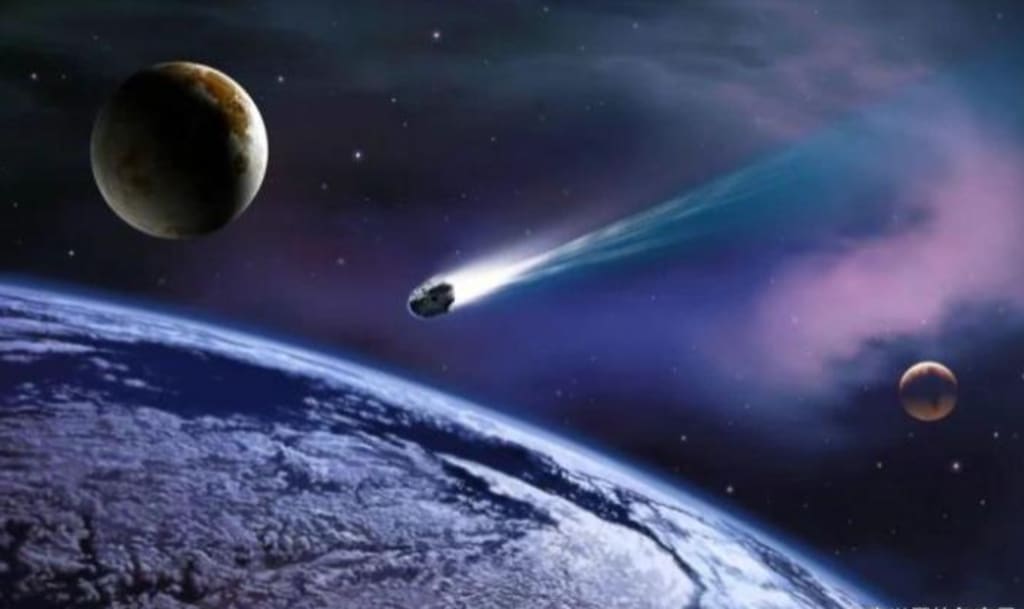
I have to say that the whole universe works very cleverly. Seemingly random, yet so regular. Take our Earth, for example. If the Earth had been a little further or closer to the sun, almost all living things would not have been possible. And the temperature and environment would certainly not be the same as it is now. Then there is the movement between the planets, each in its own orbit, without collision. (There is my personal summary of the article's highlights at the end of the article. If you're in a hurry, you can skip straight to the end for the summary.)
However, some asteroids and comets still have the potential to collide with planets. It is no small thing to realise that such a collision, if it happened on Earth, could cause the instant extinction of all species. For this reason, these asteroids and comets that could collide are known as potentially threatening objects.
But not all objects that collide with the Earth are a danger to the planet. Sometimes we hear about meteorites falling from the sky, but so far we haven't seen any disasters caused by meteorites on Earth. After all, meteorites are usually relatively small and the damage they usually do to the Earth is to smash a crater. The larger meteorites so far have been older. Contemporary meteorite damage is even rarer.
Since small meteorites do not pose a threat to the Earth, how big would a meteorite be to cause human panic? At least this celestial body should be no smaller than 150 metres in diameter. If an object of this size were to impact the Earth, whether on land or in the ocean, it would affect the areas where people live. The frequency of a celestial body of this size colliding with the Earth is about once in 10,000 years. For humans, this frequency is either encountered only once in a lifetime or not at all, and has not been encountered since the advent of mankind.
It is said to be imperative. It is not enough to know the size of the celestial body, but also the distance from the Earth. Only if it is close enough can it pose a threat to the Earth, otherwise this celestial body is not afraid even if it is large. Every celestial body has its own orbit. Whenever the orbit of a celestial body intersects the orbit of the Earth, one has to pay attention. It is not a sure thing that the intersection will collide. Each orbit runs at a different time, so it is possible to intersect but never collide. Just be aware of the minimum orbital intersection distance, when this is less than 0.5 astronomical units (1 astronomical unit is 150 million kilometres and 0.5 astronomical units is 72.5 million kilometres), it is classified as a potentially threatening object.
The emergence of potentially threatening objects is no small matter, but scientists are so concerned about it that they have created two indices to classify the size of potentially threatening objects. These two indices are the Palermo Technology Impact Hazard Scale and the Turin Hazard Index. They are described below, one by one.
The Palermo Technical Impact Hazard Class is a logarithmic criterion that combines two data indicators. One is the probability of impact and the other is the kinetic yield, i.e. the kinetic effect produced. So, let's start by understanding a term, background risk, which is the average number of years for another impact of the same or a larger object. And if the Palermo Technical Impact Hazard Rating is zero, it means that this NEO has the same risk as the background risk. If it is plus two, it means that the risk is one hundred times higher than the background risk (log100 is 2). If it is less than minus two, then there is nothing to worry about. If it is between minus two and zero, keep a close eye on it.
The Palermo technical shock hazard rating can be a bit complicated, but have no fear. There is also the Turin Risk Index. The Turin Hazard Index is a combination of impact probability and destructive power. Intuitively, the Turin Risk Index uses a number from one to ten and five colours - white, green, yellow, orange and red - to represent the different levels.
White means no danger. A value of zero means that it will not collide with the Earth or that it will be burned up on entry into the atmosphere.
Green means regulatory. A value of 1 means there will be little or no collision with Earth.
Yellow indicates concern. A value of 2 indicates a low probability of impact. At a value of 3, the chance of impact is slightly higher, with greater than or equal to 1% likely to cause small impact damage. If it will approach Earth within 10 years, the public and authorities should be informed. A value of 4 gives a slightly higher chance of impact, with a probability of regional damage greater than or equal to 1%. If it approaches the Earth within 10 years, the public and relevant authorities should be notified.
Orange represents the threat. With a value of 5, the chance of impact is high and a far-reaching impact would cause severe regional damage. If there is a chance of an impact on Earth within 10 years, governments could be authorised to adopt emergency response plans. A value of 6 indicates a high probability of impact and a far-reaching impact that would cause severe global damage. If there is a chance of an impact within 30 years, governments could be authorised to adopt an emergency response plan. With a value of 7, the chance of impact is very high and the threat of a very far-reaching impact would result in a global extinction catastrophe. If such a threat were to occur in the next century, international contingency plans would be authorised, in particular through the use of key observations to obtain convincing evidence as soon as possible to determine whether an impact would occur.
Red means danger. With a value of 8, a celestial impact will occur and cause damage to a local area, which happens once every 50 to several thousand years. At a value of 9, an impact will occur and cause damage to a large area, which occurs every 10,000 to 100,000 years. A value of 10 would result in a celestial collision causing global climate change and an extinction catastrophe that could destroy civilisation, occurring once every 100,000 years or more.
So far, we have not heard of potentially threatening celestial bodies in our daily lives. Is this because no one takes it seriously? No. The odds of such a thing are slim. If a celestial body is really about to collide with the Earth and the damage is not that great, then it is possible for people at the crash site to move ahead. If it would cause devastating damage to humans, if it were reported it would probably just cause panic and even lead to half-dead humans before the celestial body arrives. After all, if you know how it will end, you don't know what people will do. Maybe it's better not to know!
Personally, I think it's a summary of the main points :
1. for asteroids and comets that may collide, we call them potentially threatening objects.
2. When the diameter of the object is not less than 150m and the minimum orbital intersection distance is less than 0.5 astronomical units (one astronomical unit is 150 million km, 0.5 astronomical unit is 72.5 million km), it will be classified as a potentially threatening object.
3. Scientists have created two indices to classify the size of potentially threatening objects. The two indices are the Palermo Technical Impact Hazard Class and the Turin Hazard Index.
About the Creator
Roseto
Science and civilization show that too much information sometimes gets in the way of knowledge and innovation。
Ghana Wheat Market Size & Forecast 2025–2033
Introduction Ghana’s wheat market is steadily emerging as an essential segment of the country’s food economy. Driven by rapid urbanization, changing dietary habits, and the expansion of bakeries, fast-food outlets, and packaged food manufacturing, wheat has become a key ingredient in everyday Ghanaian diets. According to Renub Research, the Ghana wheat market was valued at US$ 46.20 million in 2024 and is projected to reach US$ 79.89 million by 2033, growing at a compound annual growth rate (CAGR) of 6.27% during 2025–2033.
By Marthan Sir4 days ago in Earth
Met Office Issues Yellow Fog Warnings After Parts of UK Battered by Rain
After days of relentless rainfall sweeping across large parts of the United Kingdom, the Met Office has issued yellow fog warnings, cautioning residents and travelers to prepare for reduced visibility and hazardous conditions. The sudden shift from heavy rain to dense fog highlights the volatile nature of the UK’s winter weather and underscores the challenges it poses to transport, public safety, and daily life. From Heavy Rain to Thick Fog The recent spell of intense rain saturated the ground across England, Wales, and parts of Scotland, leaving rivers swollen and fields waterlogged. As calmer weather followed the downpours, a combination of high moisture levels, falling temperatures, and light winds created ideal conditions for fog formation. According to meteorologists, this type of fog—often called radiation fog—develops when moisture near the ground condenses overnight, forming thick, low-lying clouds that can linger well into the morning. The Met Office’s yellow warning signals that fog could significantly reduce visibility, in some areas dropping below 100 meters. While not the most severe level of weather alert, yellow warnings are designed to prompt awareness and caution, particularly for motorists, cyclists, and pedestrians who may be caught off guard during early morning commutes. Travel Disruptions and Safety Concerns Fog is one of the most dangerous weather conditions for road travel, as it can dramatically shorten reaction times and obscure hazards. Authorities have urged drivers to slow down, use fog lights appropriately, and maintain greater distances between vehicles. Motorways and rural roads alike are vulnerable, with sudden patches of thick fog appearing without much warning. Rail services may also experience delays, as drivers are required to reduce speeds when visibility drops. At airports, fog can disrupt flight schedules, causing delays or cancellations, particularly during peak morning hours. Aviation authorities closely monitor visibility thresholds, and even a short-lived fog bank can ripple through tightly scheduled operations. Emergency services have emphasized that pedestrians and cyclists should wear reflective clothing where possible, especially during early mornings and evenings. With darker winter days already limiting visibility, fog compounds the risks for vulnerable road users. Why Fog Follows Heavy Rain Meteorologists explain that fog warnings often follow periods of heavy rainfall. When rain saturates the ground, it leaves behind large amounts of surface moisture. If skies then clear and winds ease, the ground cools rapidly overnight, allowing moisture to condense into fog. This pattern is becoming increasingly familiar in the UK, where weather systems are growing more erratic. Climate scientists note that a warming atmosphere holds more moisture, increasing the likelihood of intense rainfall events followed by fog, frost, or sudden temperature drops. Regional Impact Across the UK The yellow fog warnings are not uniform across the country. Low-lying areas, river valleys, and rural regions are particularly susceptible. Parts of southern England, the Midlands, and eastern regions are among those most at risk, though localized fog could appear almost anywhere conditions align. In Scotland and northern England, lingering wet ground combined with colder overnight temperatures raises the possibility of fog forming alongside icy patches. This mix of hazards further complicates travel and increases the risk of accidents. What a Yellow Warning Really Means A yellow weather warning does not mean severe disruption is guaranteed, but it does indicate a heightened likelihood of impacts. The Met Office uses yellow alerts to encourage the public to stay informed and take sensible precautions. For fog, that means checking travel updates, allowing extra journey time, and staying alert to rapidly changing conditions. Weather experts stress that fog can be highly variable. One area may experience clear skies while another, just a few miles away, is blanketed in thick mist. This unpredictability is what makes fog particularly dangerous. Looking Ahead: More Changeable Weather Forecasts suggest that unsettled weather will continue in the coming days, with further spells of rain interspersed with calmer, colder nights—conditions that could lead to additional fog warnings. While no prolonged severe weather is currently expected, the pattern reflects the broader trend of increasingly changeable winters in the UK. For many residents, this serves as another reminder that winter weather is no longer defined by just cold or snow. Instead, a mix of heavy rain, flooding risks, fog, and sudden temperature shifts is becoming the new normal. Staying Prepared The Met Office advises the public to regularly check forecasts, especially before traveling, and to remain flexible with plans during periods of weather warnings. Simple measures—such as cleaning car windows, ensuring lights are functioning, and staying updated via official channels—can significantly reduce risk. As the UK continues to navigate this wet and fog-prone winter, awareness and preparation remain the best defenses. While the fog may lift by midday in many areas, its early impact serves as a timely reminder that even seemingly mild weather hazards can have serious consequences.
By Fiaz Ahmed 2 days ago in Earth


Comments
There are no comments for this story
Be the first to respond and start the conversation.